Online Reporter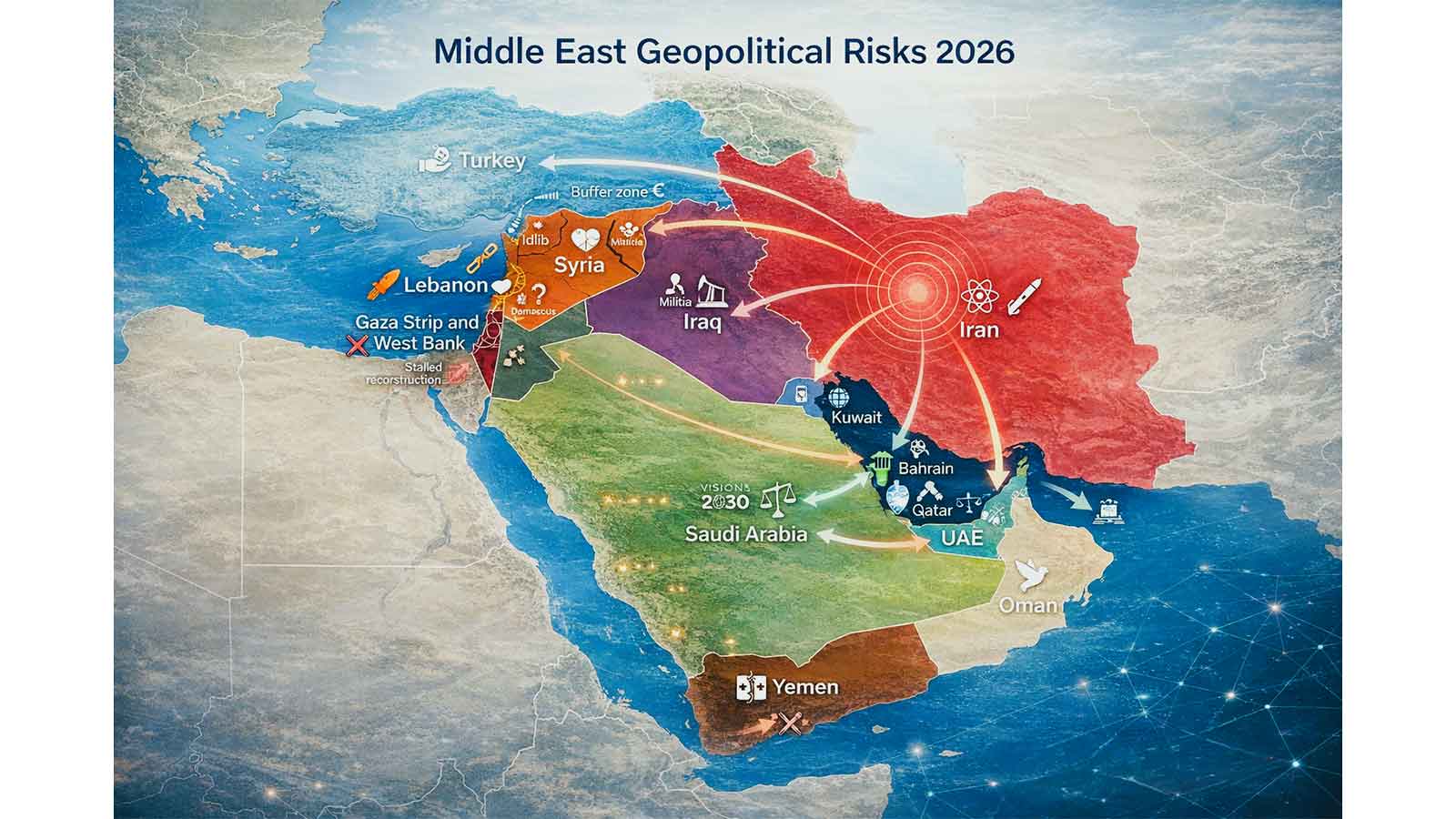
Gibson Nyikadzino-Zimpapers Politics Hub
THE Middle-East conflict of choice that the United States and Israel imposed on Iran is signalling its biggest potential to be a regional war.
Already, Jordan, Saudi-Arabia and Iraq have been drawn into the war. New fronts are being opened. Each time the war spreads, some countries benefit, even those not in the region.
They benefit through arms sales and financial rewards from the rising energy prices.
At the time Iran’s allies Hamas and Hezbollah are holding fort against Israeli occupation in Gaza and Lebanon, the Houthis in Yemen (Iran’s ally) have resumed attacks against Saudi Arabia’s oil infrastructure.
Two critical waterways are already closed. Iran has shut the strategic Strait of Hormuz, while the Houthis have imposed a maritime blockade against Saudi Arabia, warning that Saudi-linked vessels transiting the strategic waterway would be targeted.
Saudi oil tanks have already been attacked and missiles have been fired from the Houthi-controlled parts of Yemen, hitting strategic targets in Saudi Arabia.
As this happens, of great geopolitical significance to the Middle-East was the United States-Saudi Arabia nuclear deal that is set to change and reshape the region’s power dynamics, and probably initiate a desire for nuclear weapons development between Iran and Saudi Arabia. This makes the geopolitical puzzle even more complex!
The war has now sucked Saudi Arabia, Jordan, Iraqi and Yemen. Seven countries in five months. To some extent, Ukraine.
Saudi Arabia has for a long time been engaged in negotiations with the United States to allow American companies to build civilian nuclear reactors in the kingdom, and out of this, it wants the right to enrich uranium domestically with a view to establish energy independence.
Iran also has nuclear facilities for civilian purposes; hence the move by Saudi Arabia should be interpreted as a competition to have parity with Iran, as the two countries are locked in a Middle-East geopolitical competition. On the other hand, concerns on this deal have been that if Saudi Arabia enriches uranium, it may have a covert operation for nuclear creates capability.
There is reason to believe, cautiously, that this Saudi-United States deal has potential to widely open a dangerous covert nuclear arms race, despite that Iran and Saudi Arabia being signatories or members of the Treaty on the Non-Proliferation of Nuclear Weapons (NPT).
As NPT members, they have the right to use nuclear energy for peaceful civilian purposes, should not be banned to from enriching nuclear. Article IV of the treaty states that “nothing in this treaty shall be interpreted as affecting the inalienable right of all the parties to the treaty to develop research, production and use of nuclear energy for peaceful purposes without discrimination and in conformity with Articles I and II of this treaty”.
The allegations against Iran that its nuclear enrichment programme is meant to develop nuclear weapons thus give leverage and trust to Saudi Arabia by the US. This development is incentivising Saudi Arabia to challenge Iran, and has a right to do so in the context of nuclear enrichment.
Above all, since the 2020 Abraham Accords, the United States policies have always aimed to integrate Israel into a Middle-East regional security and economic architecture against Iran. This deal is also an appeasement to Saudi Arabia so that it normalises relations with Israel, creating a new power shift against Iran, despite China mediating a détente between Iran and Saudi Arabia in 2023. And the United States nuclear deal is one of the few things Saudi Arabia is asking for, in return for normalisation of relations with Israel.
In essence, the Saudis are saying to the United States; if you want us to normalise relations with Israel, one of the issues that you need to consider is to give us nuclear technology so that we use it for peaceful purposes and in pursuit of energy independence.
Beyond developments in the Middle-East region are China and Russia. These two great powers wield swaying influence. It is not only the United States that has valuable interests in the region. According to University of Zimbabwe lecturer Dr Lawrence Mhandara, “Russia and China are actively offering reactors to Saudi Arabia in the wider Gulf region with far fewer political conditions in terms of safeguards, transparency issues” when it comes to nuclear energy.
He emphasises that “if the United States walks away, it is conceding ground to Russia and China, and it concedes that ground meaning it is losing US$100 billion plus market. And more importantly, it will lose leverage over Saudi Arabia, nuclear safeguards, safety standards, and also the right to the opportunity to monitor non-proliferation activities.”
The United States is scared of walking away from the region and the Saudi nuclear deal with the view that if it does leave, someone else will come through. However, China and Russia as rising and resurgent powers are keen on a geopolitical competition for strategic consideration for the realignment or alignment of the region, Dr Mhandara believes.
There is a possibility that the Middle-East region is moving or is likely being pushed towards nuclear deterrence. A situation where Iran and Saudi Arabia have nuclear weapons will create an arms race with Israel, which already has nuclear weapons but is not an NPT member and has never ratified it. One region having three nuclear armed powers. To Dr Mhandara, Iran is unconstrained because it is now outside the 2015 Joint Comprehensive Plan of Action agreement since the US pulled out in May 2018. So, the idea of a nuclear-free Gulf region looks less likely.
The other issue which complicates the new dimension of deterrence in this region is that Russia and China are offering alternatives. Whatever the United States says, the leverage is not as smart as it used to be in the 1990s when it was the lone superpower. Now it is being challenged.
However, it is not like the world is going to see a future with a mutually assured destruction (MAD) situation like the one that characterised the United States-USSR relationship. The world is going to see something more patterned along new developments that may involve situations like between Pakistan and India
Nuclear energy is both an economic tool and a diplomatic bargaining chip for normalisation of relations between Israel and Saudi Arabia and some Gulf countries. And the start of a more multi-polar deterrence structure in the Gulf region is potentially something likely to be seen in the long run.
On paper, Saudis are looking at energy security and economic diversification.