Online Reporter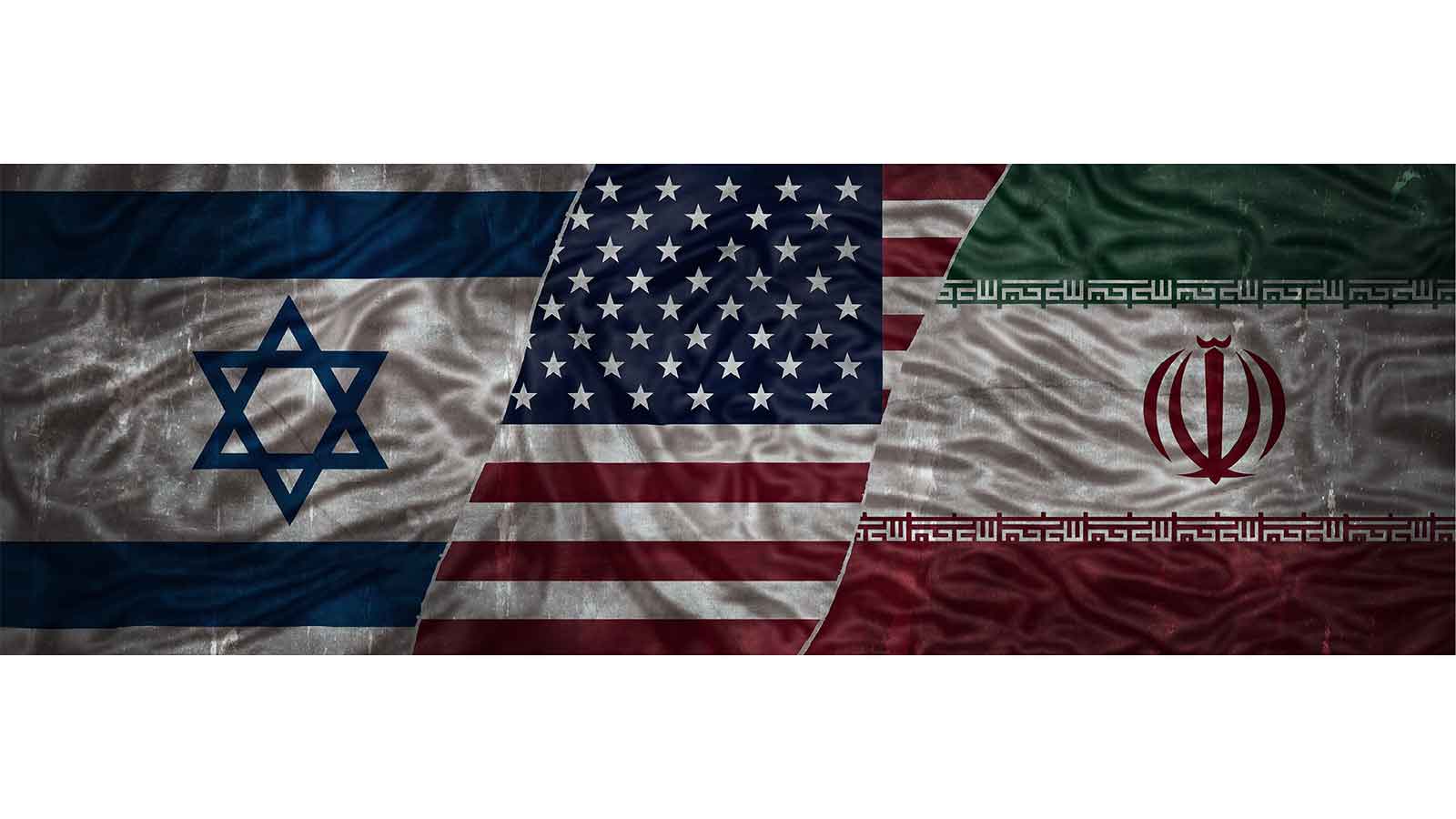
Gibson Nyikadzino
THERE are moments in international politics when allies become adversaries, and when former enemies become allies. The logic of this argument or its oppositional view always carries a basis assumed in the advice that “keep your friends close and your enemies close”.
It is a state’s interests in the international political system characterised by anarchy, which can be used as leverage and transformed into the international society to turn enemies into friends. Turning from potential enemies to friends requires that parties involved possess the ability to create a balance in the grey area that exists between adversity and alliance. At the same time, there has to be a possibility that such countries are able to simultaneously criticise and embrace each other.
This is, however, not the case when one looks at an unstable friends-cum-enemies-and-enemies-become-friends relationship between Israel and Turkey over who can exert geopolitical dominance in the Middle East. These two frenemies, Israel and Turkey, are defining the characteristics of a next showdown between friends becoming adversaries. Just like there has been war between the United States and Israel, against Iran, a former ally that became an enemy, there are reasons why it happens that way.
‘The New Iran’
Under President Recep Tayyip Erdogan, Turkiye (formerly Turkey) is conceptualised as posing an undoubted strategic challenge for Israel. In recent months, former Israeli Prime Minister Naftali Bennett said that “Turkey is the new Iran”. The framing of Turkiye as a “new Iran” comes after President Erdogan on March 30 last year prayed that “may Allah make Zionist Israel destroyed and devastated”.
Previously, in July 2024, President Erdogan had said his country would “enter Israel anytime” to help Palestinians being bombarded and targeted in a genocide following the Hamas October 7, 2023 attack.
This has been interpreted as hostility towards Israel, which Prime Minister Benjamin Netanyahu responded to by saying anyone who threatens Israel should be “taken seriously”. Israel has condemned and accused Turkiye for giving Hamas leadership a headquarters on its soil.
At the moment, Israel is probably working to do to Turkiye what it attempted to do or did in Iran. However, going to war is an extremely difficult proposition for Israel. This might resurrect the warrior spirit of the Ottoman Empire. Turks are different from Iranians.
While Iranians are showing that they are fighters, Turks are born and trained warriors, just like the Spartans in the Peloponnesian War. Conservatively, the way Israel also views Turkiye as a target is different from how it does on Hamas, Hezbollah, Houthis and Iran.
Key questions have to be answered on whether signals from both Turkiye and Israel should be interpreted just as political drama or the beginning of a real conflict, because if the two collide, it will not stay regional. It could reshape global power.
Classic geopolitical logic
Turkiye was once Israel’s closest Muslim ally, and their story did not start with diplomatic acrimony and conflict, but cooperation. In 1949, Turkiye was the first Muslim-majority country to recognise Israel. Back then, it was a bold move considering that most of the Arab world rejected Israel completely.
Before the turn of the millennium, the two countries were working together in enhanced military cooperation through joint drills, intelligence sharing and joint air exercises. Israel further modernised Turkiye’s fighter jets and supplied high-end defence systems.
This was so because Israel needed a strategic partner in a hostile region, which Turkiye was a perfect candidate, hence had to invest in her. This was a classic geopolitical logic, premised on “the enemy of my enemy is my friend” strategy. During this time, Israel had to exploit the opportunity because Turkiye was having tensions with Arab states.
Because Israel had been isolated, aligning with Turkiye was the workable geopolitical alternative, since the former was and is a member of the western-led North Atlantic Treaty Organisation (NATO) alliance. This made Turkiye not a mere regional player, it enjoys Western support.
Broken trust
When Israel attacked Gaza in 2008, while global criticism was rising, Turkiye’s condemnation against Israel was emotional and political, not diplomatic. At the 2009 World Economic Forum, President Erdogan, while on a panel of discussion with Israeli leadership, he told them that they knew very well how to kill, and he walked off. President Erdogan’s image changed overnight, becoming a hero across the Muslim world.
The country’s identity started to shift, from what Samuel Huntington in Clash of Civilisations described as a “torn country” with alignments and inclinations towards the West to positioning itself as a Muslim world leader.
In 2010, a humanitarian flotilla backed by Turkiye heading towards Gaza carrying food, medicine and aid supplies was attacked by Israel while in international waters. Turkiye’s citizens were killed and a diplomatic fallout ensued, with the expulsion of Israel’s ambassador from Ankara, military ties collapsed and trust eroded, and the relationship never recovered despite Israel paying compensation.
Stepping forward
The Turkiye-Israel tensions are not about one issue, but are a multi-layered power and influence dynamic. In the Middle East, Israel wants to expand its territory by annexing southern Lebanon and Syria, taking over Palestine and Gaza, before Egypt. Turkiye, on the other hand, wants influence within and beyond the region. Saudi Arabia, while also wanting to be a player, is cautious; and Iran is embroiled in conflicts.
Turkey is now stepping forward and positioning itself as the voice of Palestine while getting leverage to do so inside the NATO corridors. It knows that if things escalate with Israel, the West will not isolate it.
On the energy front, Israel discovered gas reserves in the offshores of the occupied Palestinian territories in Gaza. Following this discovery, Turkiye has a different plan. It now wants to become the energy bridge to Europe, using pipelines. Israel now wants to export gas, where Turkiye has control of the routes. Same market, same goal, direct competition.
Silent battleground
Over the last decade, Turkiye has massively expanded its defence industry. From drones to naval power, it is no longer dependent on the West like before. At the same time, Israel has one of the most advanced militaries, cutting-edge missile defence systems and highly sophisticated intelligence networks.
These are two technologically advanced powers; both are confident, aggressive, operating in the same region and already unwilling to refrain from their actions. Unlike the past, this time there are no clear boundaries.
Already their forces are operating in overlapping zones like Syria, meaning a small miscalculation, a single strike, or a wrong signal, might trigger something much bigger. Not a full-scale war immediately, but a chain reaction that pulls in allies, escalates tensions, and pushes the region closer to a breaking point. If Iran weakens, there is a gap.