Online Reporter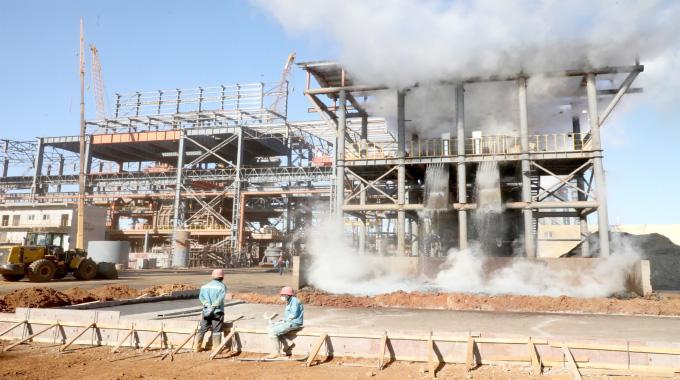
Patrick Chitumba , Midlands Bureau Chief
ONCE known mainly as Zimbabwe’s agricultural heartland, the Midlands Province is fast emerging as a national industrial engine, anchoring the country’s push towards self-sufficiency, infrastructure renewal and economic transformation in line with Vision 2030.
Over the past five years, the province has attracted more than US$2 billion in investments, driven largely by iron and steel production, mining expansion and large-scale public infrastructure projects — developments that are reshaping not just the Midlands economy, but Zimbabwe’s broader industrial outlook.
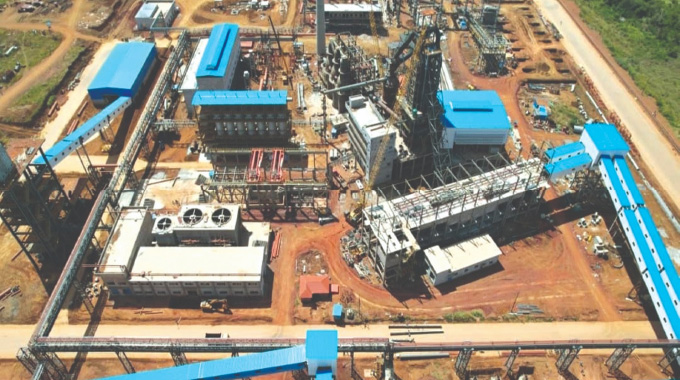
At the centre of this transformation is the US$1,5 billion Dinson Iron and Steel Company (Disco) plant in Manhize, now producing reinforced steel bars with an annual capacity of 600 000 tonnes. The project is already reducing Zimbabwe’s dependence on imported steel, lowering construction costs and strengthening local supply chains critical to national infrastructure development.
Midlands Provincial Director for Economic Affairs and Investment in the Office of the President and Cabinet, Mr Kosheni Mtisi, said the project positions Zimbabwe to reclaim its status as a regional steel producer while supporting housing, road and dam construction countrywide.
“These investments have strengthened the province’s resilience and created a firm foundation for national economic growth. Mining, iron and steel production are now central to the Midlands’ contribution to the national economy and Vision 2030 transformation agenda,” he said.
Beyond steel, the Midlands’ strategic location has amplified its national importance. The province hosts the Dabuka Rail Marshalling Yard, one of the largest in Southern Africa, reinforcing Zimbabwe’s ambition to become a regional logistics and industrial hub.
Massive public investment in roads and bridges has further integrated the province into the national transport network. Under Government programmes, about 800km of roads were resealed and more than 30 000km patched, while key arteries such as the Shurugwi-Mhandamabwe, Sanyati-Nembudziya and Gweru-Lower Gweru roads were rehabilitated.
The construction of 18 bridges, including Chemusonde, Phoenix, Nyamatikiti and Gunguhwe bridges, has improved connectivity between provinces, easing the movement of goods, people and agricultural produce across regions.
“These projects are not only provincial assets; they support national trade, food security and industrialisation,” Mr Mtisi said.
The investment momentum has also extended to water, sanitation and social infrastructure, reinforcing the Government’s whole-of-nation development approach. Major upgrades were carried out at Gwenhoro and White Waters water treatment plants in Gweru, the Mabula Sewer Treatment Plant in Zvishavane and several rural piped water schemes across Runde, Vungu and Mberengwa
Under the Presidential Borehole Drilling Programme, 325 boreholes were sunk, ensuring more than 200 primary health care facilities now have reliable access to clean water, strengthening public health delivery at a national scale.
Water security for agriculture and industry has also improved with the completion and commissioning of Holy Cross Dam in Chirumhanzu by President Mnangagwa, while Vungu Dam in Silobela and Defe Dam in Gokwe South are under construction.
However, Mr Mtisi noted that despite these gains, the province continues to reflect national challenges, particularly in agriculture.
“About 75 percent of farming households are small-scale farmers, heavily reliant on rainfall in a province prone to climate variability,” he said.
He said Government interventions such as the National Enhanced Agricultural Productivity Scheme (NEAPS) have helped cushion farmers, supporting production of key national commodities such as cotton and beef.
“As a province, we were not severely affected by the El Niño-induced drought, which allowed economic activity to continue,” he said.
Mr Mtisi said as Zimbabwe moves into its 2026–2030 planning cycle, the Midlands is positioning itself as a cornerstone of national industrial growth, leveraging minerals, infrastructure and strategic geography to drive economic recovery and long-term prosperity.
“From steel production to roads, dams and water systems, developments in the Midlands are increasingly shaping the trajectory of Zimbabwe’s national development story, not just a provincial success, but a pillar of the country’s economic future,” he said.
The Midlands Province occupies a strategic central position in Zimbabwe, linking the country’s major economic corridors that connect Harare, Bulawayo, the Lowveld and the north-western mining belt.
Historically, the province has been a backbone of agriculture, mining and rail transport, earning it the reputation as the country’s industrial crossroads.
In the post-independence era, the Midlands hosted key heavy industries and rail infrastructure that supported national manufacturing. The adoption of Vision 2030 and the successive National Development Strategies (NDS1 and NDS2) marked a policy shift towards re-industrialisation, value addition and import substitution, placing renewed emphasis on mineral-rich regions such as the Midlands.
The Midlands’ extensive road, rail, and power infrastructure make it a natural hub for logistics, mining beneficiation and agro-processing, aligning with the Government’s thrust to develop industrial parks and special economic zones outside traditional urban centres.
The province’s mixed agro-ecological regions — spanning natural regions two to five — allow for diversified agricultural production, particularly cotton and beef, which remain critical national exports.