


 Sundaymail Editor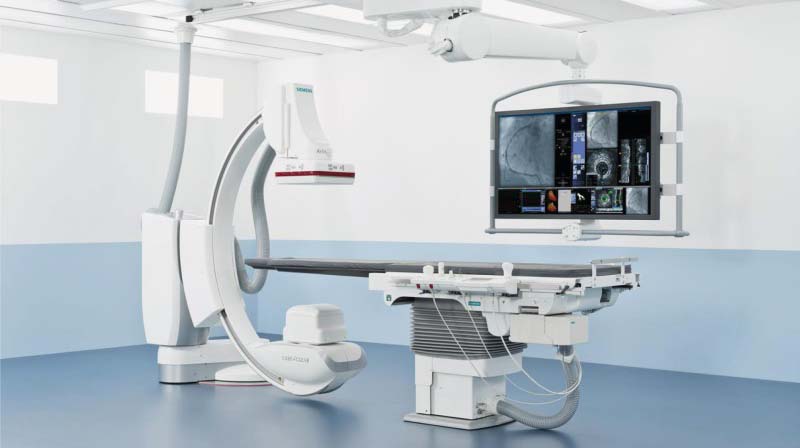
Tanyaradzwa Rusike
The Government has spent close to US$300 million in the last four years to overhaul and provide the country’s health facilities with high-tech medical equipment under a programme to modernise the health sector and ensure world-class services.
Overall, US$210 million was spent on constructing 47 new health facilities and renovating 94 existing ones.
More centres have been developed separately using devolution funds.
Through the Ministry of Health and Child Care’s borehole drilling programme, over 200 health centres now have uninterrupted water supply, while 1 000 clinics have been connected to solar power.
In addition, US$23 million has been spent on providing health centres with modern medical equipment that includes magnetic resonance imaging machines, fixed digital X-ray machines and vital signal monitors.
As a result of the giant strides made in the sector, the country will soon resume open-heart surgeries, with the Government now finalising the procurement of cardiac catheterisation laboratory (CathLab) equipment required for the complex medical procedure.
A CathLab is a specialised area in a hospital where doctors perform minimally invasive tests and advanced cardiac procedures to diagnose and treat cardiovascular diseases.
Ministry of Health and Child Care spokesperson Mr Donald Mujiri said the Government was assiduously working to transform the health sector.
“New health facilities have been constructed and existing infrastructure has been refurbished,” he said.
“We have 47 health facilities that were constructed and completed, while 94 facilities were successfully renovated.
“Some 1 074 of the country’s health facilities were upgraded to have solar power, and 201 health facilities managed to have water through the Ministry of Health’s borehole drilling programme.”
The 250-bed Lupane Provincial Hospital in Matabeleland North, which is nearing completion, is one of the transformative projects currently underway.
Before the resumption of works, construction had been mothballed for close to 18 years.
Matabeleland North currently does not have a provincial hospital.
Ongoing works include the development of central stores, a pharmacy, a casualty section, an outpatient department and an administration block.
Also under construction are junior staff flats, a maternity block, a surgical ward, a paediatric ward, a dental and eye clinic, as well as antenatal and post-natal sections.
“To date, the ministry has invested over US$210 million in bringing quality healthcare to the citizens, with the project upon completion set to provide 26-by-20-bed health centres, as well as five-by-60-bed district hospitals countrywide.”
Retooling
Government, he said, has prioritised the procurement of modern medical equipment for its health institutions to facilitate delivery of world-class healthcare.
“The equipment meant to retool the country’s health institutions is to the tune of US$23 million. Delivery and installation of the same has started.
“The equipment includes magnetic resonance imaging machines, image intensifiers, fixed digital X-ray machines, mobile digital X-ray machines, anaesthetic machines, ophthalmic microscopes, dental sets, vital signs monitors, Covid-19 virtual hospital equipment, ventilators, theatre lights, multi-parameter monitors and ultrasound scan machines.”
Procurement of the CathLab equipment, he added, was at an advanced stage.
“The procurement of this highly specialised equipment should see the country resume open-heart surgery.”
To revitalise the country’s emergency medical services, Government was also upgrading its ambulance fleet.
All 63 district hospitals and eight provincial hospitals are set to receive upgraded model ambulances.
“These ambulances are a lifeline during emergencies, and will be equipped with the latest medical equipment and technology,” said Mr Mujiri.
“Already, Government has procured 32 medical emergency vehicles, while eight others have been received from cooperating partners.”
Pharmaceuticals
Through Government interventions, the country was now geared towards becoming a regional hub for manufacturing pharmaceutical products, he said.
“In order to enhance productivity and competitiveness of the Zimbabwe drugs manufacturing industry, Government spearheaded the formulation of the Pharmaceutical Manufacturing Strategy for Zimbabwe (2021–2025).
“The strategy seeks to increase market share for local pharmaceutical products from the current 12 percent to 35 percent by 2025; local medicines production from US$31,5 million to US$150 million by 2025; local production of essential medicines from 30 percent to 60 percent by 2025 and to improve export of locally manufactured pharmaceutical products from 10 percent to 25 percent by 2025.”
Already, the National Pharmaceutical Company (NatPharm), he said, has increased capacity utilisation after receiving working capital.
The pharmaceutical industry regulator, the Medicines Control Authority of Zimbabwe (MCAZ), has been directed to prepare to register new pharmaceutical products and upgrade its quality management systems.
“To facilitate efficient storage and distribution of drugs and pharmaceutical products, the Government, through the Ministry of Health, secured US$6 million funding from the Global Fund and a US$25 million grant from the Chinese government to construct state-of-the-art NatPharm warehouses across all provinces.
“While the Harare warehouse is awaiting commissioning, the other warehouses are nearing completion, with the remainder at varying construction stages.”
Community Working Group on Health executive director Mr Itai Rusike said retooling health institutions was crucial.
“We welcome efforts being made by Government to construct and renovate health facilities,” he said.
“What is important now is to provide them with the necessary equipment and drugs so that citizens don’t struggle.”



 Bongani Ndlovu
 Online Reporter