Online Reporter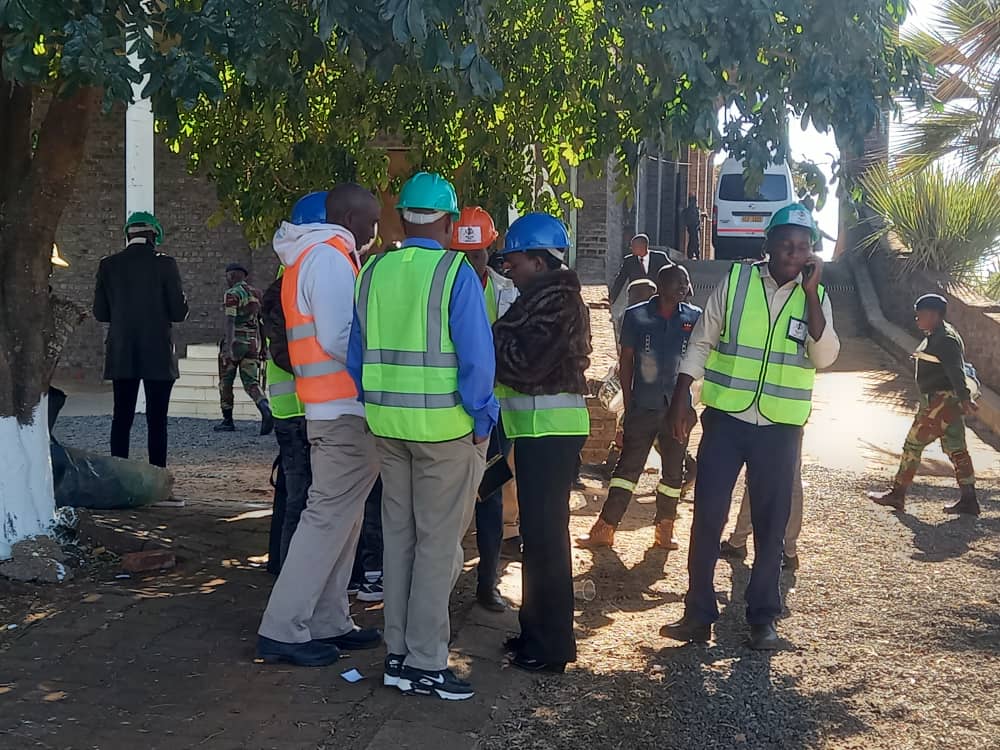
Johnsias Mutonhori
MINERS for Economic Development (Miners4ED), a Zanu-PF affiliate that serves as a conduit between miners and the ruling party, has weighed in on the proposed Mines and Minerals Amendment Bill, emphasising the need for stronger provisions to empower indigenous and small- to medium-scale miners.
Speaking in Gweru recently at Shamrock Mine during a mobilisation and structure-setting meeting aimed at furthering the formalisation of artisanal miners, Miners4ED National Coordinator, Cde Coussie Mcleame Anashe said the Bill still has gaps in addressing the promotion and empowerment of small to medium-scale miners.
“As Miners4ED, we acknowledge the Mining Bill and its sections that seek to formalise the mining sector and promote artisanal miners, because this is where the major fractions that contribute to national mining output come from,” he said.
“We, however, propose that the Mining Bill should contain provisions that reserve some mining activities for small- to medium-scale miners, as this is also where the majority of indigenous people are involved.”
Cde Anashe said the extraction of strategic minerals should be biased towards locals, with foreign investors coming in as partners, and post-extraction activities.
“Non-mechanised mining must be left for locals as contained in the Bill. However, there is a need for clarification and substantiated distinctions between mechanised mining and non-mechanised mining,” he said.
Miners4ED’s sentiments align with the Parliamentary Legal Committee (PLC), which recently raised constitutional concerns over several clauses in the revised Mines and Minerals Amendment Bill, particularly those related to the promotion of small- to medium-scale miners.
The Parliamentary Legal Committee issued an adverse report on the Mines and Minerals Amendment Bill last Tuesday, saying some provisions of the proposed law were potentially unconstitutional. The committee stated that the revised Bill failed to address reservations President Mnangagwa raised in 2018 when he declined to assent to it.
The report was presented by Masvingo Central legislator, Dr Edison Zvobgo Junior, who chairs the PLC, an arm of Parliament which scrutinises Bills and Statutory Instruments brought before the legislature
Presenting the report, Dr Zvobgo said Clause 4, which provides definitions, excluded artisanal miners, thereby depriving them of any rights, making it potentially unconstitutional.
“In fact, unconstitutional in that we find that it is discriminatory based on status and monetary wealth. The failure to mention artisanal miners in the definitional section is what we object to, firstly and foremost,” he noted.
Dr Zvobgo said Clause 25 of the Bill provides for an appeal to be lodged by applicants whose applications to register as stocking agents would have been refused within two working days.
“Under this clause, we find it objectionable that a stocking agent who is refused their application within two working days cannot then resubmit their application for a period of five years. That seems to be unconstitutional and discriminatory. It is not a reasonable limit,” he said.
The PLC also noted that Clause 31 was unconstitutional in that, in providing the criteria to which one may apply for exclusive prospecting licenses, it gave the provincial mining director excessive discretion regarding the reasons to deny a person an exclusive prospecting license, particularly in determining who qualifies as a fit and proper person.
The minister is also empowered to deem an individual as fit and proper or vice versa.
“However, while that is a customary phrase, there is really no definition of that. It is excessive and wide for you to be deemed not a fit and proper person,” said Dr Zvobgo.
“It is very difficult. There is no rationale and because of that, we believe it is excessive and therefore it would tend to be unconstitutional.”