admin
admin
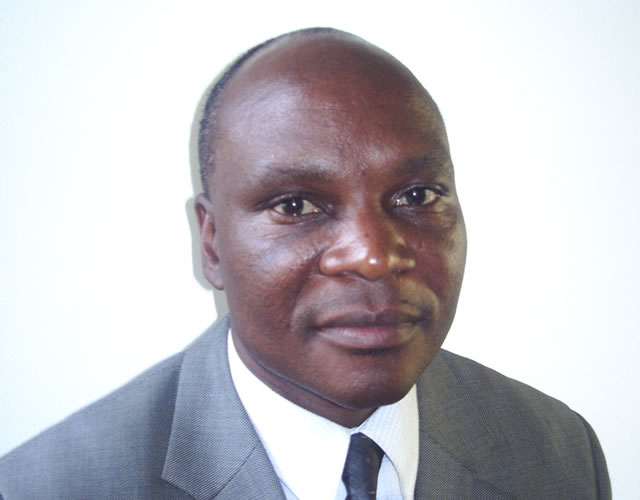
Bulawayo Bureau
THE Mines and Mining Development ministry is working on reviewing the mining claim identification and licencing processes to curb disputes over concessions and open up more opportunities for indigenous players.In an interview in Hwange on Sunday, Mines and Mining Development Minister Cde Walter Chidhakwa said this was part of strategies towards consolidating investor confidence in Zimbabwe to ensure the country derives meaningful value from the exploitation of its mineral resources.
“I have been going through briefings in my ministry and the major thrust is strengthening investment opportunities, which is critical for the success of the country’s economy.
“There is a need to review the licencing processes and try to restructure them so that we increase investor confidence,” said Cde Chidhakwa.
“The issue of claim identification is also critical. We have noted that quite a lot of disputes arise over claims between miners and as a ministry we have had to deal more with litigations from concerned parties.
“We need to address this urgently so that we focus on our key mandate. We have adopted a cadastral system, which enables one to effectively plot or peg his or her claim on the computer and create a map.”
The development comes at a time when there is concern that hundreds of individuals and companies have been holding on to mineral resources for years without utilising them for the benefit of the economy.
Cde Chidhakwa said the new approach would equip the ministry with a database of all claims and make it easy for their identification and distinction.
“This will ease the burden on our mining commissioners and reduce conflict between players. The system will also enhance investor confidence,” he said.
At the moment licence fees for the mining sector range between US$3 000 and US$5 million for big companies while those of small scale miners range between US$500 and US$2 000. Cde Chidhakwa said his ministry would prioritise equipping artesanal or small scale miners, commonly known as amakorokoza, in order to increase their operational efficiency and production output.
“Small scale miners have grown significantly over the years and they are contributing large production volumes and create jobs.
“As a ministry we will not only help formalise their operations but seek to empower them and ensure that they package and market their projects in a competitive manner,” he said.
“As part of this exercise, we have already identified eight locations across provinces, where we will set up service centres for them.
“These will offer milling services and training on how to manage the environment. We will also seek to syndicate them and offer support because it is our obligation to enhance the success of these players in line with our indigenisation policy,” said the Minister.
As a long term strategy, said Cde Chidhakwa, the ministry would set up a national geological database which would be used to determine explorations.
“We need to have a geological database, which will allow us to set up an exploration company that will assist us in expanding the mining sector.
“Of course all these things must culminate in increased production and value addition. Real beneficiation is what we are targeting and we urge our mining companies to venture into value addition instead of exporting raw minerals.
“We will also look at reviving closed mines such as Kamativi,” he said.
Mining is regarded as a key revenue injector in the country’s economy whose contribution is expected to revitalise other production sectors. President Mugabe is on record urging Zimbabwean mining experts in the Diaspora to return home and help the Government in setting up mineral cutting and polishing companies.
Cde Chidhakwa said the recent lifting of European Union (EU) sanctions on the Zimbabwe Mining Development Corporation (ZMDC), was also set to expand the market for the mining sector, especially the sale of diamonds.
“When sanctions were in place it was difficult for the country to trade its diamonds as big diamond buyers were not willing to deal directly with us,” said Cde Chidhakwa.
“The lifting of the embargo means now we can deal directly with the big diamond traders notably the United States, Belgium, India and Dubai.
“We are looking for improvement in sales as a result.”


 Online Reporter