Online Reporter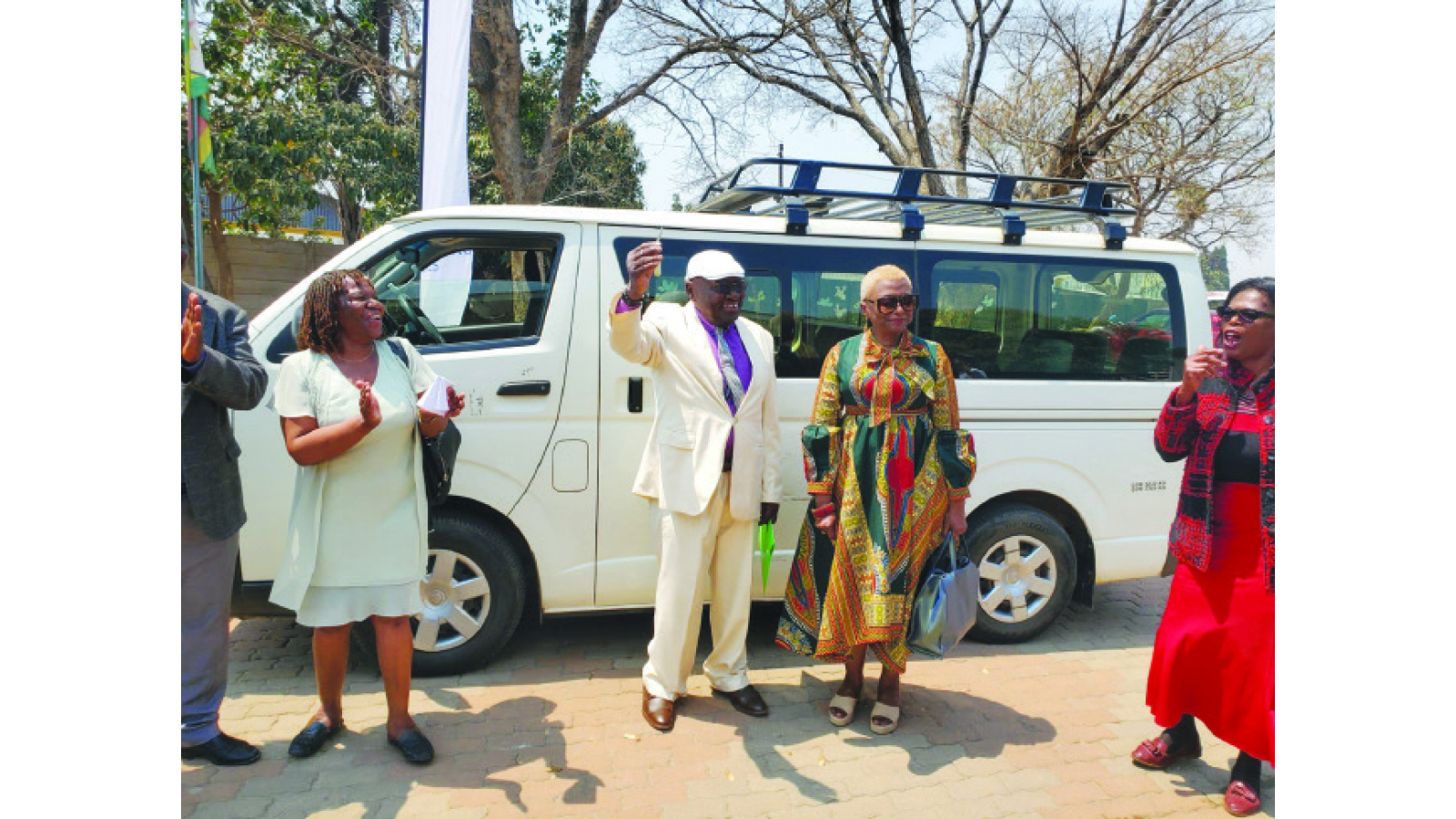
Theseus Shambare
Features Writer
ON Monday, the hall was alive with voices, children singing and clapping hands in rhythm, creating a lively, celebratory beat.
Then all eyes turned to the centre of the stage.
A boy born without legs wheeled himself forward, lifted himself with his arms, and began to dance.
Each sway of his torso, each twist of his shoulders told a story of defiance — defiance of pity, of limitation, of silence.
By the time he spun himself across the floor, the room was in tears and then on its feet.
This was no ordinary Monday at the Jairos Jiri Centre in Southerton, Harare.
Outside, a brand-new minibus gleamed in the sun, a donation from the World Food Programme (WFP).
For many in attendance, the bus was a symbol of not just transport, but access, dignity and recognition for some of Zimbabwe’s most vulnerable citizens.
Founded in 1950 by philanthropist Jairos Jiri, the association was built on compassion for people who society had pushed aside, those living with physical, mental and sensory disabilities.
Over 75 years later, it has grown into one of Zimbabwe’s most enduring institutions of care, running schools, rehabilitation centres and vocational training facilities.
The institution serves more than 16 500 people with disabilities annually through outreach and rehabilitation.
At the Southerton centre alone, over 1 200 children and adults receive education, therapy and care.
Disability affects a significant portion of Zimbabwe’s population.
While the 2022 Population and Housing Census reports about 206 447 individuals aged five and above living with a disability, World Health Organisation estimates suggest that up to 15 percent of the population, over 2,25 million people, experience some form of disability.
Many of these individuals, particularly children, face barriers to accessing education, healthcare and rehabilitation services.
The Southerton centre is both a school and a home.
Its corridors echo with the clatter of crutches, the hum of wheelchairs and the laughter of children who, despite challenges, insist on joy.
But it is also a place of struggle.
The beds are old, many broken.
Medicines are scarce.
Caregivers stretch themselves thin.
Matron Velled Mlagami, who has cared for the children for years, spoke with deep emotion.
“Our children inspire us every day, but we face serious shortages,” she said.
“Many of the beds are broken and some are damaged because our learners struggle with bed wetting. We urgently need mattresses, medicines and other disposables. These children deserve to be cared for with dignity.”
Her voice softened as she revealed the personal sacrifices that come with the job.
“There are times when a child urgently needs medicine and there is none. In those moments, I have had to take money from my own salary to make sure the child is helped.
“Working here is not a job — it is a calling. You cannot do this unless you are prepared to carry their pain as though it is your own,” she said.
For Mlagami and her colleagues, Jairos Jiri is not simply an institution.
It is a family where the staff give not only their time, but also their hearts.
Transport is more than a logistical challenge at Jairos Jiri, for it is a matter of rights.
Under the United Nations Convention on the Rights of Persons with Disabilities (CRPD), which Zimbabwe ratified, persons with disabilities are guaranteed access to education, healthcare and community participation on an equal basis with others.
Wilson Jumbe, rehabilitation technician at the institute, stressed that reliable transport is central to fulfilling these rights.
“Regular therapy is critical for our children. Without a way to reach hospitals, outreach centres, or even participate in school excursions, their right to health and education is compromised.
“This minibus is not just convenience – it is a tool that helps ensure the rights of our learners are respected,” he said.
Disability rights advocate Samantha Sibada, the director of Signs of Hope Trust, echoed the point.
“Access to transport is fundamental. The CRPD reminds governments and societies that inclusion requires removing barriers — and mobility is one of the biggest barriers for persons with disabilities.
“This donation might be small in the eyes of many but a meaningful step toward fulfilling that obligation.”
Sibada reflected on what this means for today’s learners:
“These children are capable, bright, and deserving of opportunities. Inclusion is not charity — it is a right. Transport, education, therapy, all these are fundamental rights guaranteed under the CRPD.”
Until now, one of the centre’s greatest hurdles was moving children safely to hospitals, therapy sessions and community programmes.
Staff and caregivers often struggled to secure vehicles, leading to missed appointments and delayed treatment.
“The bus will ensure continuity of care and allow us to reach more people efficiently,” Jumbe said.
Handing over the keys, WFP Country Director Barbara Clemens said: “This vehicle is a tool to support the daily operations of this incredible institution. I have visited this centre many times, and each visit leaves me deeply moved by the resilience of the learners and the dedication of the staff.
“Their courage and hope for a better tomorrow challenges us to match their spirit with meaningful action. While this minibus eases transport challenges, we know more support is needed — nutritious food, books, furniture and repairs to ageing infrastructure,” she said.
Clemens also highlighted WFP’s commitment to long-term sustainability.
The organisation is aiming to establish a nutrition garden to support school feeding, promote healthy cooking and dietary diversity and improve communal dining spaces to enhance dignity and learning.
Few stories illustrate the transformative power of access better than that of Mr Peter Masendeke, a lecturer at Gweru Polytechnic.
Born with osteogenesis imperfecta, Masendeke spent part of his childhood at Jairos Jiri before excelling at Thornhill High School and later at university.
“At Jairos Jiri, I completed primary school in six years instead of seven. The foundation I got here gave me confidence, but moving to Thornhill High, where I studied alongside able-bodied learners, was another test.
“That adjustment shaped me. It prepared me for the world and today, I am proud to stand not as a victim, but as an academic contributing to this nation,” he said.
As the ceremony ended, the boy who had danced earlier wheeled himself forward, smiling broadly as the crowd cheered.
His performance, paired with the arrival of the minibus, was more than celebration.
It was a statement that no obstacle is too great when society chooses compassion and when rights are recognised.
To pay for his display the boy was awarded with an inaugural ride on the minibus. It was all smiles
The kombi rolled out of the yard, carrying children to therapy and hospital visits for the first time in years without delay.
For some, it was transport.
For others, it was dignity.
And for all, it was a reminder that they are seen, valued and loved.
National president of Jairos Jiri, Dr Alva Senderayi, captured the significance.
“The support of WFP is a testament to the transformative power of partnership and the profound impact we can achieve when we work together.
“To Jairos Jiri, thank you for lighting the first candle. May it continue to shine brightly for generations to come,” he said.
And, as one caregiver whispered while watching the bus disappear down the road, “It is not just transport. It is life.”