

 admin
admin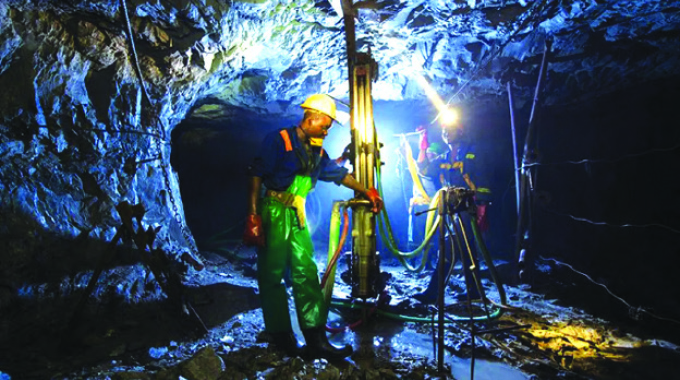
Enacy Mapakame-Business Reporter
ZIMBABWE’s mining sector still presents vast opportunities in exploration and value addition while leveraging on technology to drive production in line with the Fourth Industrial Revolution (4IR) dimension of the policy thrust, a senior Government official has said.
This comes at a time the country is angling for a US$12 billion mining sector annual revenue, a milestone that will make the sector the bedrock of Zimbabwe’s economy.
Permanent Secretary for Mines and Mining Development Pfungwa Kunaka said the 4IR, which comes with the automation of production processes will see the country boost its mineral output and exports.
This would drive growth and enable the country to achieve upper-middle-income economy status by 2030, as espoused in Vision 2030.
Mr Kunaka said this created scope for more investment into technology to boost production as well as enhance safety measures.
“Under the 4IR, we have to adopt the technologies that promote and recognise safety and efficiency,” he said at the 50th Association of Mine Managers of Zimbabwe (AMMZ) conference and AGM in Victoria Falls.
“There is need to invest in modern ICTs (Information Communication Technology). I believe it is clear to all of us that the 4IR is set to promote improved efficiency, increased productivity, greater safety for workers by refusing jobs in dangerous environments, enhanced decision-making with data-based tools and improved competitiveness by developing customised products,” he said.
The conference was held under the theme ‘Transition towards the present day industrial revolution’.
Chamber of Mines of Zimbabwe chief executive officer (CEO) Isaac Kwesu said the mining sector had emerged to become the backbone of the economy and driving its upturn. The sector accounts for an estimated 7 percent of formal jobs directly, over 11 percent of the gross domestic product, and more than 50 percent of foreign direct investment (FDI).
The sector is a significant contributor to infrastructure development.
In the past five years, the sector has grown significantly with exports more than doubling to US$5,2 billion in 2021 from US$2,5 billion in 2017. Exports are projected to further grow to US$6,5 billion in 2023.
However, there are concerns that further growth could be offset by a myriad of challenges that undermine production such as erratic power supplies and high energy costs following a review by Zimbabwe Electricity Distribution Company (ZETDC) of electricity tariff to 12 US cents per KWh from US9 cents per KWh for exporters.
The increase in electricity tariff has seen the proportion of electricity cost to the total cost of production increase to around 19 percent, from the previous 13 percent.
For ferrochrome producers, it increased to 50 percent, from around 33 percent.
Already, a State of Mining Industry Survey Report released earlier this month shows mining executives are now less confident about the prospects of their businesses in 2023 compared to 2022.
Additionally, mining executives have also bemoaned the foreign currency shortfalls and the increased royalty for platinum and lithium by 180 percent and 150 percent respectively.
The increase in royalty, experts say, might worsen the overall cost of production, impacting negatively on the viability of the affected minerals, with some capital projects likely to scale down while others may be suspended.



 Online Reporter