

 admin
admin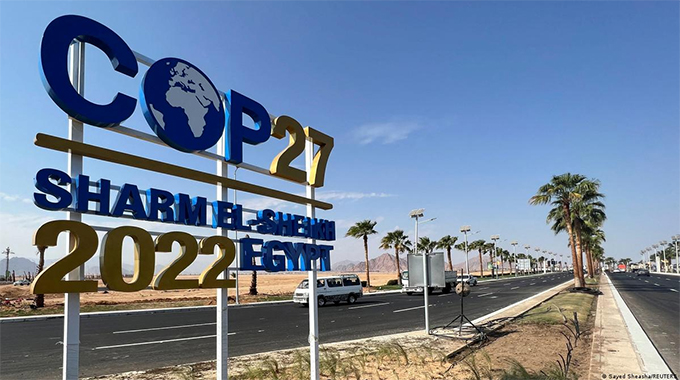
The just ended COP27, the latest UN climate change conference held in Egypt, finally managed 36 hours after it was supposed to close, to come up with a major advance in the battle against the effects of climate change, the Loss and Damage Fund.
This has been a matter of concern for many developing countries for upwards of 30 years, and until the early hours of Sunday morning largely rejected by the developed countries.
Now that has changed, although the devil will be in the details as the fund is operationalised and financed.
The argument for the fund was clear. The vast majority of the extra carbon dioxide in the atmosphere has been pumped there by those countries whose development levels are high, since they used cheap coal and cheap petroleum to create that development, as well as chopping down the large temperate forests that covered much of Europe and the eastern United States, removing a carbon sink while increasing emissions.
However, the main damage from climate change is not, yet at any rate, being faced by these developed countries that largely caused the climate change.
The damage is largely seen in the developing world, the extra droughts in some areas, the extra floods in others, the higher rate of cyclones and hurricanes, and even the rising sea levels that could well wipe some countries, especially in the south Pacific, off the map.
We would agree, from our own experience and from what we see in Africa, that climatic disasters do attract some emergency aid, very short-term aid.
But overcoming the permanent climate damage does require huge investment. Zimbabwe’s case is worth looking at. The main effect of climate change has been to increase the frequency of drought, produce more erratic rainfall seasons, and increase the chances and frequency of highly damaging cyclones.
The Government is dealing with all three, spending a lot of money on building new dams, putting in the irrigation infrastructure, and boosting our warning and disaster rescue and recovery programmes when dealing with cyclones.
But we could do a lot more a lot faster if we had access to a climate loss fund, and that is the main argument for this new fund.
The Loss and Damage Fund is not meant to replace any of the other dedicated funds that are supposed to be operating already, although some are grossly underfunded, to mitigate climate change and to allow developing countries to develop by switching to green energy, which normally requires far higher levels of investment, at least at the beginning, than the old-fashioned coal and petroleum energy. And although there is no an agreement on the fund, there is still a lot of work to be done before anyone sees a dollar.
The COP27 agreement went beyond just an agreement in principle, but not a long way beyond.
The Loss and Damage Fund is supposed to be operational by the time COP28 meets in the United Arab Emirates next year.
But there is no indication of how big the fund will be, that is how much money there will be, who will contribute and in what proportions, the criteria countries receiving help will have to meet and the sort of stuff that the fund will pay for.
So there will be continuous meetings while these rather essential details are sorted out.
Before the new deal, with the European Union taking a lead in the developing world shortly before the scheduled end of the conference and so triggering an agreement that made COP27 productive, there had been concern at COP27 that commitments for previous funding schemes were not being fulfilled.
A great deal needs to be done as the world must keep global warming below the 1,5 degree threshold climate scientists advise is the maximum to avoid a catastrophe.
This is possible, but it does require global action and sometimes this action is not that well co-ordinated. One measure rejected at COP27 was an attempt by India to spread the reduction in fossil fuels, instead of seeing just coal as the total evil, while not pressing hard on petroleum products.
India wanted to see reductions in the use of all fossil fuels, which allowed a fair degree of flexibility as each country or region could push down on one more than others, although the use of coal, petroleum products and natural gas would all be reduced.
A ganging up by the developed countries, which are largely replacing coal with natural gas, and the petroleum exporting countries killed the measure, so coal remains the number one evil, which is wrong. The other problem not being addressed fully is the need for a lot more availability of funding for capital poor countries, the developing world, to switch most of the new energy they need to greed energy.
The problem is that hydro, solar and wind all cost a lot more in the initial investment capital required than coal and gas energy sources, and this is especially so when the intermittent solar and wind generation also requires storage.
In the end, the lower operational costs of these “free-fuel” power stations help to moderate lifetime costs, but that does not alter the fact that someone has to put up a lot more money at the beginning.
Sometimes the developing world is asked to bear more than its fair share of the costs. Take Zimbabwe. We are still a carbon sink rather than a carbon emitter, thanks to the fact that we do try and preserve forests and when we use wood we replace the trees.
We should note that using a log for timber to make roof trusses or furniture retains the carbon withdrawn from the air when the tree grew, and we can continue withdrawing more with the replacement tree. Even burning wood or converting it to paper is carbon neutral so long as the tree is replaced.
But attempts to slow or stop our economic growth to prevent carbon emissions is hardly a fair policy.
We can grow our economy rapidly, and actually decrease our per capita carbon footprint while doing so, but we need that extra money to fill the gaps between carbon-based development and green development.
We are willing.



 Online Reporter