Online Reporter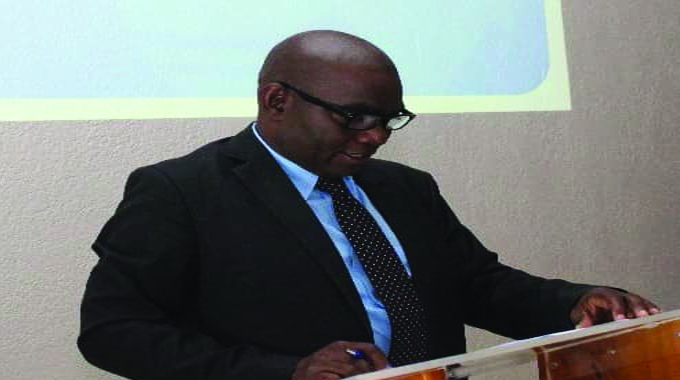
Patrick Chitumba, [email protected]
MINING businesses must prioritise community engagement and reinvest proceeds to ensure locals benefit from resource exploitation and feel the impact in their daily lives.
Director of Provincial Co-ordination in the Midlands Province, Mr Kudakwashe Machako, said this during a workshop organised by the Centre for Conflict Management and Transformation (CCMT) on mining-induced displacement and best practices development in Gweru on Wednesday.
District development co-ordinators, chiefs, representatives from the Zimbabwe Miners Federation and the Environmental Management Agency from the Midlands Province attended.

“Under the astute leadership of President Mnangagwa, the Government has partnered with the Centre for Conflict Management and Transformation to provide a platform for interrogating pressing and often overlooked issues surrounding mining activities in Zimbabwe, particularly mining-induced displacements,” he said.
Mr Machako said the discovery of mineral resources across the country has contributed significantly to the achievement of national priorities through job creation, economic growth and poverty alleviation.
“These positive outcomes are undoubtedly attributable to the policies the Government has put in place, particularly through the National Development Strategy 1, underpinned by the goals of Vision 2030, which have been crafted to help the nation attain an upper-middle-income economy by 2030 under the leadership of President Mnangagwa,” he said.
Mr Machako explained that mining activities within communities often expand, resulting in conflict related to displacements. If not handled procedurally and properly, these conflicts can disrupt the lives of local communities.
“While mining developments undoubtedly offer clear opportunities, they also bring with them a range of social, economic and environmental consequences that can impact local communities for generations,” he said.

This makes it imperative to craft strategies that manage the conflicts arising from the often-indistinguishable acts of planning and the actual occurrence of development in Zimbabwe.
“I am particularly pleased that the focus of this dialogue is not simply to identify these conflicts, but to engage in meaningful dialogue aimed at building on the guidelines and recommendations to develop best practices that will ultimately reduce the negative outcomes resulting from mining developments,” said Mr Machako.
He reiterated the Government’s commitment to balancing mining development with the rights and well-being of affected communities.
This development agenda, he noted, prioritises inclusive, people-centred growth, with the devolution process providing a mechanism for provinces to plan and prioritise development projects that leverage the comparative and competitive advantages of each region, while ensuring that the people remain at the centre of development.
“It’s crucial to incorporate affected people into development projects so that they can directly benefit and appreciate the purpose of the changes taking place in their area,” he said.
“If their sources of livelihood are impacted, new sources must be provided. If relocation is necessary, we must consider how to relocate affected people in a way that restores their lives, livelihoods and way of life, ensuring that they don’t feel aggrieved.”
Mr Machako said this requires a holistic approach to development that includes economic, social, environmental and cultural considerations.
“Throughout this process, we aim to identify best practices that can guide us and address challenges and gaps that may need attention in the future,” he said.

“This will help us improve our approach to managing mining-induced displacements (MIDs) and ensure their alignment with the inclusivity goals of our national development agenda.”
CCMT co-ordinator, Mr Xavier Mudangwe, said efforts are underway by the Government to diversify the mining sector and add value to mineral exports.
“These include initiatives to process minerals locally, thereby increasing their value before export and creating employment opportunities,” he said.
“These strategies highlight the Government’s commitment to leveraging the mining sector as a cornerstone for economic recovery and sustainable development.”
Mr Mudangwe said mining-induced displacements remain one of the most profound issues requiring collective attention, responsibility and action.
“As the Centre for Conflict Management and Transformation, our work seeks to ensure that development is inclusive, equitable and sustainable through the peace-building initiatives we conduct,” he said.
“Today, we are here not just to discuss the negative consequences of mining-induced displacement but to actively work together towards developing a Best Practice Handbook on Mining-Induced Displacements.”