daniel chigunwe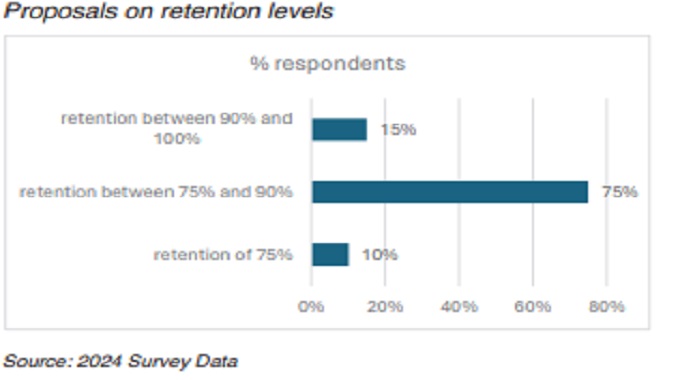
Nelson Gahadza
Zimbabwe’s mining industry says the current 75 percent foreign currency retention is inadequate to meet operational requirements and funding of expansion projects.
The Chamber of Mines of Zimbabwe, in its mining prospects 2025 report, said survey data shows that the average foreign exchange retention that meets the mining industry’s foreign currency requirements is at least 85 percent.
“Respondents in PGMs, lithium, and base metals highlighted that the 75 percent retention is now being applied on a shrinking base as mineral revenues were subdued due to softening commodity prices,” reads the report.
The Chamber noted that the retentions were under pressure as payment of electricity is wholly in foreign currency while most suppliers of goods and services are now demanding payment for goods and services exclusively in foreign currency.
“Labour unions are now demanding payment of wages wholly in foreign currency and the high royalty payable wholly in foreign currency.”
Chamber of Mines said the majority of respondents recommended a price-linked royalty, arguing that it will go a long way in balancing government revenue and mining sector viability.
According to the report, about 98 percent of the mining industry is required to surrender 25 percent of their export proceeds to the government in exchange for ZiG, liquidated at the prevailing official exchange rate.
“Of major concern to respondents is that they source local inputs that are priced at significantly depreciated parallel market rates, while their surrender portion is liquidated at the overvalued official exchange rate,” reads the report.
In terms of access to foreign currency, the mining industry measured index for prospects for improved access to foreign exchange for 2025 is -29.4, meaning that mining executives expect access to foreign currency to deteriorate in 2025.
The Chamber of Mines said the mining executives indicated that they were facing difficulties in accessing adequate foreign currency to meet their requirements.
The report noted that in the outlook, the majority of respondents, 94 percent, reported that they expect access to foreign currency to either worsen or remain depressed, as was the case in 2024, while 6 percent of respondent executives indicated that they expect access to foreign currency to be better in 2025.



 Online Reporter