admin
admin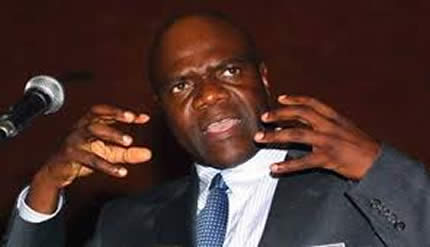
Deputy Prime Minister Arthur Mutambara said this at the Zimbabwe National Chamber of Commerce annual congress in Victoria Falls last week responding to questions from delegates on why Zimbabwe remained poor despite the country’s abundant natural resource endowments.
The congress, held from June 12 to June 14 2013, was held under the theme “The Roadmap to Zimbabwe’s desired future, defining possibilities that deliver value”.
DPM Mutambara said there was evidence of oil in Angola and evidence of diamonds in Botswana, but Zimbabwe, like many other resource rich African countries, had no evidence of its abundant natural resources.
“One of the major problems we have around natural resources is that the laws obtaining in are detrimental to the Africa, they are detrimental to the countries. They are colonial. When we had our independence in Ghana in 1957 we changed political laws, human rights laws, we didn’t touch the natural resource laws,” the DPM said.
“The same applies to Zimbabwe you look at our mining law in 1980 democracy, human rights and voting. South Africa, 1994, again same problem, what is the major problem, the right to mine is not linked to the asset underground, which means an investor or prospector is given a claim for free.
“They can take that claim, to show that it is fair for them to take that claim for free, they can take that claim and list it on the stock exchange in Australia or Canada and borrow US$2 billion on the strength of the claim, which means others know the value of the claim, we do don’t, what we call information asymmetry,” DPM Mutambara said.


 Online Reporter