Rutendo Nyeve, [email protected]
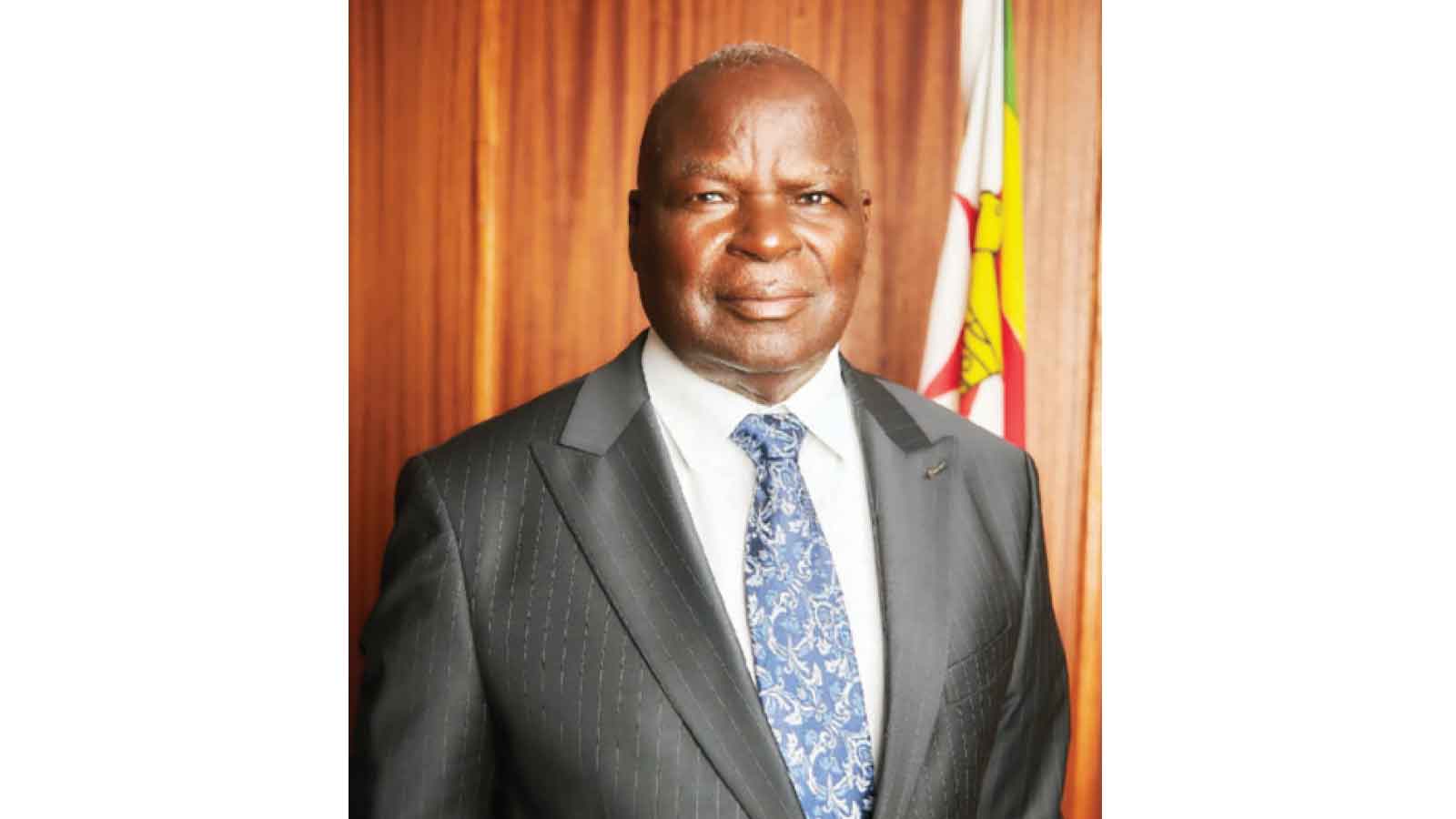
ZIMBABWE’S comprehensive energy policy reforms are unlocking the full potential of the mining sector, driving a new wave of investment and positioning the country for industrial transformation, Energy and Power Development Minister, July Moyo, has said.
Addressing delegates at the recent Annual Chamber of Mines Conference in Victoria Falls, Minister Moyo detailed how deliberate policy interventions initiated under President Mnangagwa’s leadership across the energy value chain are creating a conducive environment for mining expansion, beneficiation and value addition.
Since the coming in of the Second Republic under President Mnangagwa’s administration in 2017, Zimbabwe’s energy sector has seen major milestones aimed at ensuring power self-sufficiency and driving the country’s Vision 2030 industrialisation goals.
Among the top achievements has been the commissioning of the Hwange Units 7 and 8 Expansion project in 2023, which has added 610MW to the national grid, marking one of the biggest power infrastructure leaps since independence.
A New Glovers Solar Plant (Munyati) was recently commissioned under Phase One of the 10MW solar plant in Kwekwe, with ongoing efforts to scale the project towards a 110MW capacity to boost renewable energy.
A new Titan New Energy Thermal Plant groundbreaking ceremony was led by President Mnangagwa in Hwange in
December 2024 for a US$1 billion, 720MW waste-to-thermal-coal power plant, backed by an additional 200MW solar plant in Gweru.
In support of the private sector-driven projects, which have also helped ease load-shedding, the Zimbabwe Energy
Regulatory Authority (ZERA) has slashed licensing and regulatory timelines to 90 days or less to fast-track energy investments.
Government on its part is actively pushing for joint-venture projects such as the Batoka Gorge Hydro-power project that it intends to implement with Zambia and has a potential of about 2 400MW.
The mining sector, which accounts for approximately 22 percent of national electricity consumption, stands to be the biggest beneficiary of the Government’s ambitious energy agenda, anchored on the National Energy Compact, a
five-pillar strategy expected to mobilise US$9 billion in sector investments.
“Energy is not merely an operational input but a strategic enabler of mineral exploration, extraction, beneficiation, value addition, processing, and global competitiveness,” said Minister Moyo.
He said rising mining sector demand estimated between 600 and 700 megawatts daily by 2045 requires a reliable, affordable, and secure energy supply.
In response, Government has implemented supportive policies allowing mining companies to develop captive power plants for self-supply, enter power purchase agreements with independent producers, and co-locate
generation facilities near processing plants to reduce transmission costs.
The new energy framework, formalised through regulations introduced this year, reduces financing risks for large-scale self-generation projects and provides regulatory certainty for mines expanding their power generation capacity.
Major mining houses are already responding, with Zimplats commissioning a 35MW solar plant and Caledonia Mining’s Blanket Mine now running a 12,2MW solar facility.
On the petroleum front, Minister Moyo said the Government had maintained security of supply despite global disruptions.
He revealed that following the Middle East conflict, President Mnangagwa directed the ministry to prioritise fuel security.
“We don’t want any queues anymore after the President eliminated them. But there is the cost side of things that we are tracking, and we hope that we can reduce the costs,” Minister Moyo said.
This week, both petrol and diesel fell below US$2 per litre following the reopening of the Strait of Hormuz and stabilisation of global crude oil markets. The Government has also upgraded the Beira-Harare fuel pipeline throughput from 2,19 billion to 3 billion litres annually, with plans to expand capacity to 5 billion litres, securing
diesel supplies for mining machinery and haulage trucks.
The discovery and exploration of gas resources in the Cabora Bassa Basin, where the Mukuyu find was ranked as the second-largest hydrocarbon discovery in Sub-Saharan Africa in 2023 also presents a game-changing opportunity for energy-intensive mining and beneficiation industries.
“The resource base is substantial, with an estimated 4,2 trillion cubic feet of gas and 264 million barrels of condensate,” Minister Moyo said.
This represents enough gas to power a 500MW power station for 50 years. The upcoming Musuma-1 exploration well, scheduled for the second half of 2026, targets an estimated 1,2 trillion cubic feet of gas.
Minister Moyo reaffirmed Government’s commitment to local beneficiation, noting that 10 minerals, including lithium, platinum group metals, diamonds and coal have been declared strategic.
Raw ore exports, particularly for metallurgical coal and lithium, have been restricted to promote domestic processing.
The policy is yielding results.
In April this year, Africa’s first lithium sulfate exports departed from Zimbabwe, commanding significantly higher value than previously exported concentrate.
Minister Moyo said further processing capacity is being developed, with Mutapa Energy Resources preparing a feasibility study for a lithium processing plant linked to the Sandawana Mine.
“The future of Zimbabwe’s mining sector is inseparable from the future of its energy sector. Reliable, affordable, and sustainable energy is the foundation upon which beneficiation, industrialisation, and economic transformation will be built,” Minister Moyo said.
He called for enhanced collaboration among mining companies, energy developers, financiers, and regional institutions.
“Zimbabwe is open for business and ready to partner with investors seeking opportunities in both the mining and energy sectors,” he said.
Together, he said, the country can build an energy-secure mining industry that drives industrialisation, creates jobs, increases exports, and delivers shared prosperity for all Zimbabweans.