admin
admin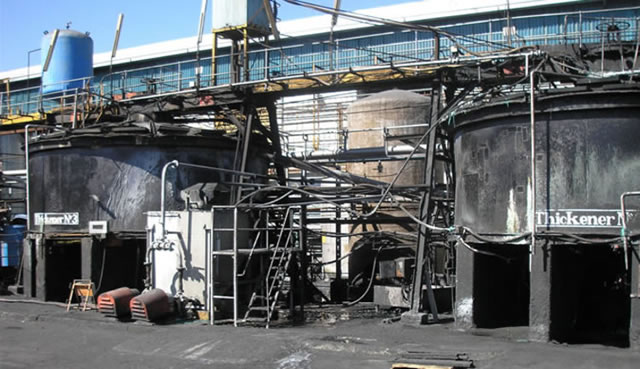

Acting Business Editor
ZIMBABWE’S mining industry is projected to grow by 11,4 percent on the back of planned investments largely driven by strong performance in some of the minerals.Strong performance is expected in minerals such as gold, diamonds, nickel and coal.
“The mining sector is projected to grow by 11,4 percent on the back of planned investments and largely driven by strong performance in gold, diamonds, nickel and coal. Government projects that gold production in 2014 will increase by 7,1 percent to 15 tonnes from this year’s target of 14 tonnes,” said Finance and Economic Development Minister Patrick Chinamasa while presenting the 2014 national budget.
He said gold production in the first 11 months of the year declined by 5,4 percent to 12,9 tonnes compared to the same period in 2012.
Minister Chinamasa attributed the underperformance of the gold sector to the leach tank accident at Freda Rebecca Gold Mine, unreliable power supply and the global economic challenges.
“The under-performance was attributed to the accident at Freda Rebecca, escalating operational costs, unreliable power supply, and falling international gold prices, reaching a low of $1,198 per ounce in June 2013,” he said.
Due to the above situations, total gold output for the year has been revised downwards from 15 tonnes to 14 tonnes. He said diamond production during the first quarter was largely subdued at 5,9 million carats due to the gradual transition from alluvial diamond mining to conglomerates which are expensive to extract.
In this light, this year’s output target for the mineral had also been revised downwards from 12,5 million carats to 11 million carats.
In 2014, diamond production is projected to increase to 12 million carats benefiting from the recent removal of the Zimbabwe Mining Development Corporation from the illegal sanctions list by the European Union.
Nickel output for the first 11 months of 2013 was 12,575.49 tonnes, compared to 7,500.00 tonnes produced in the same period in 2012, representing a 68 percent increase in the mineral’s output.
The increase in nickel production was mostly attributed to strong performance by Bindura Nickel Mine (BNC), which resumed operations in April 2013 with a revised mining plan, which involves targeting high grade ore.
“Since resumption of operations, BNC has been steadily increasing production at an average of 350 tonnes per month for the first five months to August 2013.
“In 2014, nickel output is projected at 15 tonnes, mainly on account of recapitalisation efforts at BNC, as well as rising output from PGM operations through expansion of existing and new projects,” he said.
More so, cumulative coal output for the eight months to August 2013 was 2.2 million tonnes resulting in an upward revision of the initial annual target of two million tonnes to three million tonnes.
The Government projects that coal output will reach four million tonnes in 2014 largely underpinned by ramping up of production by a new entrant, Makomo Resources.
In terms of platinum production, Minister Chinamasa indicated that the commissioning of the concentrator at Ngezi Mine under Phase II in April this year boosted Zimplats output by 48 percent.
The other projects under Phase II expansion project at the mine are set for completion in the first quarter and this is expected to further enhance platinum output.
The 2013 platinum production target was reduced to 13,000 kilogrammes from the initial target of 11,500kg of which 76 percent of the target has been achieved in the first nine months of the year.



 Online Reporter