Vusumuzi Dube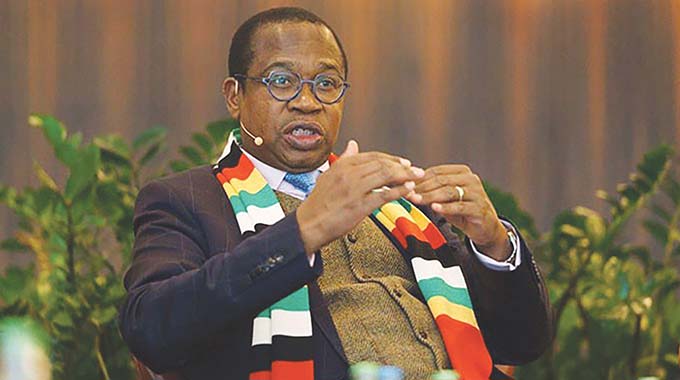
Rutendo Nyeve, Business Reporter
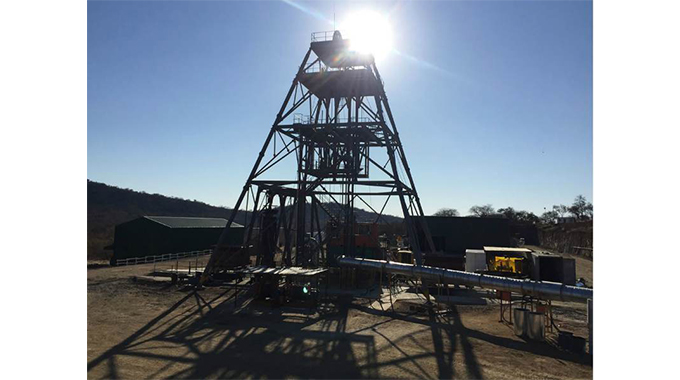
THE Minister of Finance and Economic Development Professor Mthuli Ncube has tipped the country’s mining, tourism and construction sectors to drive the country’s Gross Domestic Product (GDP) growth.
Measures to halt inflation are bearing fruit and as the economy responds to the post Covid-19 period.
The GDP is the total monetary or market value of all the finished goods and services produced within a country’s borders in a specific time period. It is a broad measure of overall domestic production and it functions as a comprehensive scorecard of a given country’s economic health.
Speaking during a public lecture at the National University of Science and Technology in Bulawayo recently, Professor Ncube highlighted that the domestic economy was slowly picking up pace as compared to 2021.
“Domestic economy continues to grow, albeit at a slower rate when compared to the 2021 on account of global disturbances and other adverse domestic factors. GDP growth for 2023 is estimated at 3,8 percent driven by higher growth expected from mining, accommodation and construction sectors,” said Professor Ncube.
The projected growth is expected to be cognisant of the global economic growth which is also expected to grow faster than the preceding year owing to the reopening of the markets.

“Global economic growth is now projected to slightly grow faster at 2,9 percent in 2023 than earlier projected 2,7 percent in October 2022, an upward revision of 0,2 percentage points is attributed to markets reopening from Covid-19 paving way for a faster than expected recovery and then an increase to 3,1 percent in 2024.
“However, the global growth is expected to continue to be weighed down by tightening of global financial conditions associated with high interest rate hikes by most central banks and the negative spill-over effects from the geo-political tensions,” said Professor Ncube.
Professor Ncube said the growth in the Sub-Saharan Africa is expected to recover slightly from 3,7 percent initially projected for 2023 to 3,8 percent and to further improve up to 4,1 percent in 2024.

Meanwhile, Professor Ncube said the inflation that was on the rise during the first half of the year 2022 has since been reversed following tight fiscal and monetary measures instituted by Government and the Monetary Authorities.
“Month-on-month inflation declined from 30,7 percent in July to 1.1 percent in January 2023, whilst annual inflation also fell from 285 percent in August 2022 to 229,8 percent in January 2023.

“In order to stabilise the economy, measures were introduced and these include further tightening the monetary policy, containment of money supply growth, introduction of gold coins and review of Government contracts and procurement processes,” said Professor Ncube. -@nyeve14



 Online Reporter