dyton mupawaenda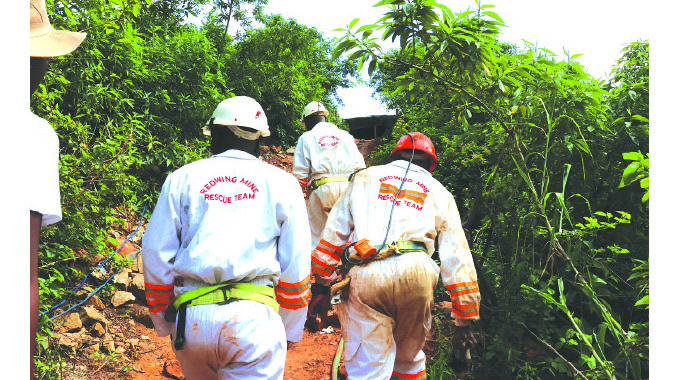
Gibson Nyikadzino-Features Correspondent
Carlos Mutena, 26, was an adventurous lad.
While waiting for his 2016 ‘A’ level results, he found himself in Harare through the benevolence of his uncle who wanted him to learn a trade in art to earn a living.
From rural Zvimba, Harare’s dazzling city lights enlightened him literally and metaphorically.
In no time, he was helping his uncle with assembling metal art objects, pocketing decent amounts for someone who was anticipating to go to university.
His ‘A’ Level results were however dismal. He quickly dismissed anything with an academic flair in his way.
In mid-2018 he was lured by friends and ended up between Chegutu and Kadoma as an artisanal gold miner.
The January 2021 Elvington Mine shaft collapse that claimed three lives and trapping other artisanal miners served as the divorce note.
“My adventures and experiments with life stopped. I witnessed that accident and from there I quit illegal gold mining. Ihondo yemagandanga (Illegal gold mining is like engaging guerrilla warfare), you are not sure when you are safe and when the next attack might happen. It is a dice with death because the practices are not standard.
“You can lose a life in the twinkling of an eye. The accidents are so common, but it is better to be safe than risk going into that world of the unknown on the road to riches,” said Mutena.
The longing to acquire money through illegal gold mining no longer has space in his head. He quit the trade cold turkey!
“What we were only interested in with my colleagues was money. There were a lot of shortcuts because there is no standard operating procedure. But after witnessing the Elvington Mine accident, I am not going back.”
Since that accident, Mutena is back working with his uncle. He has no regrets for his adventures or misadventures.
The Elvington Mine accident was preceded by the Battlefields Mine disaster near Kadoma that claimed more than 20 lives and the Jumbo Mine disaster that claimed eight lives, both in 2019.
Last October Government halted efforts to recover 16 bodies of the 20 artisanal miners killed at Bay Horse mine in Chegutu as the risk of more serious injuries and deaths among the recovery teams was considered too high.
Mining is an essential component of human development since it is key in providing necessary resources to support economies and technological development. However, it is considered a sector with a high level of serious accidents compared to all other sectors.
The search for minerals, however, is not always without risk, making mining safety a major priority.
In 2023, Zimbabwe recorded 237 mining related deaths from 212 accidents, an increase from 139 fatalities recorded in 2022 from 121 accidents.
The year 2024 also commenced with a frightening take-off when 15 miners were trapped for four days when a shaft collapsed at the Redwing gold mine in Penhalonga Mutare.
An operation rescued all the 15 miners and no death was recorded.
The significant loss of life and rising mining accidents have mainly been attributed to the unregistered artisanal miners’ disregard of laws, lack of skills and technical expertise required to make their work environment safe.
Of the recorded 2023 accidents, 18 percent were related to large-scale operations, according to the Chamber of Mines’ recent State of Mining Industry Survey Report for 2024.
“This figure (237 deaths) is scary. From the 212 recorded accidents, most of these occurred in unregistered mines,” said Mr Michael Munodawafa, the chief Government mining engineer.
Measures to ensure safe mining practices are already in place through the Mining (Management and Safety) Regulations (SI 109), 1990.
The legislation outlines expanded measures that include the protection of surface and underground working areas, operation and handling of mining machinery, mine support and ventilation, gases and dust, mine inspection and accidents, procedure of entering abandoned or disused mines and general safety standards.
“The current surge in mining related accidents is mainly due to failure by miners to adhere to set safety regulations.
“Now, besides carrying out mining inspections, Government’s extended structure that reflects having officers be deployed in all mining districts to improve on monitoring, supervision and seamless communication of Government policy right to where mining activities are taking place,” the Deputy Mines and Mining Development Minister Polite Kambamura highlighted.
According to Dep Min Kambamura, of immediacy is ensuring that all mining operations are supervised by competent mine managers conversant with the provisions of the Mining (Management and Safety) Regulations (SI. 109), 1990; Explosives Regulations, (SI. 72), 1989; Mines and Minerals Act (21:05) and other legislative frameworks that govern the mining industry.
“To minimise mining accidents, a series of safety training and routine mine inspections are being undertaken to ensure compliance and promote environmental sustainability.
“More mining inspectorate teams are to be deployed for safety awareness campaigns on accident preventive measures and safety training. Otherwise, those embarking on unsafe mining methods, illegal mining, mineral unaccountability and environmental degradation will face severe penalties.”
A safe working environment is an enabler to achieving gold output.
According to data shared by Fidelity Refineries, Zimbabwe’s 2023 gold output fell by 15 percent to 30.11 tonnes compared to an all-time high of 35 tonnes in 2022. Last year Government had set a target of 40 tonnes.
Given the increasing global demand for valuable metals and minerals, Zimbabwe’s mining associations are pledging a shift towards more collaboration to prioritise safety and environmental protection to boost social progress and economic stability.
In a quest to promote sustainable and profitable small scale mining, Zimbabwe Miners Federation (ZMF) chief executive officer Mr Wellington Takavarasha says his organisation is teaching artisanal and small scale miners (ASM) compliance with regulatory frameworks.
He distinguished illegal miners from ASM, saying the later was more cautious about safety and the environment compared to the former who even during the day “walk around with explosives”.
“What is unfortunate is that most accidents that occur are caused by illegal mining activities. Illegal miners (makorokoza) have shown that they do not care about safe mining practices because they will be scared of law enforcement agents. They only think of running away from the police or how to evade police, that is why most work overnight.
“They operate clandestinely and in the end we see how their methods significantly cause environmental damage because all they are concerned with is money. That is unfortunate because their practices are unsafe.
“Our members are not illegal miners. They are people who are mining sustainably and profitably to contribute to national economic development. To avoid accidents, we carry out workshops on safety and raise awareness through material we get from the Ministry of Mines,” explained Mr Takavarasha.
For a shared vision with Government, ZMF looks forward to embracing technological developments that Mr Takavarasha says “play a pivotal role in the prevention of mining hazards thereby improving efficiency in ASM operations.”



 Online Reporter