

 admin
admin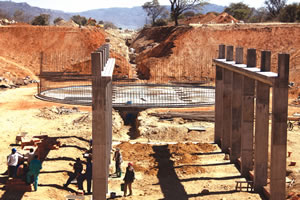
The city in recent years has been calling on the Minister of Water Resources Management and Development, Dr Samuel Sipepa Nkomo, to declare Bulawayo a critical water shortage area and pave way for emergency funding to complete water projects in the city.
Dr Nkomo has always maintained that there is no water crisis in Bulawayo.
“How critical should the situation be before Government decides that the city has become a disaster area? In a few days, we might be getting water once a week. What is stopping Government from making the declaration?” asked a participant.
Deputy Minister Zvidzai responded with the usual rhetoric, that the situation was not peculiar to Bulawayo as other cities like Harare, Kwekwe and Gweru as well as the town of Kadoma are in the same situation.
“It is frustrating to always have comparisons with other cities popping up whenever the Bulawayo water issue is raised.
“If those other cities have the same problem, why have we never heard them complaining? Why does the Government not focus on Bulawayo, which is making noise about its crisis, declare it a disaster area and move on to another city after solving the problem? What is being done to address the ‘national’ problem?” charged another participant.
Deputy Minister Zvidzai then said: “We have to appreciate that the country is emerging from an economy that has been performing at zero. Despite that, Government remains committed to solving the water problems in Bulawayo as evidenced by the $40 million that it has pumped into the Mtshabezi Dam project.”
The stakeholders complained that the Mtshabezi project was not benefiting the city, as the water has been idle since the dam was completed in 1994.
They argued that by the time the dam got connected, the city might have outgrown it, rendering it almost useless.
After a salvo of questions fired from around the room, pressing for direct answers, the Deputy Minister ended up acknowledging that the water problem in Bulawayo was unique.
“I have to admit that the situation in Bulawayo is worse than everywhere else. Bulawayo does not have raw water, while other cities have a problem of treating the water. I do not know what the argument is for not declaring the city a disaster area. Obviously there are some pros and cons that have been assessed to reach the conclusion,” said Deputy Minister Zvidzai.
Speaking at the same occasion, Bulawayo’s Mayor, Clr Thaba Moyo said a resolution had already been passed at council, declaring the city a critical water shortage area.
“We have already declared ourselves a water disaster area. We have sent the resolution to the Minister of Water and are awaiting his approval,” said Clr Moyo.
Bulawayo’s Acting Town Clerk, Mrs Sikhangele Zhou said every time the city raised the water shortage issue, they were accused of being cry-babies.
“We do not want to alarm people needlessly but we need to alert them to our plight. Last year when we talked of the need to urgently complete Mtshabezi, we were called alarmists. Now we have been proved right,” said Mrs Zhou in apparent reference to Dr Nkomo’s statements last year.
Mr Eddie Cross, the Member of Parliament for Bulawayo South, said this year the city’s five supply dams had experienced their worst performance in 10 years as they had received a combined inflow of about one percent of their capacity.
“We can no longer rely on rains alone now. We cannot wait for the Gwayi-Shangani Dam as it might take 10 years. We need an immediate solution,” said Mr Cross.
The press conference was held after a water summit in which the Bulawayo City Council met potential donors to explain the extent of the water crisis.
Another summit, in which donors are expected to make pledges towards solving the problem, has been slated for January.
Bulawayo has decommissioned two of its supply dams, Upper Ncema and Umzingwane.
Lower Ncema could be decommissioned before Christmas while Inyankuni is likely to be decommissioned early next year.
This would leave the city relying on Insiza Dam and boreholes at Nyamandlovu Aquifer.
The Mtshabezi Dam project, viewed as a short term solution to the city’s water problem, has missed so many completion deadlines that residents have become skeptical about relying on it.



 derick.khumalo
 Online Reporter