Chronicle Editor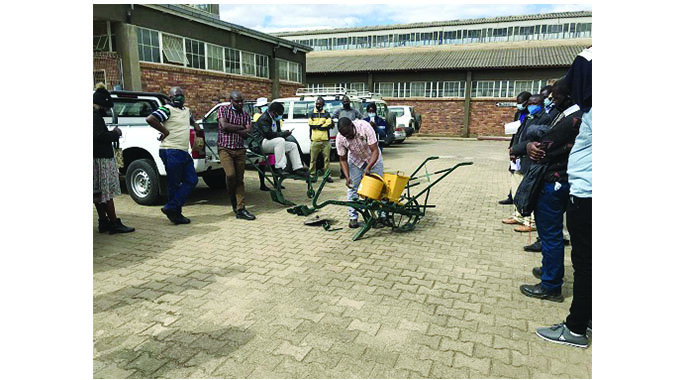
Sukulwenkosi Dube-Matutu, Chronicle Reporter
THE Ministry of Lands, Agriculture, Water and Fisheries has launched a nationwide training under the mechanised Pfumvudza/Intwasa programme to prepare farmers for the upcoming farming season which is targeting an increased production output and seeks to promote conservation farming.
Government has launched the second Pfumvudza/Intwasa phase which seeks to increase household and national food security through farm mechanisation.
Speaking during a training programme for Matabeleland South Province district extension officers in Gwanda yesterday, farm machinery trainer in the department of mechanisation, Mr Keifas Murira said district extension workers from four provinces had been trained so far.
He said the purpose of the training was to equip trainers before they trained farmers on how to use conservation farming equipment.
“We are training extension workers who will then disseminate information to extension workers at ward level who will then pass the information on to farmers. As the department of mechanisation, we are promoting the concept of bringing in more options to mechanise the Pfumvudza programme. We are introducing animal draught systems, manual systems as well as motorised systems.
“We are trying to reduce workload on the farmers as we are mechanising. As we are increasing the area planted under Pfumvudza we want to ensure that farmers don’t have a lot of workload. These mechanised systems also reduce the time as the window period of planting is very small. This is in preparation of the 2021-22 farming season. We want to ensure that come planting time every farmer will be trained on mechanised options and they will be able to choose which option will be favourable to them,” he said.
Mr Mthokozisi Nxumalo from Zimplow said they were coming in as manufacturers of equipment which could be used by farmers to ensure conservation farming. He demonstrated to extension workers how some of the equipment could be used.
Mr Nxumalo said the equipment ensures minimal soil disturbance and can perform multiple functions at the same time. He said examples of the equipment included ripper planters/ direct seeders, hand planters, jab planters animal drawn planters.
Mr Nxumalo said with the direct seeder, a farmer can open farrows while planting and also applying fertiliser at the same time. He said the equipment had been there but farmers were not utilising it. Matabeleland South acting Provincial Agricultural Officer, Mr Mkhunjulelwa Ndlovu said they will start training farmers from the province on the mechanised Pfumvudza/Intwasa programme at the beginning of next month.
He said they were targeting about 100 000 farmers compared to last year’s 87 000. “This season we want each farming household to have a minimum of five plots compared to last season where they had three plots each. We urge seed companies to deliver the right variety for the region. Last year farmers were complaining about the quality of seed,” he said.
Mr Ndlovu said the target was for all farmers to start planting in October.
Matabeleland South Minister for Provincial Affairs and Devolution Abedinico Ncube urged the extension workers to extensively train farmers in order to effectively take up the Pfumvudza/Intwasa Programme.
He also urged extension officers to equip farmers with proper farming techniques.
Minister Ncube said the Pfumvudza/Intwasa programme was crucial as it brought significant increase in food production. Having gone through one of the most bountiful harvests brought by plenty of rains and the conservation agricultural technique, the Government has now set sight on implementing a farm mechanisation driver for the next summer cropping season.
Government aims at maximising the beneficiaries from three million to five million households countrywide.
This comes after the first phase was a success as there was timely distribution of farming inputs and good rains leading to over a million tonnes of maize.
Last year Government introduced the Pfumvudza/Intwasa programme to counter climate change-induced weather patterns that had seen the country enduring successive years of drought that resulted in poor harvests. -@DubeMatutu



 Online Reporter