admin
adminSaul Gwakuba Ndlovu
There have lately been several occasions involving the Zimbabwean Minister of Arts, Sports and Culture, Cde Andrew Langa, at one of which the director of Amakhosi Theatre and Culture Centre, Cont Mhlanga, strongly criticised Cde Langa’s ministry for lack of active interest in the country’s arts industry.
Until the later part of last year, Cde Langa’s ministry was an integral department of the Ministry of Education, Sports and Culture, headed by David Coltart during the Government of National Unity (GNU).
It was a very good decision that sports, arts and culture were placed under a stand-alone ministry as they represent a wide range of human activities.
Culture, for example, is, in fact, a major component of every ethnically identifiable community’s very existence. By culture we mean arts and other manifestations of human intellectual achievement.
Art refers to either human creative skill or its application, or various branches of creative activity in the production of ideas and emotions expressed by means of music, painting and writing taken collectively.
Drawing is also a part of art and so is drama and poetry, story-telling and pottery, woodworking and other manual skills that enable a person or persons to make a practically usable or visually admirable product.
The word “arts” when used in connection with culture occurs in the well known phrase “the two cultures,” arts and science.
That is not, however, our concern here.
We are interested in culture as an everyday part and parcel of our daily environment. It is in that context that the author of this article is discussing the role of Cde Langa’s ministry in the promotion and protection of Zimbabwe’s culture.
We should understand that Zimbabwe is a multi-ethnic (multi-tribal) nation. It has various ethnic groups.
Individual Zimbabweans are products of respective cultural environments, beginning with the familial culture, through that of the local ethnic community, up to the national level.
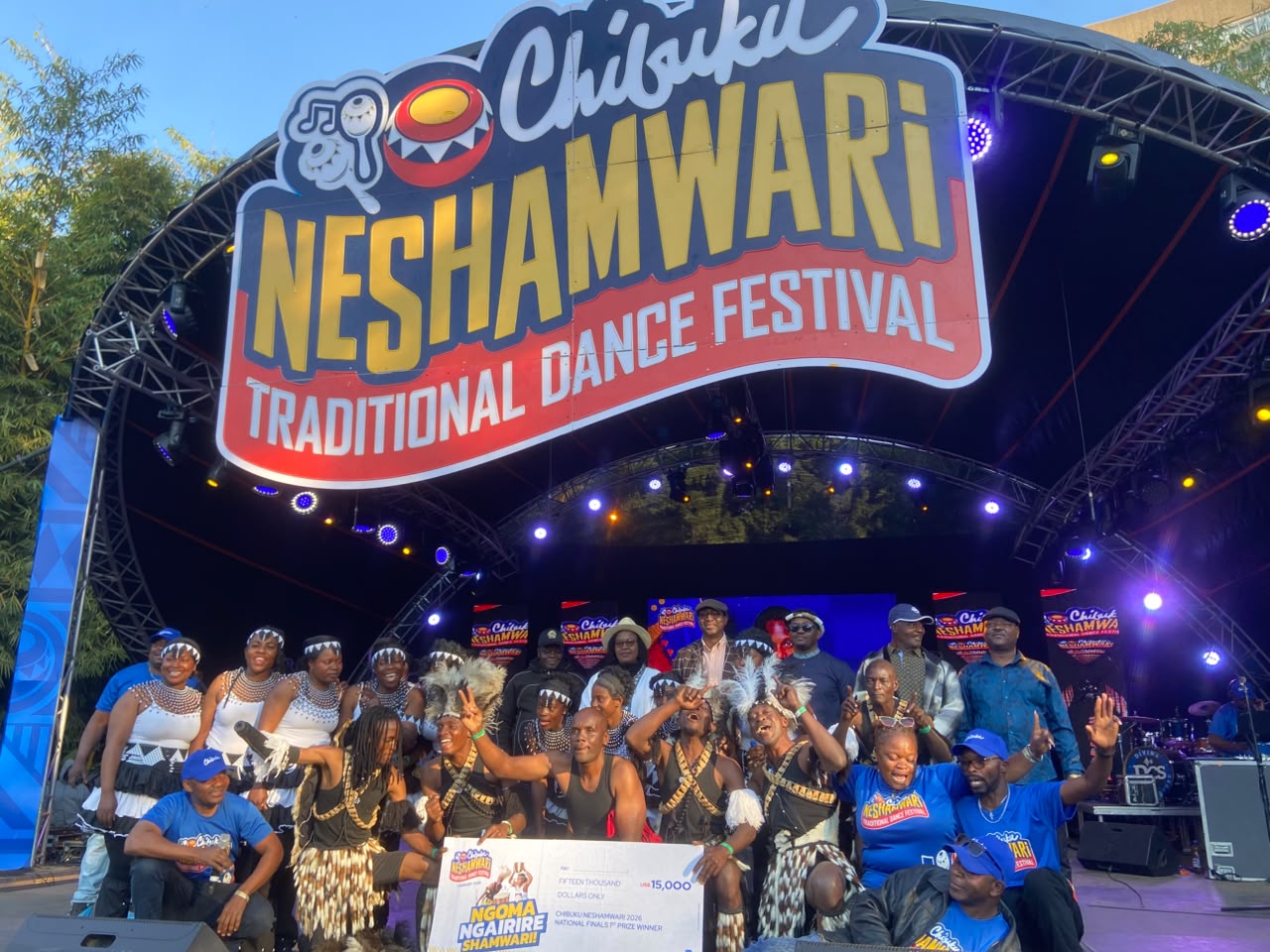
In Zimbabwe today, dancing is given much more exposure than other aspects of our collective national culture which include culinary culture, marital culture, religious culture, wildlife conservation culture, livestock keeping culture, medical culture, home-building culture, dress culture, inter-filial-parental culture, entertainment and agri(land)culture.
The ministry can organise events at district or provincial level to give an opportunity to Zimbabwe’s various ethnic and racial groups to show their types of foods, and beverages (culinary culture), the mode of dress, their traditional dances and their cultural way of bringing up their children.
Seminars can be held simultaneously with such events and knowledgeable people can be asked to give talks on such important aspects of life as cultural practices that are undertaken as part of respective ethnic communities’ ante-natal and post-natal rites. The ministry can also resuscitate arts centres such as the Kwanongoma Music Centre in Bulawayo where artistes can teach and also learn songs of various genres. Incidentally, in that regard, Bulawayo is lucky that a man who passionately likes to promote particularly traditional music is now based at the city’s United College of Education (UCE). He is Mr Adam Luthuli who was until recently in Gweru.
In Matabeleland, a cultural festival of the type suggested in this article can be attended by groups representing the following ethnic and/or racial groups. Sothos from Gwanda and Beitbridge, Vendas from Beitbridge, Ngunis from particularly Lupane, Nkayi, Tsholotsho, Inyathi areas and elsewhere, the Bakalanga from the Matobo, Mangwe, Bulilima and Tsholotsho districts, the Tongas from Binga and Hwange district, the Nambya from the Hwange district and the neighbouring areas, the San (Bakhwa, Amasili) from the Tsholotsho and Bulilima districts, the Xhosa of Mbembesi, the Indians, the Portuguese, the English, the Scottish, and a few others. Various Shona groups such as the Zezuru, the Karanga, the Manyika, the Ndau and the Korekore communities can also represent their respective cultural interest.
By the way, it is important to remind the reader that there is no tribe called Ndebele or one called Shona. These are generic names that embrace people of Nguni, Sotho, Venda, Tonga, Kalanga, San, Shangwe, Xhosa, Karanga, extraction on the part of amaNdebele, and Korekore, Manyika, Karanga, Zezuru, Barwe and Ndau on that of the Shona language cluster.
Each of these communities have their own culture pertaining to birth, foods, beverages, dress, parent — child relationships, marriage processes, traditional mode of worship and even building and protection of their villages or homes.
An article by Pathisa Nyathi in the 19 October, 2014 Sunday News edition about the various types of what they termed Ndebele foods was most enlightening. However, the foods were in fact, of Nguni culinary culture in their origin but bearing Ndebele names for their identification.
That is, however, a cultural-anthropological issue that could be explained in another article.
For the purpose of this article suffice it to say that Cde Langa’s ministry could enhance Zimbabwe’s cultural heritage if it could organise cultural festivals at which there could be contests in both art and oral presentations on cultural topics.
Since we all agree that culture is dynamic and not static, classical choral music could also feature at community rather inter-school level. Dishes cooked by different ethnic cultural communities could be sampled by acknowledged gourmets and prizes awarded.
From where would the ministry get prizes? From food manufacturing and processing companies as well as supermarkets, butcheries, and the hospitality industry. Chiefs would, I am sure, not be found wanting. In 1950 a mini occasion was held at the Bulawayo Vashee Hall and was called “Southern Rhodesia National Dishes Day.” The Indians brought their various very hot piripiri dishes, the English their rice, roasted beef, chicken and salads, the Africans their isitshwala (hadza, sadza) of various grains and going with something like half a dozen kinds of relish: ground biltong-mixed with peanut butter, dried bean-leaves mixed with peanut butter, boiled beef, boiled chicken, dried mushrooms mixed with peanut butter, sour milk (amasi, mahwe) and boiled fish.
The occasion was Joshua Nkomo’s brainchild.
Quite a few people attended the event and immensely enjoyed themselves. Only one man, a black university graduate who was a teacher at Mzingwane Government School refused to attend the luncheon occasion. Why?
“Because it is not the custom of my family to eat sadza,” he declared.
At that time there were only about five or six black university graduates in this country. The author of this article was told this story by Dr Joshua Nkomo, a man who was very proud of his culture.
- Saul Gwakuba Ndlovu is a Bulawayo-based retired journalist. He can be contacted on cell 0734328136 or through email [email protected]


 derick.khumalo