Chronicle Editor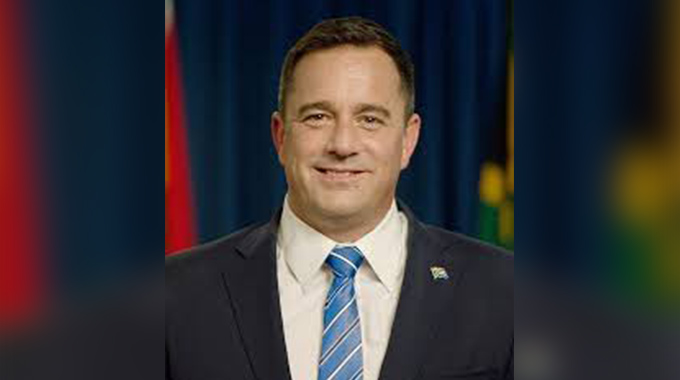
Marshall Ndlela, [email protected]
THE recent South African election has sparked discussions concerning the country’s political landscape. With the African National Congress (ANC) failing to secure a majority after 30 years of post-apartheid rule, concerns have arisen regarding the party’s future.
To gain a comprehensive understanding of the situation, it is imperative to critically examine the motivations and strategies employed by the Democratic Alliance (DA) and its likeminded parties. The DA’s strategy appears to be advocating a coalition between the DA and ANC, with John Steenhuisen possibly serving as Deputy President or Prime Minister. However, there are concerns that this move could be a calculated ploy to eventually dethrone Mr Cyril Ramaphosa from his position.
Reports suggest that the DA might exploit legal charges against Ramaphosa, known as the “parked aside charges,” including cases like Phalaphala, Bosasa, Marikana, and the revelation of sealed boxes containing information about his funders that could potentially be used against him. These allegations could be brought forth as cables, with the aim of undermining Ramaphosa and challenging his legitimacy.
Additionally, it is crucial to consider the broader implications of such a coup attempt. The destabilisation of the current government could have severe repercussions for South Africa’s political stability and economic progress.
A comprehensive analysis should also consider the economic implications of these political manoeuvres. Instability and division caused by a potential coup attempt can hinder progress in addressing the pressing economic challenges facing the country, including land redistribution, education, healthcare, and regional integration. A unified approach is necessary to address these issues effectively.
Moreover, the role of South African billionaires in supporting right-wing policies and dividing the black community should not be overlooked. The influence wielded by these individuals can exacerbate inequalities and undermine unity among South Africans.
In navigating these political and economic transitions, it is essential to prioritise unity, stability and the pursuit of inclusive growth. South Africa should be cautious of divisive tactics and attempts to undermine the country’s democratic processes. Building a prosperous South Africa requires comprehensive solutions that address historical injustices, promote social and economic equality and foster unity among all citizens.
Additionally, the strategy of influential figures such as Helen Zille, a prominent DA member, needs to be examined. Zille has presented a case for collapsing the ANC, further fuelling concerns about the DA’s intentions and the stability of South Africa’s political landscape. Moreover, it is necessary to address the role of South African billionaires who support right-wing policies. Their influence and financial backing of these policies can contribute to the division among black South Africans and perpetuate inequality in the country. A comprehensive analysis should also consider the economic implications of the political landscape. The DA’s attempts to create division within the black community and exploit historical injustices can hinder progress towards addressing issues like land redistribution, education, healthcare and regional integration. It is crucial to prioritise these challenges for the advancement and prosperity of all South Africans.
Furthermore, the role of the media and NGOs in shaping public discourse cannot be overlooked. It is crucial to ensure a balanced media environment that provides objective and unbiased information, free from the influence of politically motivated funders. This enables a more inclusive and informed democracy, where diverse perspectives can contribute to meaningful discussions.
In navigating these political and economic transitions, South Africa should be mindful of the dangers of divisive tactics and attempts to stage a coup-like scenario. The focus should be on fostering unity, economic growth and addressing historical injustices, rather than perpetuating divisions among the population.
While the ANC’s loss of a majority warrants scrutiny and demands introspection, it is important to handle these discussions with nuance and an open mind. By focusing on inclusive policies and prioritising the well-being and progress of its citizens, South Africa can overcome its challenges and build a brighter future for all.
The DA has been preaching against the socialist policies of the ANC as a disastrous recipe for economic development. Contrary to the DA’s claims, there are examples that challenge this narrative. In Botswana, for instance, nationalisation efforts have increased, with Deer Beer Mine, also known as Debtswana, being a significant example. Despite this move towards greater nationalisation, which the DA associates with deterred foreign investment, Deer Beer Mine has chosen to remain in the country. This example shows that left-leaning policies do not necessarily drive away foreign investors. Another misleading assertion made by the DA is that the depreciation of the Rand would lead to a complete economic collapse. The reality is far more complex, as demonstrated by Turkey. Despite the depreciation of the Turkish Lira, the country’s economy has not been devastated. It is important to approach economic matters with nuance and avoid succumbing to fear-mongering.
The DA defacto “Chancellor” madam Helen Zille even suggested a power sharing deal that gives them the “Board Of Directors” oversight role with the ANC as the “Senior Management” of the State of South Africa. This is a doomsday coalition, or a simple power transfer from the ANC government to the minority DA, not power sharing.
In conducting a comprehensive political and economic analysis, key areas such as land redistribution, education, healthcare and regional integration must be addressed. The ANC, which has been in power for many years, has faced criticism for their perceived failure to effectively tackle these challenges. Issues such as landlessness, the “40 percent pass” education policy, migration challenges, and a deteriorating healthcare system require urgent attention.
Moreover, progress on the implementation of promises outlined in the Freedom Charter has been slow, leading to disillusionment among the population. The ANC’s ability to deliver on these pledges must be scrutinised. Additionally, their failure to significantly increase government expenditure to support black businesses, provide free education and implement effective employment programmes raises concerns about the efficacy of their economic policies.
A balanced media and the involvement of NGOs are crucial for the maintenance of an informed and inclusive democracy. The influence of DA-associated funders on the South African media raises questions regarding the impartiality and objectivity of the information being disseminated.
It is important to avoid generalisations and oversimplifications when analysing complex issues. While Zimbabwe has faced its unique challenges, it has made progress in addressing land inequality, implementing State-led initiatives in banking (such as AFC Holdings and the People’s Own Savings Bank — POSB), and nationalising certain industries. These examples highlight the multifaceted nature of development journeys in different countries.
As South Africa navigates these political and economic transitions, it is crucial to approach the situation with an open mind, considering diverse perspectives. While the ANC’s loss of a majority deserves scrutiny, the challenges faced by the country require a comprehensive and inclusive approach that addresses historical injustices and fosters social and economic equality. Engaging in divisive tactics and attempting to stage a coup will only hinder progress and undermine efforts to build a prosperous South Africa.
λ Marshall Ndlela is a Zimbabwean based in Melbourne, Australia. He is a holder of a Master’s Degree in Finance and Accounting from the University Of Chichester, England. He can be contacted via [email protected]


 Online Reporter