admin
admin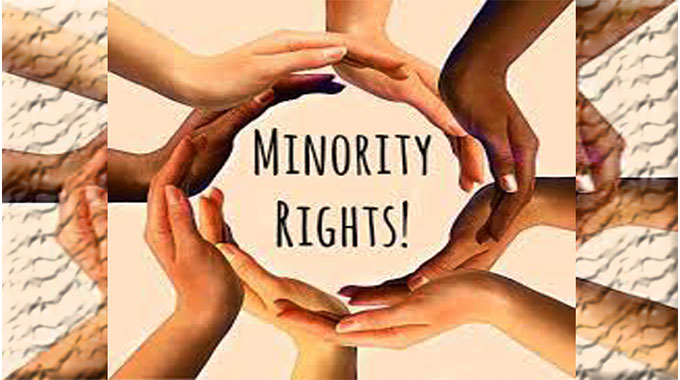
Andile Tshuma
Last week, Justice Francis Bere delivered a judgment which urged the nation to start a conversation on sexual minority rights in the country.
In the landmark ruling, the High Court ordered the Minister of Home Affairs and Cultural Heritage and police bosses to pay Bulawayo transgender activist Rikky Eugene Nathanson (53) $400 000 as compensation following her unlawful arrest for allegedly using a ladies’ toilet at a city hotel.
The case has been dragging for a couple of years until the recent ruling.
In his judgment handed down on Thursday last week, Justice Bere ruled that Nathanson’s arrest and subjection to forced anatomical examination was in violation of her constitutional right as a citizen.
“This case raises issues regarding minority rights in this country and one hopes this judgment in a way will help spark a frank national conversation on these issues which we appear to have been shy or less enthusiastic to openly discuss,” said Justice Bere.
The ruling got me thinking and has been subject of social media debate throughout the week. I think it carries a lot of wisdom.
There are certain things that we have not talked about as a country but at some point we shall face the music because they just cannot be wished away.
We are all different and as our constitution says, ‘united in our diversity, by our common desire for freedom, justice and equality, and our heroic resistance to colonialism, racism and all forms of domination and oppression’.
While we must never attempt to force our views, opinions, beliefs and aspirations down the next person’s throat, it is important to realise that none of us lives on an island, so this precious dear country we all love, belongs to us all and therefore tolerance is key for peaceful co-existence.
While we may agree on some things and disagree on others, this conversation is necessary.
Soon after his inauguration, President Emmerson Mnangagwa, when asked about the issue of LGBTIQ rights in the country in his wisdom said that he is a constitutional leader and is guided by the voice of the people. He said those that want recognition of any groups or rights just canvas for it.
The President’s sentiments show that the Government puts so much power in the people and that we are responsible for the peace, the diversity and equality that we enjoy as a nation.
Section 56 of the Zimbabwean Constitution states that all persons are equal before the law and have the right to equal protection and benefit of the law and that unfair discrimination on the grounds of sex and gender are prohibited. By interpretation, this also includes gender identity.
Justice Bere castigated Nathanson’s treatment while in the hands of police and called for people to be treated with respect and dignity.
“For three days, the plaintiff (Nathanson) in this case was not only deprived of her liberty but was subjected to forced anatomical examination in the most crude and naked manner by adventurous members of the police. As if that was not enough, she was then subjected to further invasive examination by two doctors at two different medical institutions all because of her transgender status, something that she did not invite upon herself,” he said.
The judge said transgender citizens were part of Zimbabwean society whose rights ought to be recognised as the Constitution does not provide for their discrimination.
While the ruling addresses the plight of transgender people, the judge called for an umbrella dialogue on minority rights to be ignited and castigated derogatory treatment of minority groups by some sections of the media.
The judge said through the conduct of the police, Nathanson was made cheap fodder by journalists and social media and ordered the defendants to pay $400 000 being damages for unlawful arrest, emotional distress, malicious prosecution and contumelia.
He described Nathanson’s arrest and detention as outrageous and the prosecution process as thoughtless and malicious.
“One cannot avoid concluding that the conduct of the police in arresting and detaining the plaintiff, was quite outrageous because clearly, they abused their discretion in arresting her. The prosecution of the plaintiff was both thoughtless and malicious,” he said.
A number of issues remain taboo in public talking spaces. People still do not want to challenge social ills such as genital mutilation, some communities are still not keen to address the issue of abortion, yet people are dying almost every day from unsafe termination of pregnancy.
“We may want to practice the best ‘moral standards’, but at some point, it is not only necessary but practical to be real and face reality. These youths need help and if they do not get the proper services from health institutions, they will not stop going the dangerous route, risking their lives.
This group of people remains marginalised and excluded from health policies, particularly around testing and treatment of HIV.
UNAIDS and the World Health Organisation include men who have sex with men, sex workers, transgender people among the key population group vulnerable to HIV infection. But LGBTIQ groups are hardly mentioned in Zimbabwe’s official definition of “at risk” populations.
Without this kind of policy recognition, they lack official support and protection and efforts to end HIV are almost futile if one group that makes up the key populations is ignored.
The director of family health in the Ministry of Health and Child Care Dr Bernard Madzima, recently said the ministry was non-discriminatory and ensured that all society members accessed the same health services.
“As a ministry, we are not selective, but we offer inclusive healthcare for all, be it LGBTIQ, homosexuals, gays and lesbians, sex workers as ‘key population’ groups,” said Dr Madzima.
It is understandable that people in society hold different views on the issue of sexual orientation. Following Justice Bere’s rulling, what comes out clear is that society is better when the people are tolerant and accommodative.
Minority rights are also human rights and no human rights are more superior. The rights of other people should be respected as long as they are not infringing on other people’s rights. For instance, in Zimbabwe we enjoy freedom of worship, it is one of the freedoms that make our country what it is and there is so much diversity as far as religion is concerned.
It is however important for those religions to ensure that while they are practicing their religion, they do not infringe on the rights of others.
We talk of target 90-90-90 but without confronting some of these issues in our society, achieving 90-90-90 will remain a dream as there is need for the engagement of all key populations in the fight against Aids.
Men having sex with men, and other LGBTIQ communities ought to be acknowledged so that efforts to end HIV can achieve the desired results.
This is a fact that just cannot be wished away.
Zimbabweans should take seriously Justice Bere’s call for debate on these issues.
Zimbabwe is founded on respect of the nation’s diverse cultural, religious and traditional values, and the recognition of the inherent dignity and worth of each human being, recognition of the equality of all human beings and gender equality, among other founding values and principles. — @andile_tshuma


 Online Reporter