peter
peter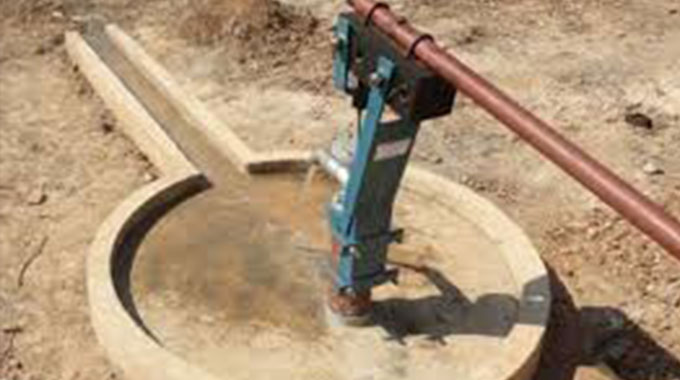
Vincent Gono, News Editor
NEMAKONDE Village is tucked in Ward 28 of Gutu District in the sprawling province of Masvingo.
The greater part of the district and by extension the province is in natural ecological Region 5 where rainfall is usually in the negative of what crop life requires.
The aphorisms “water is life and or save water, save life,” are therefore not just carefully crafted catch-lines for those that are into water conservation in that part of the country, a good majority of people relate very well with the clichés.
And with climate change taking its toll and exacerbating the water shortages, most villagers are beginning to work around the problem as they seek to find ways of circumventing food insecurity at family level.
Those that have been affected by water shortages attest to the heavy weight of the burden. Suffocating dry spells over the past couple of years where the sun would rise with an unrestrained vengeance, licking every drop of morning dew and giving nothing in return have seen communities grappling with severe water shortages.
Coping with cyclical droughts has become a way of life for many a folk in parts of Gutu District where the few boreholes have either broken down or dried up due to excessive use owing to recurrent dry spells forcing families to spend part of their productive time looking for water.
Adapting to water scarcity has, however, been an uncommon phenomenon. The villagers had no idea how to skirt around their problems, but with problems, comes innovation.
Sunday News caught up with Bishop Philip Mudzve — a police officer by profession who leads the St Peter’s Apostolic Church with branches in most parts of the country who has adopted the rain water harvesting technique of building a tank that collects water fr
om the small hill close to his home.
He is in the process of constructing the tank with the aim of using the water to irrigate his almost six-hectare plot where he grows a number of crops as well as for domestic purposes.
According to him, the tank that he is building has a capacity of 50 000 litres of water. He said the programme had so far faced a challenge of resources, mostly cement for plastering and flooring. It is according to Bishop Mudzve big enough to achieve what he intends to do as it has three outlet valves for his irrigation.
“I got motivation from the need to ensure food self-sufficiency at household level first and national level that the Government has been preaching, even giving out resources to people to ensure they are food secure.
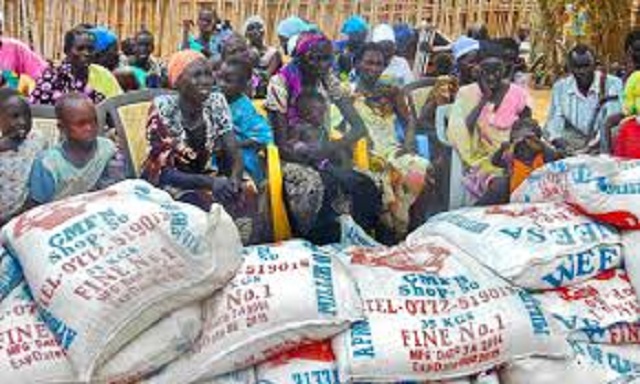
“Gutu South which covers the area I come from is always surviving on food hand-outs from the Government and its partners because it is an area that has no consistent rainfall. And with climate change becoming more apparent droughts and floods have also increased making people even more vulnerable.
“So, to skirt around the problem I hatched a plan to harvest water through a water pump from the nearby Nyamukono River which flows for almost 11 months of the year.
“The idea is that once my water tank is complete and starts collecting water I will be using that water and supplement it with river water if need be so that I irrigate my land,” said Bishop Mudzve.
He said he was convinced that once his tank was completed he would have more land under irrigation where he plans to go commercial in his farming venture.
“I did this to ensure my family will not starve and secondly so that the community at large will survive from my farming. Being a church leader, I know the societal expectations are high and I believe I should lead by example. We have to encourage people to work hard and not to just believe in miracles,” he said.
The Bishop said with the reality of climate change dawning even in rural areas where it was less appreciated building resilience with resources at people’s disposal without waiting for donor support was the way to go.
“Unlike in other areas where I have travelled, we are not supported by donors. So, we need not to sit back and wait for them but work with what we have and if they are to come, they will find us on the way,” he said.
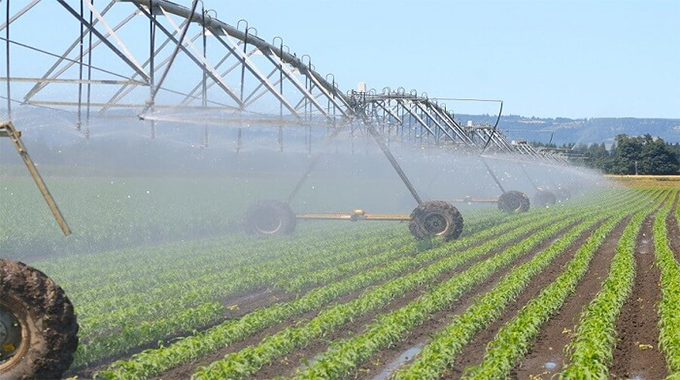
Irrigation, Bishop Mudzve said was the panacea to food self-sufficiency in low rainfall areas whose productivity was affected by climate change if communities were to avert hunger and not be a burden to the Government.
For, now Bishop Mudzve grows maize, vegetables, tomatoes, beans, potatoes, watermelons and onions and he is selling some of his produce to the communities around.
“I am not yet linked to big markets. You see I am still starting but as I grow bigger I will need to do that. For now, I am depending on the community and you know how it is doing business within the community, at times you will end up just giving and not realising profit. But the idea is to ensure that somehow people around get inspired to work for food self-sustenance,” he added.
His vision is to create an agriculture value chain where apart from growing crops, he will rear different types of chickens as well as venture into piggery. The idea according to him is to ensure his farming business remains truly organic where each unit will support another.
As a church leader, Bishop Mudzve says he encourage his followers to rally behind Government programmes especially those that seek to end poverty in the country and the communities.
He said it was gratifying to note that the Government was empowering its people without restrictions and the onus is with the country’s population to take up the challenge and ensure they transform their lives.
He is appealing to those that can assist to do so, so that his dream of having a solar powered community garden irrigation scheme is realised where the vulnerable such as the elderly, child headed families, widows and orphans get both food and income from the project and lessen the burden of food provision from the Government.
He says because of climate change, water scarcity has become an understood reality and everyone across all age groups now have an equal appreciation of the maxim “every drop counts.”
Bishop Mudzve says the erratic rainfall that typifies parts of Gutu District may not be enough for extensive cropping, but if harvested can go a long away in quenching the thirst of village folks.
His vision is to get into fishing project, biogas, poultry, goat project, orchard, community production of stock feed, small grains cropping, solar powered gardening and water harvesting as part of building resilience and responding to community needs.


 Online Reporter