admin
admin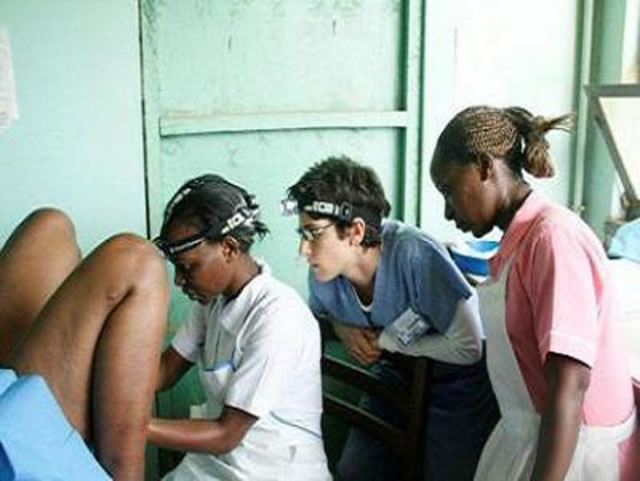
Angeline Mpofu
CERVICAL cancer is having a devastating impact on women’s health around the world, especially in developing countries.
In Zimbabwe, it is the leading type of cancer among all women and leading cause of death globally. It is estimated that about 500 000 new cases occur every year and 86 percent of these cases occur in developing countries.
However, most of the times women are ignorant while others are uninformed on what happens in their bodies, hence by the time they seek medical advice it would be too late to reverse their condition especially when they are eventually diagnosed with cervical cancer.
The main cause of cervical cancer is human papillomavirus (HPV), a common virus that can be passed from one person to another during sex. HPV also causes other cancers, including vaginal, vulvar, anal, penile, and a few head and neck (oropharyngeal) cancers. At least half of sexually active people will have HPV at some point in their lives.
Most of the time, HPV goes away by itself within two years and does not cause health problems. The immune system can fight off HPV naturally. If the body does not clear the virus, it stays in the body for many years before it causes these cancers. It is not known why HPV goes away in most, but not all, cases.
Cancer screening has become the popular salvation for the deadly disease.
The Ministry of Health and Child Welfare implemented a national cervical cancer screening programme using Visual Inspection with Acetic Acid and Cerviography (VIAC).This is a “see and treat” method which is simple, painless and results are made available immediately after the test. The process has saved many women because the disease is detected at an early stage and then treated. Medical experts say early detection is the key for cancer as many lives could be saved.
It is quite alarming that while world statistics reveal that about 250 000 women die every year due to cancer, a few women show an interest in visiting the hospital for VIAC.
At least 500 women are screened every month at United Bulawayo Hospitals meaning that more women still need to embrace the notion of cancer screening.
UBH chief executive officer Mrs Nonhlanhla Ndlovu said awareness campaigns must be intensified so as to attract more women.
“We need to heighten and intensify cervical screening awareness campaigns so as to save more women from the deadly disease. Screening provides enough time for early diagnosis of the disease so that they are able to seek treatment at the early stages before the cancer spreads to most parts of the body,” she said.
The underutilisation of cervical cancer screening and the vulnerability of women to cervical cancer may be compounded by their health beliefs.
Most women think that when they go for screening they could be wakening the monster from its slumber.
This is a misconception because the opposite is true. Once a woman is diagnosed and the results show that they are positive, she immediately receives treatment before the disease reaches an advanced stage.
Most women have misconceptions about the disease because they are not fully informed about the programme.
A resident from Hlalani Kuhle/Garikai in Cowdray Park, Sizani Ncube said: “Why should I bother myself by visiting the hospital for screening. It is not necessary as long as I don’t feel anomalies in my body. In fact I would panic if I found out that I had the disease”.
Such sentiments show that there is still a long way to go in reaching out to women and informing them about the disease.
Most young women also think that cervical cancer is an “older persons” disease. This shows that they are not aware of the dangers that cervical cancer poses to their health and longevity.
Younger women, even teenagers, should be aware of the risks, because research indicates that a female who is sexually active is at a risk of developing the disease.
Women also fall at the mercy of the disease because of traditional beliefs.
In African traditions, beliefs on cancer, its causes and treatment vary from culture to culture.
In Ndebele culture cancer, popularly known as imvukuzane, has sometimes been likened to an object/insect inside one’s body that keeps moving around the body which can with the right skill be trapped and removed.
Curator for Bulawayo National Gallery Clifford Zulu said in African societies people discover cancer and wait for divine intervention until valuable time is lost resulting in late diagnosis and treatment.
“The belief in the supernatural powers is common and deliverance ceremonies are what drive most churches these days. We do not condemn such perspectives but we want the public to be educated about cervical cancer and seek treatment as soon as they have been diagnosed with it,” said Zulu.
With such sentiments, it is clear that there is an urgent need for health workers to enlighten more women about cervical cancer.
Cervical cancer services should be made available at very affordable cost so that women can easily access the services in order to reduce incidence of invasive cancer.
There are health precautions that sexually women can practice to prevent the disease. Women should avoid smoking, having sex with many partners and having unprotected sex.
This is because HPV infection can occur in both male and female genital areas that are covered or protected by a latex condom, as well as in areas that are not covered.



 Online Reporter