admin
admin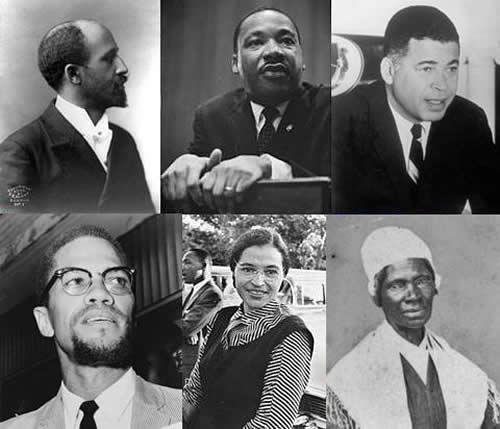
 Lovemore Ranga Mataire
BLACK History month has been observed in the United States, England and Canada since 1926. The commemoration is the brainchild of Carter G Woodson who declared the second week of February as the “Negro History Week.” Woodson recognised the scarcity of information on blacks and founded the “Association of the Negro life and history”.
In 1926, he initiated the celebration of the Negro History Week, which corresponded with the birthdays of Frederik Douglass and Abraham Lincoln.
Douglass was a former slave who became an ardent anti-slavery crusader and Lincoln was hailed as the first white American President to publicly and privately denounce slavery.
In 1976 President Gerald R Ford expanded the celebration to a month arguing that America needed “to seize the opportunity to honour the too often neglected accomplishments of black Americans in every area of endeavour throughout our history.”
The idea of the Black History month commemoration is steeped in the firm understanding of need to change the prevalent negative portrayal of African-Americans in the mainstream white-dominated media.
While some critics have said it is not enough to simply paying nominal homage to the achievements of blacks in America for just month, others have argued that it is the symbolically recognition of priceless deposits by black people into the American history that must be immortalised.
The major missing link of the Black History month is its failure to reconnect with the source, which is the African continent where the cream of able bodied young men and women were uprooted and landed in the Americas.
Their identities that were once connected and bonded by blood became untraceable as they found themselves lost in foreign lands and forced to live with fellow Africans who spoke different languages and originated from different tribes.
Consequently, the lives they once knew became mere faded memories, tossed overboard and lost at sea and this is the reason why Maya Angelou reinforced the need for the commemorations to realign themselves with Africa when she says; “For Africa to me . . . is more than a glamorous fact. It is a historical truth. No man can know where he is going unless he knows exactly how he arrived at his present place.”
It is thus important for the Black History month to acknowledge and embrace its intrinsic link with Africa and derive inspiration with the heroic and historic achievements by blacks in Africa to counter the negative images and stereotypes that demean the African in America.
African-Americans and Africa share an inseparable history, which if nourished well can create and foster mutual benefits at political, social or economic levels. In order to remain relevant and meaningful the Black History month must foster enduring linkages with Africa and ensure that Salif Keita, Youssou N’dour, Oliver Mutukudzi and Thomas Mapfumo are extolled in the same way that Miles Davies and Robert Johnson’s soulful Jazz and somber blues are applauded.
African-Americans must applaud Madam CJ Walker as the first self-made black female millionaire in the same manner that Nkosazana Dlamini Zuma is hailed as the first African woman to chair the African Union Commission.
Black Americans also need to learn more and be proud of such women of virtue as Queen Nzinga of Angola and derive inspiration from her exceptional military and general leadership skills.
As African-Americans proudly flip through Phylis Wheatly’s verses of poetry and marvel in her prowess as the first African-American woman to publish a book, the same must also be extended to Mariama Ba, Ama Ata Aido, Tsitsi Dangarembgwa and Bessie Head.
It must be acknowledged that the contributions of blacks to world history and civilisation forms part of our collective consciousness as the human race and non-but ourselves should extol our achievements because as long as we are not ourselves, the emerge of what other people think of use will form the daily interpretations of who we are.
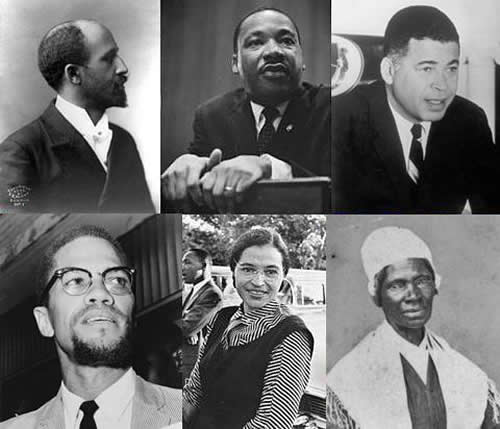
The challenge facing African-Americans is to reignite the spirit that galvanised Martin Luther King Jr and Malcolm X and other earlier civil rights movement leaders to fight for the equal treatment of blacks in all fields of human endeavours.
It is a challenge that is rooted in the understanding that most African-Americans think that the election of Barak Obama as the first American black President means they have arrived.
African-Americans must come to the realisation that Africa is their homeland and the source of their well-being and any celebrations of African achievements are meaningless without any reference to other historical continental achievements.



 Online Reporter