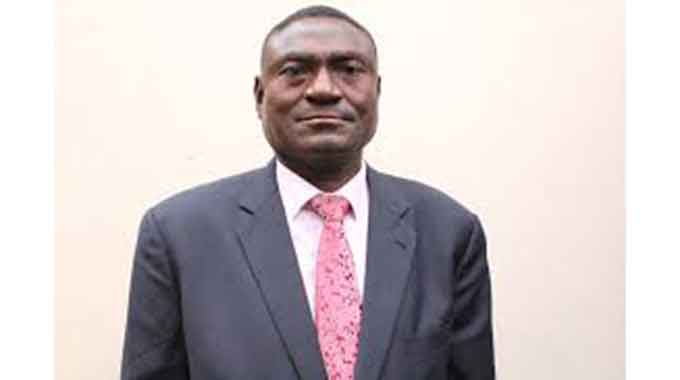
Vusumuzi Dube
Langelihle Dube, [email protected]
MJ Sings, the “Prince of Soul”, is adding a new rhythm to his repertoire. For years, the musician born Mncedisi Jeremiah Ncube has been the voice that defined the smooth, soulful side of Bulawayo’s music scene.
But step into the Nizhe De Soul (NDS) Academy for DJs today, you will find him in an unfamiliar role as a student.
MJ Sings has stepped behind the decks. Yet, by his own definition, he is not simply “becoming a DJ”. He is evolving into a hybrid performing artiste — a shift that feels less like reinvention and more like a natural progression for someone whose career has been shaped by constant growth. It is the latest chapter in a journey that has steadily moved him from the background to centre stage. At the academy, students like MJ Sings undergo month-long, hands-on professional DJ training.
To understand where he is going, one must look back to where it all began. MJ Sings first caught the industry’s attention in 2015 as a finalist in the Dreamstar Zimbabwe national talent search. That breakthrough opened the door to a deal with Boom Studio, led by former Idols South Africa judge, Dave Thompson. It was during this period that the “Prince of Soul” moniker took hold, as comparisons to Ringo Madlingozi and Jabu Khanyile began to follow him.
His early catalogue, including Dali Wami and Ngizobuya, was rooted in Afro-pop and acoustic soul. A songwriter at heart, MJ Sings drew influence from Oliver Mtukudzi’s storytelling and Ed Sheeran’s contemporary appeal. Over time, however, his sound evolved, moving from stripped-back acoustic arrangements to the high-energy pulse of electronic music. Collaborations with local heavyweights such as Murphy Cubic and the late Cal_Vin marked this transition, and by the time Koloyi dominated local airwaves and earned nominations for the Bulawayo Arts Awards in 2022, MJ Sings had firmly established himself as a versatile force rather than a genre-bound artiste.
His decision to enrol at NDS Academy was neither impulsive nor a strategic gimmick. It stemmed from a long-held desire to incorporate DJing into his live performances, enhancing the overall experience for his audience. Still, he admits that hesitation lingered until the academy offered a structured space to learn and refine the craft. For MJ Sings, the shift is not as drastic as it may seem. He sees singing and DJing as closely connected, both rooted in the art of performance.
“DJing and singing are one and the same thing. The same rules apply on both ends, where you need to understand build up, song selection, reading the audience and maintaining composure when you make a mistake,” he said.
“So, I took the same lessons and applied them to the DJing field.”
He tested his skills in February with a performance at the Sukulture Festival.
Returning to the basics, especially as a multiple Bulawayo Arts Award (BAA) winner, demands humility, something MJ appears to embrace fully. Interestingly, his greatest challenge has not been learning new skills, but unlearning old habits. At the academy, he has been pushed beyond the comfort of a single genre, opening himself up to a broader musical landscape.
“I enjoy the thrill of challenging myself and constantly reinventing myself. From a young age, I was always told that I get bored easily, and I guess I carried that to music as well. My catalogue is a story of growth, with my first single just being a plain acoustic guitar, to now adding electronic elements to my music.”
This evolution extends beyond performance into his work as a songwriter. For a time, MJ Sings operated behind the scenes, penning songs for South African stars such as Nhlanhla Mafu of Mafikizolo and Speedy of Bongo Maffin. That experience, facilitated through his connection with Speedy, proved transformative.
Working in South Africa sharpened his awareness of Bulawayo’s unique cultural positioning.
“That’s when I started to see the blessing of being from Bulawayo. You can easily communicate with South Africans,” he said.
This “Bulawayo advantage” has allowed him to seamlessly blend Ndebele and Shona in his music, broadening his reach while remaining rooted in identity. Now, he plans to extend that philosophy to his DJ sets, using the platform to amplify cross-cultural Zimbabwean sounds on a global stage.
The impact of this approach is already evident. After winning the BAA Outstanding House/Amapiano Artiste award in 2025, MJ Sings has seen his music travel further than ever before. International DJs such as Nitefreak have been spinning his tracks in Europe. At the same time, Sun El Musician has featured them in South African sets, a surreal milestone for an artiste still refining his new craft.
Watching audiences across continents respond to his music has reshaped his sense of possibility.
Despite the growing international buzz, MJ Sings remains grounded. He views accolades as affirmation rather than pressure, choosing instead to focus on creating from a place of passion. His latest single, Abalele, reflects that mindset, as he prioritises intentional, high-quality releases over rushing into a full album.
His ambitions are firmly global. Within the next two years, he envisions the MJ Sings brand as one of the most sought-after live acts worldwide, not as a traditional DJ, but as a fully realised hybrid performer.
“I have my eyes set on the big global festivals around the world, and I’ll take my country’s pride with me. I’m not a DJ, but a performing artiste. Ed Sheeran plays the guitar and sings, I’ll play the decks and sing.”
Back at NDS Academy, where he balances being both student and mentor, his message to younger creatives remains simple and grounded: “Stay humble and always be a student of the game.”
It is this blend of experience and curiosity, the willingness to start again while carrying years of knowledge that positions MJ Sings as one of the most compelling artistes to watch in Zimbabwe’s evolving music landscape.
Ends//…


 Online Reporter