Vusumuzi Dube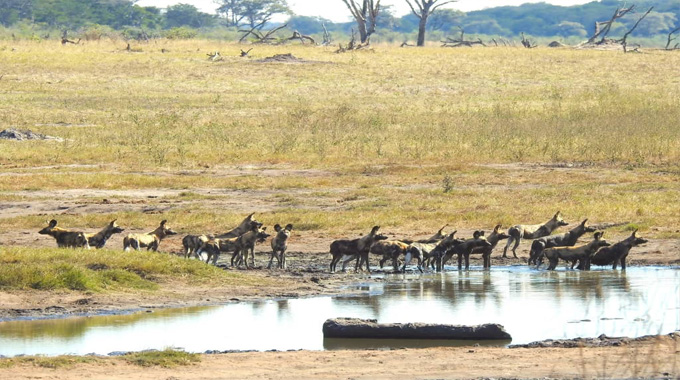
Rutendo Nyeve, Victoria Falls Reporter
AT Hwange National Park, a wilderness often dominated by the trumpeting of elephants and the thunderous roars of lions, a quieter yet equally extraordinary conservation triumph is unfolding — led by a remarkable pack of painted dogs known as ‘‘Mkhonto Pack’’.
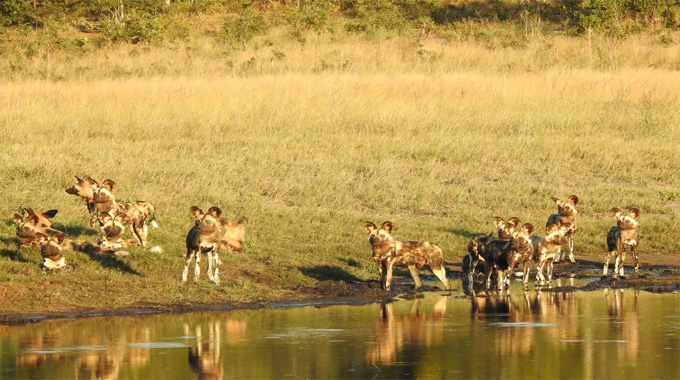
Though they may not command the same fame as their trunked, horned, or maned neighbours, these painted dogs — also called African wild dogs or hunting dogs — are among the most captivating creatures on the continent. With their oversized rounded ears, lean athletic frames, and striking patchwork coats of brown, black, yellow, and white, each dog wears a pattern as unique as a fingerprint.
Native to Africa and found nowhere else in the wild, these endangered predators now cling to survival in small, scattered populations across a handful of countries. Zimbabwe remains one of their last strongholds. According to
Painted Dog Conservation (PDC), roughly 700 painted dogs roam Zimbabwe, with about 200 concentrated in Hwange National Park.
Through a blend of conservation, education, and community outreach, PDC works tirelessly with local communities and wildlife authorities to ensure these animals do more than survive — they thrive. This year, that mission delivered a story of remarkable success, one that has thrust Zimbabwe firmly onto the global conservation stage.
In an interview with Saturday Chronicle, PDC’s marketing and communications manager, Ronnie Sibanda, confirmed the breakthrough. He revealed how the Mkhonto Pack, once teetering on the brink of extinction, has become a symbol of resilience and recovery.
“The conservation breakthrough is being achieved after a critical pack, known as the Mkhonto Pack, risked being wiped out when it dispersed from Hwange National Park in 2022. Through rigorous anti-poaching, community outreach, and dedicated tracking, the initial six dogs that left the park have since thrived, swelling their numbers to an impressive 30 by 2025,” said Sibanda.
He said that in 2022, the then pack of six dogs ventured beyond the park into the buffer zone.
“Together we put a lot of work into our anti-poaching unit, community outreach, tracking and monitoring to protect this pack, and the numbers rose to 30 by 2025. New members were welcomed into the family, creating huge excitement and optimism that indeed one day the fight to reclaim the lost numbers will be achieved,” he said.
The journey from six to 30 dogs in just three years is no small feat. Painted dogs are highly social, co-operative hunters, yet they face relentless threats — habitat fragmentation, human-wildlife conflict, snares, and disease. When the small pack strayed from the park’s protection, its survival hung by a thread.
A co-ordinated response swung into action. Anti-poaching units, many staffed by former poachers turned protectors, intensified patrols in the buffer zones. Community outreach programmes helped neighbouring villages appreciate the ecological value of these dogs — vital apex predators that keep ecosystems in balance. Using specialised tracking collars and daily monitoring, conservationists maintained a vigilant watch over the pack’s movements and well-being.
The result has been nothing short of a conservation fairy-tale. Pups were born and survived, the pack grew strong.
“The newly-born now take the family to 30 and besides exciting those in conservation and tourists who visit, the pack has also placed Zimbabwe at an enviable position globally in terms of resilience and ability to protect and preserve its flora and fauna,” said Sibanda.
Today, the Mkhonto Pack continues to roam, its daily movements tracked by dedicated personnel. Their success is more than a statistic — it is living proof that with political will, community engagement, and scientific dedication, even the most endangered species can be pulled back from the brink.
In a world where headlines often lament extinction and loss, Zimbabwe’s painted dogs offer a narrative of hope, tenacity, and a nation’s unwavering commitment to safeguarding its natural heritage. The Mkhonto Pack is not merely surviving; it is howling a song of recovery for all to hear.



 Online Reporter