admin
admin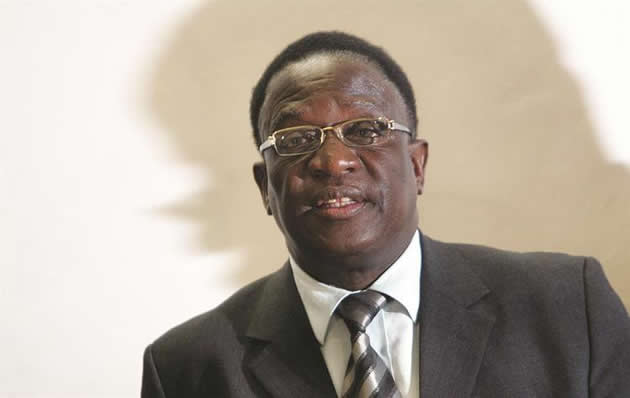

Daniel Nemukuyu Harare Bureau
JUSTICE Minister Emmerson Mnangagwa has admitted defeat after Cabinet shot down his plan to scrap the death penalty.
Minister Mnangagwa wanted the death sentences of 97 death row inmates commuted to life in prison, but he revealed yesterday that he had failed to find support from fellow ministers.
“I took the matter to Cabinet. Firstly, I put all the 97 inmates in about three pages of argument saying I wanted all of them removed from death row. Cabinet rejected the argument directing me to give the circumstances of each single inmate individually for assessment,” he said in Harare yesterday, during commemorations of World Day of the Anti-Death Penalty Campaign.
“I lost that bid because I had bundled everyone of the 97 inmates so that I could get what I wanted. Now I’ve been allowed to bring their cases in batches of 10 and I believe next Tuesday will be the first day of the assessment. When we decide, some will succeed while others will fail.
“Some will be given 20 years or so in prison, others may even be sentenced to life in prison depending on the circumstances of each case. But I’d have loved to see all the 97 escaping capital punishment.”
Minister Mnangagwa was once sentenced to death by the white minority regime during the struggle for Zimbabwe’s independence, and is an opponent of capital punishment.
Zimbabwe has not carried out any executions since 2004, in part because there was no hangman.
Years of unsuccessful headhunting by the country’s Justice Ministry ended last September with a chilling announcement by Justice Secretary David Mangota: the government had secured a hangman who was “raring to go”.
Little is known of the hangman, who is rumoured to be from Malawi.
Zimbabwe’s new constitution adopted last year does not permit the execution of women and those above the age of 70.
Responding to a question by the Zimbabwe Association for Crime Prevention and Rehabilitation of the Offender (ZACRO) programmes director Tecla Ponde, Minister Mnangagwa said the only female inmate on death row was off-the-hook because the new constitution exempted women from capital punishment.
“That woman is already saved. It’s guaranteed that she’ll not be hanged. What’s left is for her to know her sentence, but by next week she’ll be informed of her appropriate penalty,” said the minister.
The commemorations were organised by ZACRO, with the assistance of the Embassy of Switzerland in Zimbabwe.
Currently, 58 countries around the world actively execute criminals, with 90 percent of all executions taking place in Asia.
Despite suffering a setback in Cabinet, Minister Mnangagwa launched himself as a key voice against capital punishment, insisting that it was “abhorrent” and had not deterred criminals.
“For the record, I want to pronounce myself clearly on the fact that the death penalty is the ultimate denial of human rights and a cold-blooded and abhorrent killing of a human being by the state in the name of justice,” the minister said.
“On the whole, research in the social sciences shows that capital punishment is abhorrent and does not deter crime.”
Minister Mnangagwa said he would do his best to see to it that no-one was hanged during his tenure as Justice Minister.
Speaking at the same function, Chief Nyakunhuwa of Zaka gave the Chiefs Council’s position on the death penalty.
Chief Nyakunhuwa said the Chiefs Council was against the death penalty which he said was an instrument of colonialism.
“As chiefs, we don’t support the death penalty at all. Before colonialism, we used to be governed by our traditional leaders and we didn’t have a death penalty. Traditionally, we believed compensation was the best way to manage or to stop the avenging spirits and we’d perform rituals and solve the issue peacefully without further bloodshed,” the chief said.
“With the coming in of the whites, we started using the Roman-Dutch law that calls for ‘an eye-for-an-eye’ and people are now being sentenced to death.”
Roman Catholic priest Father Fidelis Mukonori did not give the church’s position on the death penalty, leaving the subject to debate.
He quoted the fifth commandment, “Thou shall not kill”, saying killing was bad. But later he went on to raise some arguments suggesting that nations might execute for justice.
Father Mukonori cited the case of Abraham in the Old Testament, who offered to sacrifice his own son to please God.



 Online Reporter