admin
admin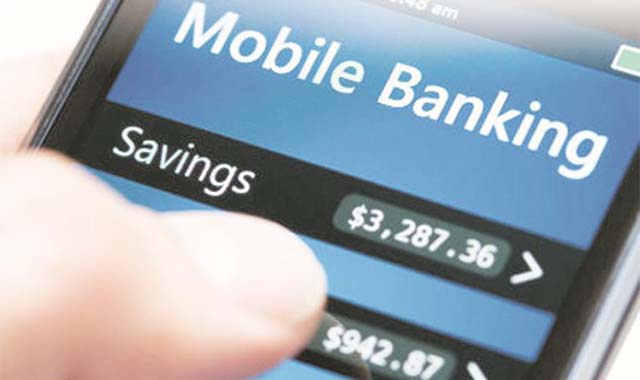

#DigitalDialogue with Delta Milayo Ndou
We shall be robbed blind until we create our own consumer protection mechanisms by naming and shaming entities that fleece us on a regular basis and while we keep quiet because we don’t want to swim against the tide of social proof.
The other day I tweeted triumphantly about the ease of transacting via my bank’s mobile app. I felt euphoric about circumventing the whole hassle of queuing. Well, my euphoria didn’t last long.
I had made the rookie mistake of not asking beforehand what using the mobile app would cost me.
I assumed since the app was free to download, it was equally free to navigate to my heart’s content.
We shall be robbed blind if we don’t take the time to quiz banks and other service providers about surcharges arising from using certain services or platforms.
I learnt this the hard way and I’m inclined to use the experience as a teaching moment.
I happened to lose money from repeatedly pressing the “refresh button” while navigating a mobile banking app.
I was trying out this app for the first time and checking out its functionality compared to that of other banking apps I use.
So I kept opening pages, navigating and refreshing pages at random.
Then when I had familiarised myself with it, I decided to show a few people and help them understand its utility. Little did I know that refreshing the bank balance page on the mobile app would attract a $0.15 charge every single time.
When I downloaded the free app there was nothing on the menu to communicate the charges entailed in using the app.
The bank teller manning the customer counter didn’t mention charges either when I asked about the efficiency of the app.
It was a rude awakening really.
The refresh button on the app functions as some kind of “pay wall” that attracts a charge the moment you press it for an enquiry.
What made things worse for me was realising, belatedly, that these costs could have been avoided by opting for alternative and completely free means of checking my bank balance like via the ATM (automated teller machine) or via the Internet Banking facility.
I do not understand the logic of charging for the balance inquiry service on the mobile app when other means of acquiring the same service — such as ATM, Internet Banking, handing a bank teller a balance enquiry slip over the counter — are free.
Does offering the balance inquiry service on the app as opposed to the ATM cost the bank extra?
I imagine that automation is at the heart of transacting electronically and so there is no reason why two automated services should have disparities in terms of charges they attract.
If an ATM gives bank balance information for free why should the mobile app attract any fee for providing the same?
Automation, in this context, simply means ensuring the app is able to extract and give out the desired data (e.g bank balance or bank statement) without requiring human intervention (such as a bank teller punching in your account number into a computer) to facilitate the request. This is pretty much what the ATM does, for free.
It is these deceptively small amounts charged surreptitiously that cumulatively lead to us falling prey to fleecing by service providers who take advantage of our lapses in technological shrewdness.
Social proof: Why we need to crowd-source our discontent
While I was downloading the aforementioned mobile banking app, I happened to check out the app reviews for some of our local banks on Google Playstore.
The reviews were disconcerting in that they occupied extremes by way of reaction.
There was effusive praise on one end and harsh critique of the app on the other. I was left with the dubious feeling of being sold a dummy.
I got the impression that many of the positive reviews seemed forced, lacked sufficient detail to justify the high star ranking the reviewers were generously giving in endorsement of the app.
I even thought (rather cynically I admit) that perhaps the banks got their IT departments to mobilise employees and herd them onto the Playstore platform to sing praises of their own apps.
It is a function of social proof leveraged upon by new media marketers who use the psychological phenomenon of “informational social influence” that makes people want to copy the actions of those around them in order to conform to supposedly “correct behaviour” in a given context.
Social proof says “if others are praising something, it must be good so you must praise it too; if others are doing something, it must be correct so you must do it too”.
You can call it “herd mentality” if you wish but social proof is about conformity in order to fit in, to identify with others and to belong.
In its worst form, social proof leads to heights of idiotic, uncritical wholesale swallowing of hokum — line, hook and sinker the likes of which tales such as “The Emperor’s New Clothes” best illustrate.
Shrewd marketers play upon our desire to behave correctly and conform to socially approved conduct — so we seek social proof from those around us to check if our behaviour meets the collective standard.
Now instead of having the banks and mobile money operators splashing adverts and taking over review forums to praise themselves and their own products in order to create superficial social proof — we should band together and start sharing our experiences as customers and users of these services or products.
We shall be robbed blind until we create our own consumer protection mechanisms by naming and shaming entities that fleece us on a regular basis and while we keep quiet because we don’t want to swim against the tide of social proof.
We should not hesitate to go on those review platforms and air our grievances (if any) or give our wholehearted endorsement where it is deserved.
It is possible that some will take to such platforms to spread falsehoods out of malice and spite however, the taste of the pudding is in the eating — so try the services out yourself.
The reason I prefer crowd-sourced reviews is that there is more nuance, more voices, more diversity and a wider range of perspectives to draw from in reaching your own conclusion about a service or product you have never tried out.
We need to be a bit more proactive in protecting our consumer rights in a fast-changing environment where new technologies outpace policy and overtake regulatory frameworks that do not have the agility to quickly adapt.
We have the means to wield our collective discontent and protect our consumer rights by calling out poor service provision whilst giving due credit to those who give us worthwhile service.
Some good might come out of this cash crisis
Sometimes it takes upheaval for mindsets to transform. Circumstances beyond our control force us to consider alternatives, to modify our behaviour and to change our minds.
If any good is to come out this cash crisis, I wager it will be the reconfiguration of our collective attitudes towards cashless transactions. We are being driven to adapt.
Municipalities and other business entities that have long dragged their feet with regards facilitating cashless transactions are working round the clock to put those alternative payment mechanisms in place.
By the time the bond notes hit our shores, we will have grown accustomed to the idea of cashless transactions in many aspects of our daily lives to the point where we will be a digitally conversant people in the area of cashless transacting.
Mindsets are hard to change but when hard times hit, as they are doing so now, adapting is no longer an option.
It is clear that existing facilities for cashless transactions are overwhelmed by demand with mobile money operators occasionally failing to cope with the abrupt surgency of a cashless market.
Those selling POS machines are likely thanking their lucky stars while employees at various businesses are being quickly trained to familiarise themselves with the usage of such devices.
The frenzy with which businesses and individuals are adapting is heartwarming to some of us digital evangelists who’ve longed to see people harness technological solutions and embrace innovative disruption.
Unfortunately, there are always some who regress to past habits such as this luxury bus operator that used to offer the option of purchasing bus tickets by card but has now suspended the facility.
Surely, this is not the time to be regressing and insisting on cash in the midst of such crisis. I was quite miffed and expressed the spiteful hope that their buses travel with as many empty seats as karma might deem appropriate.
On the other hand, some businesses are responding to the crisis by finding ways to offer customers reprieve in this surcharge-centric transacting environment.
One mobile money operator has reportedly removed transacting fees and made payments free on its card.
I do hope this information is accurate and not some publicity stunt; those who do use that mobile money operator’s card will bear witness to the veracity of this too-good-to-be-true claim.
I retain a healthy scepticism where these highly profiteering-oriented sectors of mobile banking and mobile money are concerned because past experience has shown one can so easily be robbed blind if they are not vigilant.
Delta is Head of Digital Services at Zimpapers and a PhD scholar researching on digital media, disruptive technologies and journalistic practice. Follow her on Twitter: @deltandou



 Online Reporter