admin
admin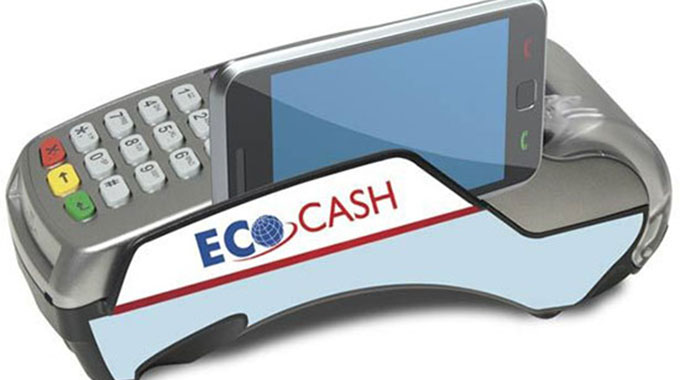
Enacy Mapakame
Business Reporter
The total number of mobile money transactions processed in 2020 went down by 23 percent to record $1,5 billion from $1,96 billion recorded in 2019 as active mobile money subscriptions also took a dip.
Postal and Telecommunications Regulatory Authority of Zimbabwe (Potraz) attributed the declines to the banning of mobile money agent lines.
During the period under review, the Reserve Bank of Zimbabwe (RBZ) banned agent lines which mainly affected Ecocash as it had the highest number of agent lines.
“As a result, Cash-In transactions and Cash-Out transactions are no longer being effected,” reads part of the Potraz sector performance report for 2020.
According to the report Ecocash maintained its dominance on both number of transactions as well as value of transactions at 97 percent and 95,7 percent respectively.
OneMoney accounted for 4 percent of value of transactions while the remaining 0,11 percent was for Telecash.
Active mobile money subscriptions went down by 11 percent compared to prior year.
The total number of active mobile money subscriptions was 6,495,682 as at 31 December 2020, representing a decline of 11,4 percent from 7,334,639 as at 31 December 2019.
Since 2016, active mobile money subscriptions had always been on an upward trend until 2020 when the RBZ banned agent lines.
In 2016, the country had 3,3 million active mobile money subscribers and more than doubled to 7,3 million before falling to 6,5 million in 2020.
However, the regulator expects growth to continue going forward.
Figures from Potraz also show that Econet and Telecel lost market share in line with the decline in their active mobile money subscriptions. Ecocash’s active mobile money subscribers went down by 18 percent to 5,5 million while Telecash fell 90 percent to 5 222. On the other hand, NetOne`s market share increased during the course of 2020 with active mobile money subscribers growing by 99 percent 936 479.
The regulator expects growth in the value of mobile money transactions, attributable to the growing scope of services that can be settled using mobile money as well as the general inflationary environment.
Mobile money has been on a growth trajectory since the country started experiencing cash shortages in 2016. The outbreak of the Covid-19 pandemic has also given rise to adoption of cashless transactions as more service providers embrace digitalization in line with observing lockdown regulations and social distancing.
Overall, the sector is expected to record growth due to a surge in demand for communication services, in particular data and courier volumes as consumers adapt to the new normal of life.
“Hence, digitalisation is likely to be scaled up, with operators repositioning themselves by upgrading and automating their networks to enhance agility to deliver new services/ applications to meet fast changing and versatile consumer demands,” said Potraz.



 Online Reporter