THE Government’s decision to invest in modern mineral testing and assaying laboratories is one of the most important, yet generally overlooked, steps in ensuring that the country captures greater value from its vast mineral wealth.
While public debate on mining policy frequently focuses on extraction, beneficiation and exports, the ability to accurately determine what lies within the ore itself is equally critical.
For decades, many mineral-rich African countries have relied on foreign laboratories, especially Australian ones, to test and certify their mineral products. This dependence has created information asymmetries that often favour buyers and international trading houses over producing nations. Without independent domestic testing capacity, governments risk undervaluing mineral resources, collecting lower royalties and taxes, and losing revenue that should rightfully support national development.
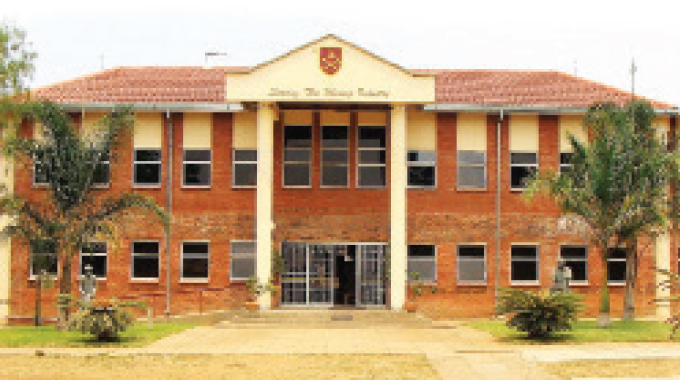
The move to modernise the National Metallurgical Laboratory in Harare and eventually establish a network of regional laboratories, as we report elsewhere today, seeks to address this challenge. Equipped with modern analytical technologies such as X-Ray Fluorescence spectrometers and ICP-OES systems, local laboratories will allow authorities to accurately determine the composition, grade and value of minerals before they leave the country.
The benefits extend far beyond royalty collection. Accurate assaying strengthens transparency and accountability throughout the mining value chain. It reduces opportunities for under-declaration, misclassification and illicit mineral flows, challenges that have long plagued resource-rich economies like ours. Reliable testing also gives regulators greater confidence when issuing export permits and assessing compliance with mining regulations.
The timing of the initiative is particularly significant given the nation’s ambitions in the lithium sector. Lithium ore is rarely composed of lithium alone. It generally contains a range of valuable associated minerals and rare elements whose economic value can be substantial. Without sophisticated testing capabilities, some of these minerals may go undetected or undervalued, resulting in lost earnings for both the State and mining communities.
Domestic laboratory capacity also strengthens the country’s bargaining position in international markets. When producers and regulators possess credible scientific data about the quality and composition of their minerals, negotiations with buyers become more balanced. Accurate information is a powerful economic asset.
Furthermore, the programme supports broader industrialisation goals. Collaboration with institutions such as the University of Zimbabwe and the Zimbabwe School of Mines will help develop local scientific expertise, create skilled employment and encourage research into mineral processing technologies. Over time, such knowledge can support downstream industries and innovation.
Laboratory capacity complements Zimbabwe’s planned ban on lithium concentrate exports and its broader value-addition strategy. Beneficiation policies can only succeed when supported by robust systems that measure and verify mineral content.
The construction and capacitation of mineral testing laboratories should therefore be held as a technical upgrade as well as a strategic economic investment. By knowing exactly what our country possesses beneath the ground, we will be better positioned to safeguard revenues, strengthen governance, attract responsible investment and secure a fairer share of the wealth generated from its mineral resources.