Londile Moyo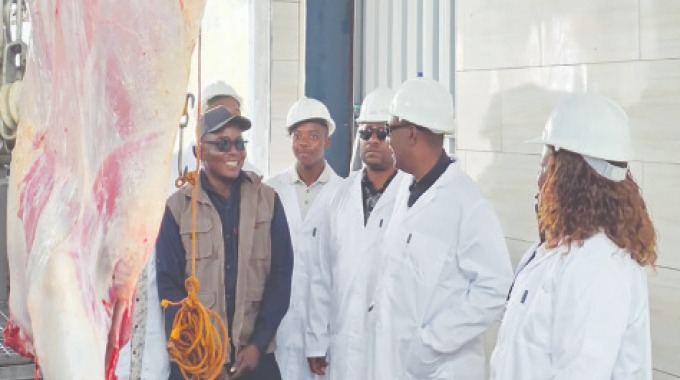
Patrick Chitumba [email protected]
A NEW US$320 000 modern Wamambo Abattoir, owned and managed by a local entrepreneur, has been commissioned in Redcliff town in the Midlands Province.
The new investment was commissioned recently by the Minister of State for Midlands Provincial Affairs and Devolution, Owen Ncube.
In his remarks, the minister said the investment resonates well with President Mnangagwa’s rural industrialisation and infrastructure development agenda as the country move towards attaining a prosperous and empowered upper-middle-income society by 2030.
“Furthermore, Wamambo Abattoir, which adds to the already existing Kwekwe and MC Meats Abattoirs, underscores the broader economic growth and community empowerment trajectory advocated under the NDS2 pillar on agriculture, food, climate and environment,” he said while addressing business people and Government officials attending the commissioning of the Abattoir.
Minister Ncube said abattoirs were a strategic focus directed towards the strengthening disease surveillance and control mechanisms, promoting sustainable rangeland and pasture management and enhancing access to comprehensive animal health services.
The Midlands Province, he said, is a proud beneficiary of the Second Republic’s tangible, impactful and people-centric programmes and projects that boost agricultural production and productivity and the attainment of Vision 2030.
“These include the Presidential Title Deeds Programme, which enhances security of tenure and ensures the use of the Global Positioning System in pegging farms, thereby resolving issues of plot boundaries and size, linkages with regional and international markets that include the African Continental Free Trade Area and the European and Asian markets, the Agriculture and Food Systems Transformation Strategy, which has accelerated irrigation development through the Presidential Borehole Drilling Scheme, the establishment of Village Business Units and the rehabilitation of dip tanks,” he said.
The implementation of the Livestock Recovery and Growth Plan, the minister added, strengthens animal disease surveillance and control systems, as well as more developed and resilient livestock production to mitigate recurrent disease outbreaks, particularly foot and mouth and January disease, which undermine animal health.
Minister Ncube also urged the Department of Veterinary Services to strengthen the procurement of adequate supplies of acaricide and ensure farmers adhere to the regular intensive 5-5-4 dipping schedule.
He implored farmers to adhere to laws on animal movement, as the illegal movement of animals from restricted areas increases the spread of diseases.
“In this regard, I commend Mr and Mrs Chaminama for complementing the New Dispensation’s desire to transform community livelihoods through agro-industrial growth, employment creation, infrastructure development and the provision of quality, efficient and hygienic meat processing services that positively impact our Provincial GDP, thereby positioning the region as a key player in livestock production and processing, “ he said.
Wamambo’s Abattoir director Mr Takwana Chaminama said the US$320 000 abattoir is there to serve community.
He said the company’s engagement with the Department of Veterinary Services during the establishment of the facility demonstrated that efficient and professional public service delivery can enable investment.
“Wamambo’s Abattoir was established in response to high slaughter fees charged by established operators, which he said had pushed some small-scale players into unsafe practices such as informal slaughtering,” he said.
Mr Chaminama said as small-scale operators, they faced high slaughtering fees, adding that some resorted to bush slaughter, which is risky because the meat will not be inspected.
He said the facility is at present processing about 10 cattle per day, with plans to increase capacity to between 20 and 40 animals daily, subject to expansion of cold storage facilities as recommended by veterinary officials.
“The abattoir charges US$20 per beast and US$5 per goat, which is lower than the prevailing market rates, and currently employs 12 people. The facility is awaiting halal certification after meeting inspection requirements, with management indicating that pork processing will not be introduced in line with certification standards,” he said.



 Online Reporter