Chronicle Editor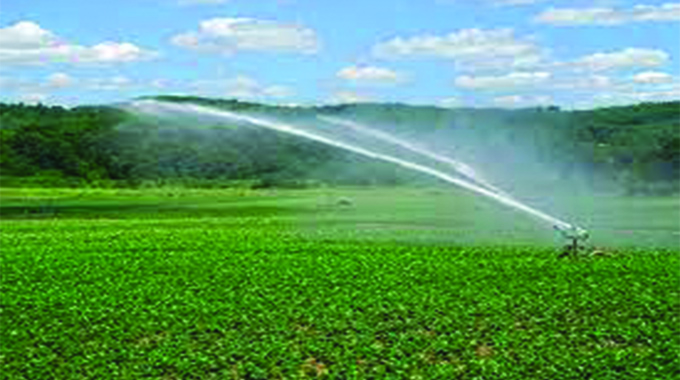
Patrick Chitumba, [email protected]
AS temperatures continue to rise amid the prolonged dry spell, more farmers are turning their attention to irrigation resulting in a spike in demand for water from major dams whose levels have started declining, the Zimbabwe National Water Authority (Zinwa) has said.
Government has already activated its systems to provide food relief to vulnerable families amid reports that the bulk of the crop planted this season countrywide has succumbed to moisture stress.
In a statement the water authority’s head of corporate communications and marketing, Mrs Marjorie Munyonga, said as of 22 February 2024, at least 35 percent more water had been released from the dams for irrigation than in a normal rainy season.
This has resulted in the national dam level average declining to 84,2 percent from 84,4 percent on February 14.
“Dam level averages for Mashonaland East, Matabeleland North, Matabeleland South and the Midlands are currently below the average expected during this time of the year in a normal season,” said Mrs Munyonga.
She said declines in water levels due to increased releases for irrigation have been noted in dams such as Tugwi-Mukosi, Manyuchi, Mazvikadei, Sebakwe, Manyame, Chivero and Osborne.
“The proportion of cities, towns, growth points and rural service centres whose raw water sources hold sufficient water to last them for a period of at least 21 months now stands at 51,1 percent with the proportion of centres whose water supply dams have water enough to last between 12 months and 20,9 months currently at 38,3 percent,” said Mrs Munyonga.
She said a proportion of 10,9 percent of cities, towns, growth points and rural service centres was water insecure with their raw water supply dams holding water that can last them for less than 12 months. Mrs Munyonga said the proportion is expected to grow should the current drought conditions persist.
“Areas in that category include Chegutu, Mt Darwin, Figtree, Gwanda, Bulawayo and Mutoko. These developments point to a very critical water security situation for the country during the year with very limited water available for socio-economic activities such as the upcoming winter cropping season and for domestic purposes,” she said.
Under these circumstances, Mrs Munyonga said, the need for sustainable, efficient and sound management of the limited available water cannot be overemphasised.
“Zinwa is, therefore, appealing to all individuals and entities intending to draw water from national dams for the winter cropping season to apply for or to renew their water abstraction agreements as required by the law,” she said.
Mrs Munyonga noted that these water abstraction agreements make it possible for Zinwa to properly allocate the available water among the competing needs of diverse users and stakeholders.
“In the interest of food security and safeguarding compliant farmers and other raw water users, no water shall be released from the dams for any individual or entity without a water abstraction agreement while Zinwa will intensify its monitoring capabilities to detect any illegal water use,” she said.
Mrs Munyonga encouraged farmers and other raw water users to visit their nearest Zinwa offices for any assistance regarding these water abstraction agreements.



 Online Reporter