peter
peter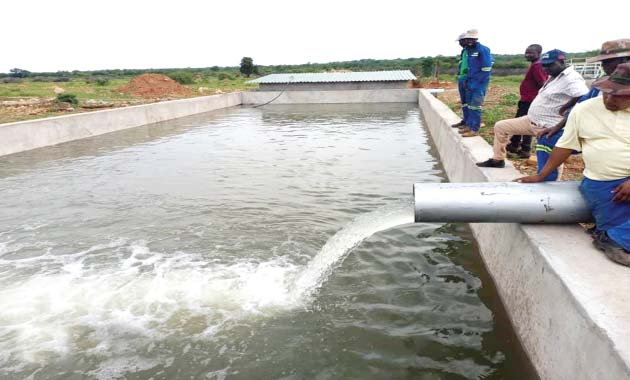
Sukulwenkosi Dube-Matutu, [email protected]
THE rehabilitation of the Bambanani Irrigation Scheme in Mangwe District, Matabeleland South Province, is complete with production expected to start soon after the connection of electricity.
The development of the scheme is set to contribute significantly towards food and nutrition security.
Two centre pivots have been installed at the irrigation scheme to irrigate 68 hectares. A drip irrigation system has been installed to irrigate 17 hectares while 26 hectares will be irrigated by sprinklers.
Some of the works that have been completed at the irrigation scheme include the construction of a night storage dam pump house, installation of night storage dam booster, installation of pumps, and water pipes, and the construction of a pump house at Ngwizi Dam.
The 131 hectare-irrigation scheme had been lying idle for about 15 years until Government intervened. The irrigation scheme was rehabilitated under the Small Holder Irrigation Revitilisation Programme (Sirp) to the tune of US$800 000.
A tender was awarded to Forster Irrigation Company, which is based in Bulawayo.
In an interview, Sirp programme coordinator, Mr Walter Makotore, said once operational, Bambanani Irrigation Scheme will go a long way in addressing issues of food and nutrition security and employment creation.
“The contractor has completed all the rehabilitation works at Bambanani Irrigation Scheme and a team from the Rural Electrification Agency is expected to visit the scheme soon in preparation for its electrification,” he said.
“Once electricity has been connected to the scheme then farmers will start producing. The target is to ensure that come winter, the farmers will be ready to produce their wheat. In the meantime, farmers have been capacitated with knowledge on best farming practices.”
Mr Makotore, said a total of 50 hectares has been cleared while 60 hectares are yet to be cleared. He said the completion of Bambanani Irrigation Scheme rehabilitation, is one of the significant milestones recorded in the agricultural sector.
Sirp was launched in November 2017 to assist in the revitalisation of irrigation schemes across the nation through the rehabilitation of infrastructure. It is a Government programme funded by the International Fund for Agricultural Development (Ifad).
It is being implemented in Manicaland, Masvingo, Midlands, and Matabeleland South. A total of about $40 million has been invested in rehabilitating 42 irrigation schemes across the country under the Sirp,and the programme is targeting 60 irrigation schemes.
The programme is targeting to revive production on 5 200 hectares. So far 3 900ha have been rehabilitated.
Bambanani village head, Mr Thomas Tshuma, said the completion of rehabilitation works at the irrigation scheme has revived their hopes.
He said community members are looking forward to planting their first crop this year.
“After several years of waiting, we have witnessed our irrigation scheme being brought to life. We thank Government for chipping in us and we are now working towards producing,” said Mr Tshuma.
“This irrigation scheme will go a long way in improving the livelihoods at household level benefit. I’m confident that once production begins, people will be raring to go to ensure that this project become a success.”
Several irrigation schemes in Matabeleland South have been rehabilitated by Government to improve food and nutrition security and these include Makwe, Guyu-Chelesa, Sebasa, Silalatshani, and Tshikwalakwala among others.
Work is underway to revitalise Mankonkoni Irrigation Scheme, Midlo Irrigation Scheme and Rustlers Gorge Irrigation Scheme.
Government is targeting to rehabilitate and develop 350 000 hectares of land by 2025 across the country to safeguard the country against the negative effects of climate change and boost food production.
Government has also rolled out various agricultural schemes meant to transform subsistence agriculture into commercial farming in line with the Second Republic’s rural industrialisation agenda.
Through rural industrialisation, the Government hopes to stem rural to urban migration, which saps growth from the African countryside, transferring it to towns and cities.
Rural industrialisation, which hinges on the Second Republic’s devolution policy, involves nurturing agro-processing start-up enterprises in rural areas through financial and technological support via venture capital funding and Government agencies. —@DubeMatutu



 Online Reporter