Online Reporter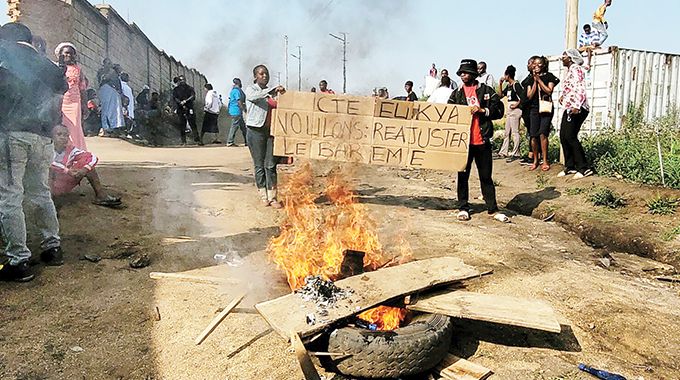
Health workers at an Ebola treatment centre in eastern Congo went on strike on July 25, demanding their pay. The walkout disrupted care for patients in the epicentre of the country’s rapidly growing outbreak.
The number of confirmed cases of Ebola in Congo has reached 2 973, including 1 309 deaths, according to government data released last Friday in what authorities say is the fastest-growing outbreak on record.
The Elikya Ebola Treatment Centre in Bunia, Ituri province, came to a standstill after doctors, nurses and security staff stopped work.
About a hundred health workers protested outside the treatment centre the same day as the strike.
They said the unpaid bonuses were undermining morale and disrupting patient care, and called on Congolese authorities to resolve the backpay so they could resume their work.
“We need to be paid, because in the meantime the disease is spreading at the treatment centre,” Martin Bolombi, one of the health workers on strike said.
“I’ve already had five people die who are still inside there. A solution must be found for us,” he added.
In a statement issued last Friday, staff said they had unanimously voted to strike until “concrete solutions” were found to resolve “two months of unpaid performance bonuses.”
The strike comes a day after Congo’s Prime Minister Judith Suminwa came to Ituri, touring major treatment hubs, in Rwampara and Mongbwalu, to assess the outbreak response. During her visit in Mongbwalu, she faced urgent demands from healthcare personnel protesting payment issues.
Dr. Adelard Lufungula, operations manager for the Ebola response, said July 25 the payment issue is “being resolved,” with workers now paid via mobile money instead of cash, and that the backlog “should be cleared” in the coming days.
Last week, health workers at Bunia General Hospital, the region’s largest medical centre, had already gone on strike over unpaid salaries. Some told The Associated Press they had not received any payment since they started work at the onset of the outbreak. The World Health Organisation says more than 100 healthcare workers have been infected since the beginning of the outbreak.
The outbreak continues to spread faster than health officials can track despite an expanding response. A key challenge is that patient zero has yet to be identified in the outbreak while displacement from armed conflict and illegal mining in the region have made it difficult to trace thousands who have come in contact with infected individuals.
The response is also hampered by a funding gap, attacks on health centres, an ongoing conflict in eastern Congo and mistrust among local communities.
There is also a lack of approved vaccines or treatments for the Bundibugyo virus, unlike the more common Zaire virus for which there is a vaccine and which was responsible for most of Congo’s past 16 outbreaks of the disease.
WHO says the global risk of the outbreak spreading outside Central Africa is low, noting that Ebola spreads through direct contact with the bodily fluids of an infected person rather than through the air, making it much harder to spread than respiratory viruses. — Prosper Heri Ngorora and Constant Same Bagalwa Associated Press