Online Reporter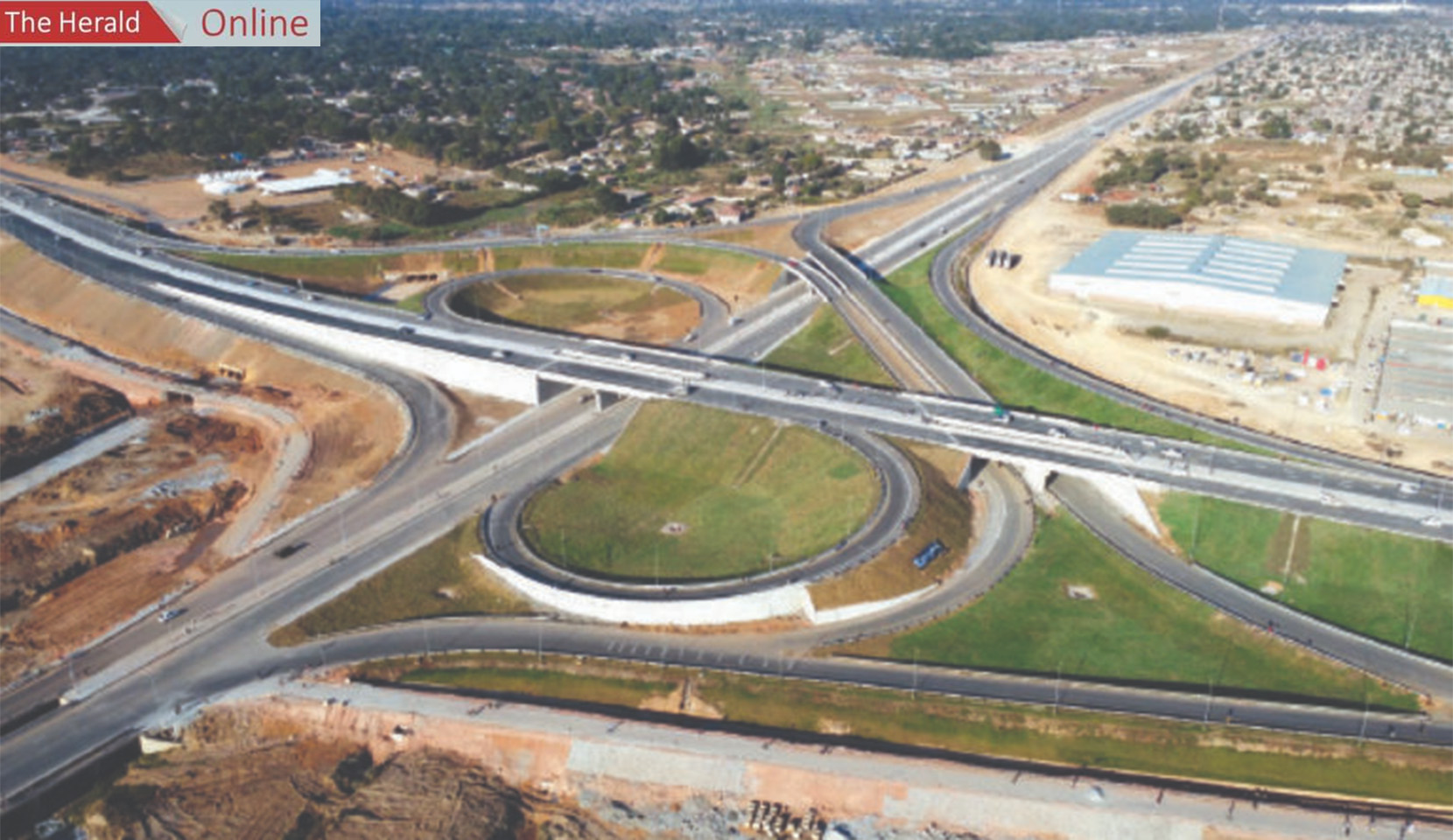
Zvamaida Murwira-Senior Reporter
PREPARATORY work for the construction of two additional interchanges at the junctions of Simon Mazorodze and Willowvale roads, and Simon Mazorodze Road and Remembrance Drive have started, amid revelations that four more such structures are in the pipeline to ease congestion, reduce carnage and modernise the country’s infrastructure.
The interchanges will be at the Mabvuku junction; Harare Drive-Mutare Road; Harare Drive-Liberation Legacy Way; Nemakonde Way-Harare Drive; Sam Nujoma-Harare Drive; Westgate Traffic Circle; Kuwadzana Traffic Circle and Churchill/Liberation Legacy Way.
This is also part of wider efforts to improve the country’s infrastructure, President Mnangagwa has said.
The President said this on Friday while commissioning Trabablas Interchange in southern Harare, which has since been opened to traffic much to the joy of motorists.
“The construction of this interchange is not an isolated project, but part of my Government’s plan to ease congestion across cities. Under this initiative, we are widening major roads leading into the central business districts, which will be complemented by appropriate interchanges at major intersections,” said President Mnangagwa.
“Processes for the construction of two more interchanges along this road, are underway. These will be at the intersection of Simon Mazorodze and Willowvale roads, as well as Simon Mazorodze and Remembrance Drive.”
“Additionally, other interchanges will also be constructed at the Mabvuku Junction; Harare Drive/Mutare Road; Harare Drive/Liberation Legacy Way; Nemakonde Way/Harare Drive; Sam Nujoma/Harare Drive; Westgate Traffic Circle; Kuwadzana Traffic Circle and Churchill/Liberation Way. Nine junctions shall be updated as part of the JM Nkomo Road.”
He said smart traffic management systems will be deployed to ensure smooth flow of vehicles.
“In addition, smart traffic management systems are now also in place and will be deployed towards optimising traffic flow through intelligent systems.
“The roll-out of these systems must be publicised and see greater discipline on our roads. These projects are expected to bring noticeable improvement to Harare’s transportation infrastructure and facilitate a smoother flow of traffic towards economic growth,” he said.
President Mnangagwa implored Government ministries, departments and agencies to collaborate in order to produce desired outcomes.
“Riding on the whole-of-government-and-society approach, I urge Ministries, departments and agencies to continue working closely together, so that these envisaged plans are a success. Together, we can achieve more high impact developmental results,” said President Mnangagwa.
“Without doubt, this project is the ultimate culmination and robust assertion of the value of partnerships. This includes state and non-state actor collaboration in the form of Government, business, financial institutions and communities, rallying towards the common goal of nation-building.”
He said appropriate infrastructure was the anchor for the attainment of Vision 2030.
“As we are all aware, the availability of appropriate and adequate infrastructure is key for to the realisation of Vision 2030. Presently, our national development priorities are mindful of the growing population, urbanisation, as well as the increased demand for quality services. In this regard, transport infrastructure was singled out as one of the critical enablers for economic growth, development, industrialisation and modernisation. It is also central to the accessibility of goods and key services, leading to an overall improvement in the quality of life for the citizenry,” said President Mnangagwa.
“The growth of the economy and increased performance of all sectors exerted pressure on our roads. This has resulted in traffic congestion, accidents, frustrating delays and the loss of production and family time.
“In view of this, my Government developed a comprehensive, long-term strategy to transform our transport system to make it more efficient, sustainable and people-centred. The implementation of this multi-pronged approach focuses on improving the current infrastructure, upgrading public transport and ensuring behavioural change among road users,” he said.
“One project under this strategy was the construction of this state-of-the-art interchange. With its completion, we expect a transformation in the way we travel, a reduction in congestion and improved connectivity, not only with regards to local transport, but also along the North-South Corridor.
“This landmark interchange connects three major roads, Simon Mazorodze, High Glen and Chitungwiza. The project involved the construction of 15 major bridges, 18 structures, some as high as 18 metres from ground, with 13 of them directly on the Interchange and 2 on Amalinda and Harare Drive. I want to commend the people, who were within this vicinity, who supported the construction of this project, in the national interest.”