Chronicle Editor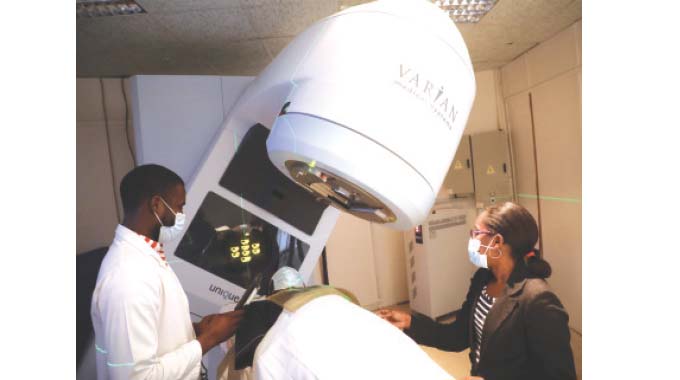
Thandeka Moyo-Ndlovu, Senior Health Reporter
CANCER patients from the southern region have gone for more than a year without radiotherapy services, which health experts say can treat a majority of cancers prevalent in Zimbabwe.
The Mpilo Central Hospital cancer unit is one of only two medical public facilities in the country that treats cancer patients but its radiotherapy machine has been down since August 2020.
The machine was fixed in January last year but could not be availed as the hospital, which services Bulawayo, Matabeleland North, Matabeleland South, Masvingo and Midlands provinces had no physicist.
One was deployed from Harare but after a month the machine broke down.
As a result, cancer patients from the southern region had to travel to Parirenyatwa Group of Hospitals in Harare, the only other hospital that offers cancer treatment in the country.
In Harare, one machine has to service close to 200 patients daily forcing desperate cancer patients to start queuing as early as 2AM.
Those who cannot afford to travel to Harare have had to default treatment, a development which put their lives in danger as the disease is likely to progress and become untreatable.
Others resort to chemotherapy, which does not help in managing most cancers while others resort to traditional medicine whose efficacy is yet to be proven. Radiotherapy is the use of radioactive rays to kill cancer cells and/or shrink the growth.
The effects of radiotherapy are localised and confined to the region being treated or targeted, making it impossible for the cells to continue growing and dividing.
The lifesaving treatment, is essential in the cure of several cancers including cervical cancer, which accounts for more deaths in women.
Speaking during a cancer prevention and treatment webinar, Dr Tatenda Chingonzoh, an oncologist and the head of radiotherapy department at Mpilo said disruption of treatment services was affecting cancer treatment in Zimbabwe as a whole.
She said more needs to be done to help cancer patient’s access radiotherapy services.
“We have had no radiotherapy services since January 2021 so every patient has been forced to travel to Harare and that is if they can afford or have relatives there,” she said.
“We cannot assume that everyone has relatives in Harare and that it is easy for a woman with cervical cancer for example to just leave her family for at least six weeks in search for the lifesaving radiotherapy services,” said Dr Chingonzoh.
“Secondly, we need to retain our trained specialists whom we keep losing to UK and other countries because radiotherapy is a highly specialised field and we cannot do much without their experience in treating cancer locally.
“Some patients have opted for chemotherapy while waiting for the radiotherapy, which only buys more time and not really address the main problem.”
She said chemotherapy drugs were less effective as the cost can also be prohibitive as drugs are not affordable to the general person and that tends to burden the equipment.
According to Dr Chingonzoh, those who delay treatment once diagnosed are at a danger of having their cancers progress, which make them impossible to treat.
“Once one is diagnosed with cancer, they must immediately access treatment services so that they are saved. Unfortunately, a majority of cancer patients present late and with disrupted radiotherapy services, we can only give them medication to ease the pain as they await their fate,” she added.
Dr Nothando Matizira who heads the Parirenyatwa radiotherapy department said although the machines are up, the service has been disruptive of late and unreliable for cancer patients in Zimbabwe.
She said the machines were down from January to August in 2020, which forced patients to rely on the Mpilo one and although it was fixed, there is no consistency.
She said top three cancers in Zimbabwe: the breast, cervix and prostrate account for more than 60 percent cancers cases and 61 percent of deaths.
“Provision of radiotherapy services from 2018 to 2021 are highly unreliable, we do not have a continuous provision of service it’s problematic year in year out.
“Machines are always breaking down and at the moment we have one machine servicing the whole of Zimbabwe,” said Dr Matizira.
“The experience has been sad for our patients as they are forced to queue for treatment as early as 2AM, in the morning. The waiting list also presents another challenge as we have more than 200 people waiting to be served at a time that is unsustainable.”
Health and Child Care Deputy Minister Dr John Mangwiro said he was looking into the matter and had directed that the service is resumed in public institutions. — @thamamoe


 Online Reporter