Mbulelo Mpofu [email protected]
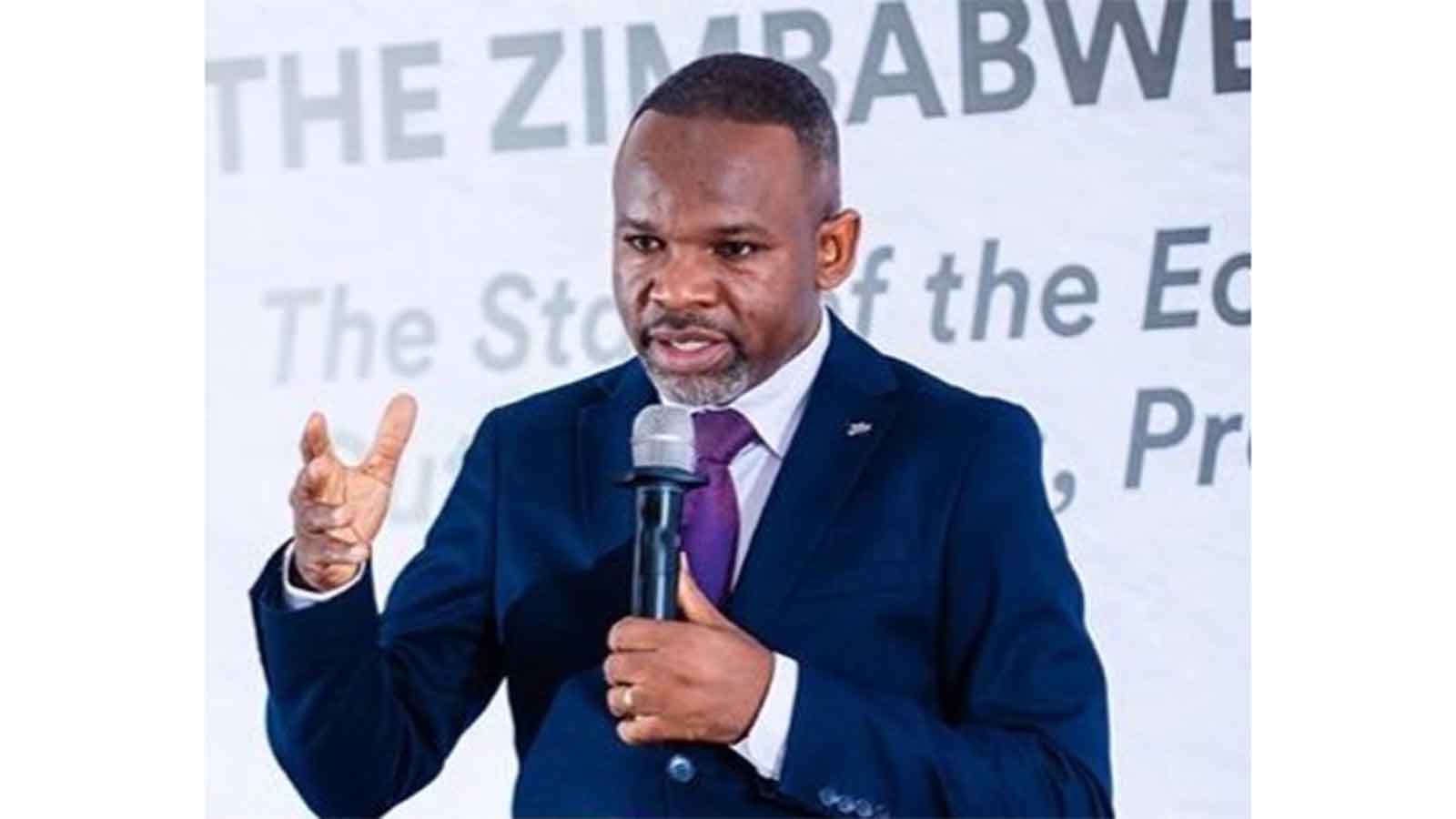
THE return of African cultural artefacts taken during colonial rule should not be viewed as the end of a historical dispute, but as the beginning of a broader process of cultural renewal, justice and self-determination, says Dr Lennon Mhishi, an assistant professor of anthropology at the University of British Columbia in Canada.
Mhishi, whose research explores anthropology, art practices, migration, diaspora and heritage, believes restitution offers African communities an opportunity to confront historical injustices while reimagining how their cultures, identities and knowledge systems can shape the future.
Reflecting on his recent presentation, “Restitution, Art Practices and Making Culture into the
Future”, delivered in July at the National Gallery of Zimbabwe (NGZ) in Bulawayo, the academic said returning cultural objects must be accompanied by conversations about their histories, spiritual significance and social relationships.
For Mhishi, restitution is not simply about transferring ownership from foreign museums to African institutions.
It is about repairing cultural disruptions caused by colonial violence and enabling communities to determine how their heritage should be understood, preserved and passed on.
“One of the recurring questions that colleagues and I have had to confront in this work is what it might look like to fill a cultural gap. In other words, how do you repair and restore centuries of deliberate cultural theft and destruction?” he said.
“There is of course no easy answer, but restitution offers an opportunity, in its fuller sense, to bring to the fire conversations around return and repair that — even with contestation — can open up ways of rethinking our notions of culture and identity.”
His argument places restitution within a broader conversation about culture and justice, particularly as African societies negotiate colonial legacies alongside rapid social, political and technological change.
The question of African cultural heritage held overseas has drawn attention to the circumstances under which artefacts, artworks and ancestral remains were removed from their communities.
Mhishi cautions against portraying African cultural identities as incomplete while awaiting the return of these materials.
Zimbabwean and other African communities have continued sustaining and transforming their cultural practices despite historical dispossession.
“I must emphasise here that cultural identities and heritage in Zimbabwe, and I am sure on the African continent, have not been ‘waiting’ for the return of cultural ‘objects’ – these are living and dynamic practices and processes — to which the conversation around return can be a productive complement,” he said.
This distinction recognises African communities as active custodians and creators of culture rather than passive recipients of a heritage that was taken away.
Restitution can nevertheless encourage renewed engagement with indigenous practices, including knowledge, ritual and craftsmanship that have been disrupted or marginalised.
“If cultural identities and heritage can be reshaped across the African continent and its diaspora, in tune with the lived realities of African peoples, then restitution should be mobilised to enable this in a world whose poles are rapidly shifting,” he said.
His vision extends beyond national borders, inviting African communities and the diaspora to reconsider the continent’s cultural narratives on their own terms.
A central concern in Mhishi’s work is the role communities should play in determining the future of returned cultural material.
Through projects such as, “Reconnecting Objects,” which explored colonial collections across Africa and Europe, he has examined the relationships between cultural objects, the people from whom they were taken and the institutions that continue to hold them.
He cautions against treating communities as unified groups with a single position on restitution.
Different experiences, interests and interpretations of heritage mean consultation should not become an attempt to manufacture consensus or legitimise decisions already made by those in authority.
“Communities have all kinds of contested positions, and their importance in restitution is not a tending towards consensus or innocent resolve,” he said.
African material culture and ancestral remains have historically occupied places in everyday life extending beyond their presentation as museum exhibits.
Their significance can be spiritual, symbolic, practical and social. Their removal can therefore disrupt relationships through which culture is lived and understood.
Mhishi recalled meeting the late mbira musician Mbuya Stella Chiweshe, who challenged him to consider the spiritual implications of African belongings held in museums.
One question concerned how communities might confront the accumulated violence associated with these materials and what their return might require beyond physical transportation.
“What would ritual and ceremony look like in cleansing material that now carries in some instances the toxicities of colonial violence, as well as of chemical life?” he asked.
Mhishi refers to this wider process through ukuhlanjululwa/kucheneswa, terms associated with cleansing and purification.
He is not arguing against restitution. Rather, he advocates an approach that recognises how objects and their histories may have changed during decades or centuries in foreign collections.
“If the ‘object’ that left is no longer the same ‘object’ that returns, what role can communities play in shaping how restitution unfolds beyond return, and beyond the ‘object’?” he quizzes.
The question invites communities to shape the ceremonies, interpretation, care and future use of returned heritage according to their cultural understandings.
Restitution also raises questions about custody and legitimacy.
Where materials were taken under different political and territorial arrangements, deciding who should receive them today can be complicated by the boundaries and institutions of modern nation states.
Mhishi challenges the argument that African cultural objects are necessarily safer or better appreciated in foreign museums. Communities had their own systems of preservation, meaning and responsibility before these materials were removed.
The issue, he argues, is not merely whether an institution has the resources to conserve an artefact, but whether communities retain the authority to determine its cultural significance and how it should be held.
“Our diverse communities have both the right and the capacity to build cultural infrastructures that value and engender appreciation for the various facets of our cultures, material and non-material,” he said.
This requires investment in local museums, galleries, archives, community centres and research facilities, alongside efforts to strengthen the documentation and transmission of indigenous knowledge.
Such infrastructure would enable returned materials to become part of a wider cultural ecosystem connecting the past with contemporary artistic practice and future generations.
Mhishi acknowledges work already being undertaken by Zimbabwean cultural practitioners and institutions, as well as the country’s participation in discussions on restitution and cultural policy.
However, he is reluctant to prescribe a uniform model for institutions such as the National Gallery of Zimbabwe, arguing that those working within the local cultural sector are better placed to understand their circumstances.
“The critical work is already happening in Zimbabwe, and there is room for growth. It is heartening to know we can and will do better,” he said.
For contemporary artists, Mhishi sees restitution as an invitation to engage critically with the historical circumstances shaping their work.
Colonialism, he argues, should not be treated as a closed chapter because its consequences continue to influence cultural hierarchies, racial inequalities and the ways African artistic traditions are classified and valued.
Artists can challenge established narratives while creating alternative ways of understanding
African experiences.
Mhishi’s conception of art extends beyond conventional visual representation to encompass sound,
architecture, sculpture and other sensory forms of expression.
He invokes the Shona word, kuona and the Ndebele ukubona, associated with seeing, to suggest
that perception can extend beyond looking to include hearing, feeling and engaging with
dimensions of experience that conventional museum displays may not fully communicate.
He points to contemporary Zimbabwean artist Masimba Hwati as part of a wider body of artistic
work that encourages audiences to think differently about perception and cultural meaning.
Mhishi also questions the tendency to reduce Zimbabwean sculpture to established historical
classifications, advocating more expansive ways of understanding artistic traditions.
“What does an African-led movement for restitution look like in Zimbabwe?” he asked, framing the
question as part of an ongoing process of collective imagination.
For him, artists can create spaces where disagreements about heritage and identity become
productive, allowing different perspectives to coexist in the pursuit of cultural dignity.
Mhishi’s reflections ultimately lead to a broader question: How can African societies draw on
indigenous knowledge systems and local cultural practices to imagine alternative futures?
He cautions against romanticising tradition or presenting indigenous knowledge as a fixed body of
wisdom unchanged over time. Cultures are continually reinvented and communities should
determine which practices remain meaningful in their present circumstances.
He also challenges the tendency to position African knowledge as the opposite of modernity,
suggesting indigenous societies have long developed ways of adapting to disruption and making
sense of changing environments.