Online Reporter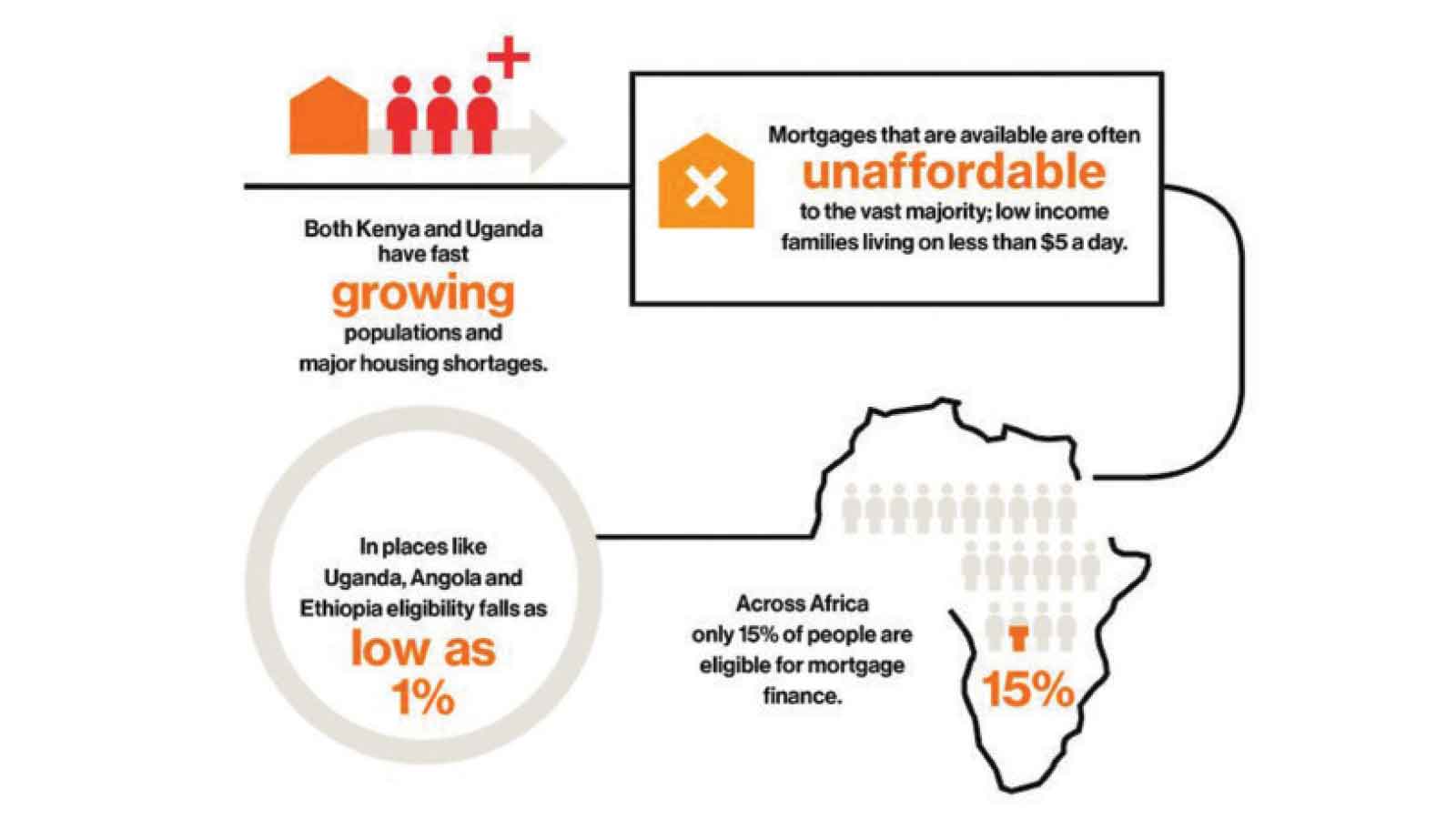
Wellington Muzengeza
If we dispense with polite illusions, the mortgage is not a neutral financial tool; in reality, it is a colonial relic, imported wholesale from economies built on salaried stability and contractual predictability.
Sadly mortgage has over the years been imposed on a continent whose economic lifeblood is informal, fluid, and entrepreneurial in nature.
An estimated 85 percent of incomes in most African cities are reportedly earned outside the formal wage system, yet we continue to worship the mortgage as the sacred template for housing finance.
This is not innovation; instead, it is structural exclusion and absurdity masquerading as policy.
Across Africa, the metastasis of informal housing is not a cultural preference; it is the inevitable consequence of exclusion.
“Proof of income” is a cruel bureaucratic joke in cities where survival is transacted in cash, negotiated in markets, hustled on motorcycles, and mediated through mobile money and smartphones.
Payslips, tax returns and employment letters are fantasies of a bureaucratic elite, irrelevant to the current lived realities of millions in African cities today.
“Slum Inc” is not the failure of the poor to conform to formal structures; it is the catastrophic failure of financial institutions to innovate.
It is the entrenched arrogance of systems that refuse to meet people in the realities of their existence, clinging instead to instruments that erase the rhythms of African life, yet alternatives are already alive.
Across the continent, communities have refused to wait for banks or states to awaken from their inertia.
They have engineered their own mechanisms of survival and progress, imperfect, certainly, but functional, pragmatic, and grounded in lived experience.
These are not marginal footnotes to be dismissed; instead, they are prototypes of a new financial imagination, blueprints for a system that acknowledges and harnesses the vitality of informality rather than criminalising it.
In Africa’s informal settlements, the question of housing finance is not a matter of convenience; it is a matter of survival, dignity and resistance against a system that has historically excluded the urban poor from formal credit markets.
The dominant models of housing finance reveal both the ingenuity of marginalised communities and the structural violence of financial institutions that continue to gatekeep access to decent shelter. Microfinance housing loans, pioneered by institutions such as Jamii Bora in Kenya, LAPO in Nigeria, and SEWA in South Africa, provide small, short-term loans that enable incremental building.
They are more accessible than conventional mortgages, yet they remain shackled by the demand for formal documentation, a cruel irony in settlements where informality is the norm.
Savings and Credit Cooperatives (SACCOs), widespread in Kenya, Uganda, and Tanzania, embody community-rooted trust and solidarity, pooling member savings to extend low-interest loans, but their reach is strangled by regulatory constraints and liquidity shortages, exposing the hypocrisy of states that preach financial inclusion, while suffocating grassroots innovation.
Community savings groups, ROSCAs and VSLAs stand as the backbone of survival for millions, particularly women. These rotating schemes finance land purchases and home improvements with agility and resilience, deeply embedded in cultural practice, yet they remain vulnerable, lacking scale, protection, and recognition, dismissed by policymakers who fail to see that these groups are the true architects of urban survival.
Urban Poor Funds, such as Muungano wa Wanavijiji in Kenya, FEDUP in South Africa, and SDI Nigeria, represent one of the few models that unapologetically centre dignity, collective agency, and tenure security. They are radical in their insistence that the poor are not passive recipients of charity but active agents of transformation.
NGO-backed housing finance, offered by organisations like Habitat for Humanity and SELAVIP, provides subsidised loans or grants often tied to sweat equity.
While valuable, these schemes are donor-dependent and rarely scalable, perpetuating a cycle of dependency rather than systemic change. Incremental self-financing, the most common model across Africa, forces families to build in stages as income allows. It is slow, precarious, and often criminalised by authorities, yet it is the reality of how Africa builds, a testament to resilience in the face of exclusion.
Mobile money-linked credit, through platforms like M-Pesa in Kenya and MoMo in Ghana, is a revolutionary intervention. By leveraging behavioural data rather than bureaucratic paperwork, it dismantles barriers and democratises access to housing finance, proving that innovation thrives where formal systems fail.
Employer-assisted housing schemes, though rare, are emerging in mining and agricultural sectors, offering loans or savings plans tied to formal employment, but they remain elitist, confined to enclaves of formal labour, irrelevant to the majority who toil in informality.
Public-private partnerships (PPPs) promise affordable housing with flexible payment plans, yet their rigid creditworthiness assessments systematically exclude the poorest, exposing the lie of “affordability” when measured against the lived realities of the urban poor.
Finally, land tenure regularisation programmes in Rwanda, Ethiopia, and Tanzania demonstrate that legal recognition of land rights can unlock formal credit; however, titling alone is insufficient; without financial innovation, it becomes another bureaucratic ritual that fails to translate into real empowerment.
The landscape of housing finance in informal settlements is therefore a battlefield. On one side stand communities armed with creativity, solidarity, and sheer survival instinct; on the other, institutions that cling to colonial-era notions of property, documentation, and creditworthiness.
The challenge is not merely to expand access to finance but to dismantle the structural barriers that criminalise informality and perpetuate exclusion. Anything less is cosmetic reform. Comparative housing finance models in informal settlements across Kenya, South Africa, and Nigeria reveal both the ingenuity of marginalised communities and the structural contradictions of states that continue to criminalise informality while failing to provide viable alternatives.
In Kenya, microfinance housing loans through institutions such as Jamii Bora, KWFT, and Faulu Kenya have become lifelines for low-income households, enabling incremental construction in contexts where mortgages are inaccessible.
South Africa, by contrast, has seen limited uptake of microfinance housing loans, with NGOs experimenting in backyard dwelling finance, while Nigeria’s LAPO Microfinance Bank has positioned itself as a critical provider for low-income earners.
Yet across all three countries, microfinance remains constrained by its dependence on formal documentation and its inability to scale to the magnitude of urban housing demand.
Savings and Credit Cooperatives (SACCOs) in Kenya, Stima, Harambee, and countless others, are deeply embedded in the social fabric, pooling member savings to extend affordable housing loans. South Africa’s equivalent, stokvels, are more savings-oriented than credit-driven, while Nigeria is witnessing the emergence of cooperative housing schemes that signal a growing appetite for collective finance.
Community savings groups, whether VSLAs and ROSCAs in Kenya, stokvels in South Africa, or ESUSU and Ajo systems in Nigeria, remain the most culturally embedded and resilient models.
They fund land purchases and home upgrades with agility, but their informality leaves them vulnerable to exploitation and exclusion from formal recognition. The lesson is clear: Africa’s housing future will not be built by banks or bureaucrats but by communities that refuse to be silenced, criminalised, or ignored. What is required is aggressive financial innovation that dismantles structural barriers and recognises informal settlements not as aberrations to be eradicated but as the living, breathing foundation of Africa’s urban reality.
Rethinking “Proof of Income”
The true frontier of financial inclusion is not the invention of yet another loan product, but the radical reconfiguration of epistemology itself, the very definition of what constitutes “proof.”
We must dismantle the colonial hangover that equates legitimacy with a payslip or an audited statement, and instead construct a new architecture of trust rooted in African realities. Mobile money transaction histories, digital bookkeeping applications, community-based verification systems, receipts from informal trade, and hybrid scoring models that fuse behavioural data with cash flow patterns; these are not peripheral curiosities, they are the living metrics of credibility. They may be imperfect, but they are authentic, they are functional, and above all, they are African.
The tragedy, however, is that even when informal settlements and grassroots economies demonstrate viability, through repayment discipline, collective cohesion, and incremental upgrading, they are still strangled by the tyranny of formal parameters.
The system insists on payslips from men and women who have never had formal employment in their lives. It demands audited statements from women who orchestrate entire supply chains from a market stall, whose economic genius is invisible to the bureaucratic gaze. This is not prudence, it is prejudice. This is not due diligence; it is financial apartheid masquerading as risk management. It is the systematic exclusion of the majority by a framework designed to privilege the minority. Until we obliterate this epistemic violence and replace it with a recognition of Africa’s own financial vernacular, innovation will remain a hollow slogan, and inclusion will remain a lie.
What Must Be Done
What Africa requires is not a timid reform of housing finance but a full-scale revolution, an uncompromising break with the colonial epistemologies that continue to dictate who is deemed “bankable” and who is condemned to exclusion. The starting point must be the recognition that informality is not a deviation from the norm; it is the norm. It is the majority condition, the lived reality of millions, and any financial system that refuses to serve this majority is not merely inadequate; it is illegitimate.
Capital must be decolonised, stripped of its obsession with Western templates of creditworthiness, and redirected toward the vernacular economies that already sustain African cities. Risk must be redefined, not as the absence of a payslip or audited statement, but as the presence of demonstrated resilience: repayment histories in savings groups, the durability of community trust networks, the cash flows of market traders, and the incremental investments households make in upgrading their dwellings.
Finance must be democratised, not through tokenistic inclusion campaigns, but through structural redesign that privileges accessibility over bureaucracy.
Concrete steps are clear. First, governments and lenders must institutionalise mobile money records, cooperative savings schemes, and informal trade receipts as legitimate proof of income. Second, housing finance must embrace incremental lending models that mirror the way Africans build, room by room, wall by wall, rather than imposing rigid mortgage structures that presuppose formal salaries and lump-sum capital. Third, community-based verification systems must be formalised into policy, allowing local associations, cooperatives, and savings clubs to serve as guarantors of trust. Fourth, hybrid scoring models that combine behavioural data with cash flow analysis must replace the outdated fixation on payslips and tax returns.
Until these measures are enacted, we will continue to construct cities of exclusion, governed by spreadsheets that cannot see the people they erase. The future of African cities will not be built by mortgages designed for foreign contexts; it will be built by financial models that understand how Africans live, earn, and build. Let us be clear: this future is not a technical puzzle awaiting innovation. It is a political choice, a question of whether we will continue to reproduce financial apartheid or whether we will finally choose to recognise informality as the foundation of African urbanism.
Wellington Muzengeza is a Political Risk Analyst and Urban Strategist offering incisive insight on urban planning, infrastructure, leadership succession, and governance reform across Africa’s evolving post-liberation urban landscapes.