Online Reporter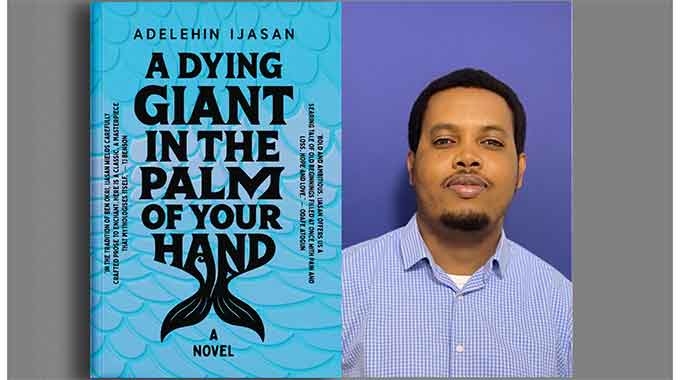
If the list below shows anything, it is that 2026 is promising on a number of counts. Once again, some of the most recognisable African authors working today have books coming out.
Another noticeable trend is the publication of poetry collections (in Nigeria, perhaps that has something to do with the fact that the 2026 edition of the Nigeria Prize for Literature is on poetry).
A number of debuts are testaments that visibility is being given to homegrown talents. On the other hand, we will realise that many of the books coming out in Africa today are merely books being republished for an African readership, having already been published in the United States, the UK, and elsewhere.
Of course, this is very welcome, but it also calls for self-reflection. Some of the recognisable names here are authors who, having built their reputation with fiction, now appear to be branching off into genres such as children’s literature and poetry.
A Dying Giant in the Palm of Your Hand will be published by Masobe Books in January 2026.
The narrative begun in Tramaine Suubi’s 2025 book, phases, continues with a companion collection, stages: Poems, eagerly anticipated for release. While Suubi’s first book turned its gaze to the moon, stages charts the evolution of stars, moving from “Yellow Dwarf” to “Protostar”.
The collection is described as a meditation on the choices that define a life, navigating the tension between personal tranquillity and the entanglements of capitalism.
It traces Suubi’s journey across continents, asserting a fierce freedom to exist on one’s own terms. Early praise has been effusive: National Book Award winner, Mary Szybist, calls the work “visionary love poetry”, celebrating its ability to render a single life as vast and enduring as the life cycle of a star.
The Comedian’s Diary — Obase-Sam Ikoi (Masobe Books)
This inventive debut follows failed accountant and aspiring comedian, Oga Simon, as alcohol addiction slowly unravels his life, and after, his path to redemption, to building a life worth living. Intimate and emotionally charged, Ikoi demonstrates addiction’s far-reaching consequences, not only on the victim, but on loved ones too, and the crude reality in one man’s trying and failing to get his life back on track.
Born at the End of the World — Donica Merhazion (Catalyst Press)
Born at the End of the World is the debut historical novel by Eritrean-Ethiopian author Donica Merhazion, to be published by Catalyst Press in February 2026. Inspired by the true story of the author’s parents, the novel is set during the Ethiopian Red Terror of the 1970s and unfolds as a powerful narrative of love, sacrifice, and resistance.
It follows the intertwined lives of Elen, who escapes an arranged marriage in rural Ethiopia to build a new life in Asmara, and Girmai, who flees an abusive home and rises from street hustler to respected businessman.
Their paths converge as the Derg regime seizes power, forcing both into the underground network of the Eritrean People’s Liberation Front, where they serve as spies in the struggle for freedom. Amid terror and political violence, a deep and passionate bond forms between them.
Benni — Benni McCarthy with Mark Gleeson (Pan Macmillan South Africa)
Benni is the authorised biography of Benni McCarthy, co-authored with Mark Gleeson and set for release in February 2026 by Pan Macmillan South Africa. The book chronicles McCarthy’s journey of resilience, tracing his rise from growing up amid poverty and gang violence in Hanover Park, Cape Town, to becoming one of the most respected figures in global football.
It details his playing career at clubs including Ajax Amsterdam, Celta Vigo, Blackburn Rovers, and Orlando Pirates, with particular focus on his time at FC Porto under José Mourinho, where he played a central role in the club’s 2004 UEFA Champions League triumph – the first time a South African player won the competition.
The Shipikisha Club — Mubanga Kalimamukwento (Dzanc Books)
The Shipikisha Club by Mubanga Kalimamukwento, slated for release on 10 March 2026 by Dzanc Books, is set in Kabwe, Zambia. The novel follows Salifyanji (Sali), a mother of three, as she stands trial for the murder of her husband, Kasunga.
At its heart, the story interrogates the Zambian cultural concept of shipikisha — the expectation that wives must endure any hardship in marriage. Told through the shifting perspectives of Sali, her daughter Ntashé, and her mother Peggy, the novel unfolds as a poignant family and courtroom drama, balancing intimate emotional stakes with broader questions of duty, endurance, and personal agency.
A Museum of Unfinished Men — Kukogho Iruesiri Samson (Masobe Books)
A Museum of Unfinished Men is a deeply introspective poetry collection that examines the devastating complexities of failed fatherhood and generational legacy. Through raw emotional candour and profound reflection, it explores how inherited silence and emotional neglect shape male identity across different eras, creating an agonising tension between inherited burdens and the pursuit of transformation.
The Inventory of Lost Things — Abubakar Ibrahim (Masobe Books)
The Inventory for Lost Things is a lyrical meditation on memory, grief, exile and the ways we rebuild ourselves after loss. Through sixty poems that shift between personal recollection and collective history, the collection explores how language can be both wound and wonder, and how tenderness endures in the aftermath of ruin.
The poems traverse intimate and public landscapes, from the quiet ache of familial absence and the ghost of a mother’s voice, to the smouldering ruins of war-torn geographies such as Gaza and Khartoum, to elegies for drowned men and vanished homelands.
The Oath — Muthoni wa Gichuru (Ibua Publishing)
The Oath by Muthoni wa Gichuru will be published by Ibua Publishing in 2026 and was the runner-up in the 2024 Ibua Novel Manuscript Project. A historical novel attentive to spiritual and cultural rituals, it has been praised for its rich world-building and its sustained engagement with the traumatic legacy of colonialism.
The narrative explores tensions between tradition and modernity, questions of cultural identity, and the enduring imprint of the colonial era on African societies. JudgeBilly Kahora highlighted the novel’s strong engagement with the trauma of the colonial experience, while Judge Edwige-Renée Dro commended the depth and coherence of its world-building. – Afrocritik.