admin
admin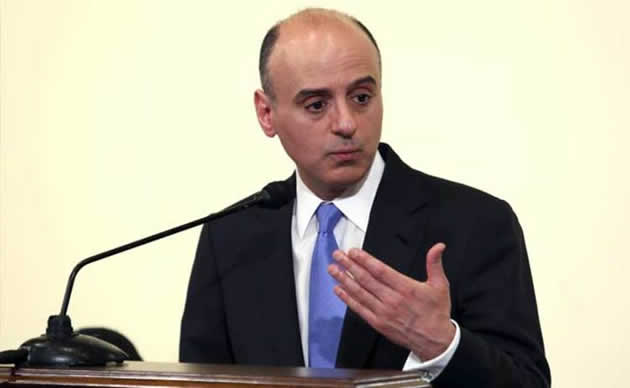
Dubai. — It is not just the Saudi king who will be skipping the Camp David summit of US and allied Arab leaders. Most Gulf heads of state won’t be there.
The absences will put a damper on talks that are designed to reassure key Arab allies, and almost certainly reflect dissatisfaction among leaders of the six-member Gulf Co-operation Council with Washington’s handling of Iran and what they expect to get out of the meeting.
Saudi Foreign Minister Adel al-Jubeir announced late on Sunday that newly installed King Salman will not be attending. The ostensible reason was because the upcoming summit on Thursday coincides with a humanitarian cease-fire in the conflict in Yemen, where a Saudi-led coalition is fighting Shi’ite rebels known as Houthis.
Crown Prince Mohammed bin Nayef, who is also interior minister, will lead the Saudi delegation and the king’s son, Deputy Crown Prince Mohammed bin Salman, who is defence minister, will also attend.
President Barack Obama had planned to meet King Salman one-on-one a day before the gathering of leaders at the presidential retreat but the White House did not take his decision to skip the summit as a sign of any substantial disagreement with the United States.
The king, who took power in January after his brother King Abdullah died, has not travelled abroad since his ascension to the throne.
The tiny island kingdom of Bahrain said separately that its delegation would be headed by the country’s crown prince, Salman bin Hamad Al Khalifa.
Bahrain, whose leadership has close ties to the Saudis, is an important military ally of the US. It is the long-standing host to the Navy’s 5th Fleet, which is responsible for operations around the Arabian Peninsula and northern Indian Ocean, and is Washington’s main naval counterbalance to Iran.
At the summit, leaders of Gulf nations will be looking for assurances that they have Obama’s support at a time when the region feels under siege from Islamic extremists and by Iran’s rising influence. The Gulf states worry the nuclear pact taking shape with the U.S., Iran and other nations may embolden Tehran to act more aggressively in the region. — News24.


 Online Reporter