admin
admin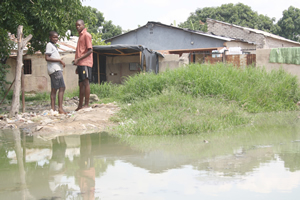
bacteria that causes diarrhoeal diseases, a health expert has said. Dismissing the notion that the current typhoid outbreak that affected about 900 people was caused by informal fish and meat vendors only, epidemiological and disease control director in the Ministry of Health and Child Welfare Dr Portia Manangazira said a lot of factors could have caused the outbreak.
“There are a combination of factors that could have caused this outbreak. Provision of clean and adequate water supply is still erratic and sewers continue to burst in the same suburbs.
“All that could have contributed to the outbreak,” Dr Manangazira said.
She said although partners have helped by sinking boreholes, it has been noted that water from some of the boreholes is contaminated. She said boreholes in urban areas should only be temporary and should never be assumed or used as a permanent solution to mitigate the problem of inadequate water supplies.
“According to the Public Health Act, tap water is the only acceptable source of drinking water in urban areas.
“If someone sinks a borehole for watering his garden, it should be clearly labelled ‘borehole water not for drinking’,” she said.
Dr Manangazira said the reason why Government, in conjunction with its partners, sunk boreholes in most high-density suburbs was to augment water supplies from council, which had failed to provide safe and adequate drinking water.
RELATED STORIES
- Diarrhoea outbreak hits Warren Park
- Cholera fears abound
- Contain Typhoid before it reaches crisis levels
- Typhoid cases rise to 756
“Most boreholes were drilled between 2008 and 2009 at the height of the cholera outbreak as a stop gap measure to ease (the) water crises.
“We anticipated that by now our council would be able to produce enough water for its people,” Dr Manangazira said.
She said boreholes were not supposed to be a permanent solution to water problems because there is a lot of contamination that takes place at various levels.
“If the city wishes to make borehole water a permanent solution, it should cite a place for the borehole and water is pumped into a tank where it is treated first before being distributed to users,” Dr Manangazira said.
She said it was very possible for borehole water to be contaminated by sewage because the city’s sewer reticulation system is no longer intact and water could be contaminated through seepage.
Boreholes should be sunk about 30 metres away from dump sites, graveyards and sewer pipes. Dr Managanzira said the bucket system was not safe because some people brought contaminated containers to the borehole, others would physically
touch the borehole sprout and all this could lead to contamination of borehole water.
In separate interviews carried by The Herald yesterday, fish mongers in Glen View and Kuwadzana blamed council for failing to collect refuse and attend to burst sewer pipes in time, resulting in Salmonella typhi, the bacteria that causes typhoid, thriving in the filthy environmental conditions.
The vendors said the failure by council to collect refuse on time has resulted in residents dumping waste at undesignated dumb sites near vending stalls.
“This is our only source of income and if we are prohibited from vending fish, how are we going to look after our children,” said one of the vendors who only identified himself as Tawanda.
Workers at council-owned Ingwe Farm said they were forced to use the bush since all toilets there were not functional.
“All toilets are blocked and all the 54 families are forced to use the bush system,” said one worker.
“If an outbreak occurs, the whole compound would be wiped out,” added the employee. In Chitungwiza, pools of untreated sewer and heaps of uncollected garbage that has made some roads impassible are a common sight. The worst affected areas are St Mary’s, Unit D and H and some parts of Unit B where the drainage system in not functioning properly.
“Heaps of uncollected garbage and untreated sewer has been normalised here. The council is not moved anymore by their occurrence. The sewer will eventually dry on its own and sometimes when the rubbish is too much we burn it,” said Mrs Tendayi Rwodzi of St Mary’s.
In parts of Epworth, residents rely on boreholes and blair toilets as there are no proper sanitary facilities.



 Online Reporter