Alice Tagwira
Beyond Boundaries
Though the calendar marked Mother’s Day this past Sunday, the air remains thick with the scent of lilies and the lingering echoes of gratitude.
But as the floral arrangements wilt and the social media tributes fade into the digital abyss, a more profound conversation is demanding space.
It is time we stop viewing motherhood through the narrow aperture of biology and start recognising it as a metaphysical state of being. We are here to celebrate not just the “fertile womb,” but the “fertile soul”— the woman who, by her mere existence, provides the scaffolding upon which humanity is built.
In a world that constantly asks women, “What do you bring to the table?” it is time for a radical correction: A woman does not bring something to the table; she is the table.
For centuries, societal structures have weaponised the womb, using it as a barometer for a woman’s worth. If she bears fruit, she is honoured; if she remains “barren”—whether by nature, timing, or choice — she is often relegated to the sidelines of the Mother’s Day parade.
This is a staggering intellectual and spiritual failure.
Motherhood is not a purely physiological event; it is an archetypal energy. It is the capacity to nurture, to protect, to endure, and to hold space for the vulnerable.
When we look at the child-free woman, we see a guardian of freedom who teaches us that a woman’s purpose is not a factory setting.
When we look at the aunt, the mentor, or the “cat lady” who provides emotional sanctuary to her community, we are looking at motherhood in its most distilled, selfless form.
These women offer a “social womb,” gestating ideas, stability, and love without the contract of genetic legacy. They are the true revolution, proving that fulfillment is an internal harvest, not an external delivery.
Let us speak with the candour that this occasion deserves. There is a “bitter pill” that society swallows daily, yet refuses to acknowledge: the staggering disparity in how we judge parental abandonment.
In our collective consciousness, a mother’s presence is treated as a law of nature, while a father’s presence is treated as an optional luxury.
When a mother leaves, the world reacts with a visceral, scorched-earth vilification.
She is a “scandal,” a “monster,” a disruption of the cosmic order. Yet, when a father leaves, he often becomes a mere “statistic.” Society shrugs, muttering the tired refrain, “That’s just how men are,” as if the Y-chromosome carries a genetic exemption from responsibility.
This normalisation of the “absent father” is a poison. We have reached a point where we celebrate men for doing the “bare minimum.”
We give parades to fathers who manage to pay child support on time, while the mothers — whether married, single, or divorced — perform the invisible, 3am labour of emotional anchoring without so much as a nod.
Furthermore, we must address the “Disneyland Dad” phenomenon — the man who abandons his biological children from a previous union only to play the role of the “heroic stepfather” for his new partner’s kids. While the stepchildren get tuition and theme parks, the biological children are left to wonder if their existence was a draft that their father decided to delete. Biology doesn’t make a parent; “showing up” does. Any man can contribute a seed, but it takes a soul to be a father.
We return to the question of value. In the transactional theatre of modern relationships, women are often pressured to justify their seat at the table with education, financial contribution, or reproductive success.
But if we look at the intrinsic nature of the feminine, we find that a woman’s value is a pre-existing condition.
Nature did not wait for a woman to get a degree or a positive pregnancy test to make her valuable.
Her presence in the “marriage equation” does not add to the sum; it creates the space where the sum can exist.
As the core principles of this identity remind us:
Worth is Inherent: You don’t need to have children to bring value.
Socio-Economic Independence: You don’t need to contribute financially or hold a degree to bring value.
The Power of Being: Simply being a woman is enough.
The achievements — the wealth, the PhDs, the career milestones — should be the garnish for her own growth and happiness, not the “buy-in” for her worth. Without the woman, there is no marriage. Without the “table,” the feast of life falls to the floor.
There is a reason why, across cultures and increasingly in modern theological discourse, the attributes of the Divine are being reconnected to the feminine. To say “God is a Woman” is not an act of heresy; it is an act of recognition.
When we examine the scriptures, we find a God who transcends the “Angry Patriarch” trope. We find a God who is:
The Ultimate Nurturer: Mirroring the way women care for their families with a tenderness that defies logic.
The Protective Mother: As Psalm 91:4 suggests, “He will cover you with His feathers and under His wings you will find refuge.” This is the imagery of a mother bird shielding her brood.
The Life-Giver: Femininity is the portal of life, and God is the source.
The Patient Endurer: 2 Peter 3:9 speaks of a God who is “patient with you, not wanting anyone to perish.” This endurance is the hallmark of the feminine spirit—a patience that outlasts the harshest winters.
The “unconditional” nature of a mother’s love — the kind that asks no status and seeks no reward — is the closest human approximation we have to the Divine. Isaiah 49:15 asks, “Can a mother forget the baby at her breast?” It uses the most unbreakable human bond to explain God’s commitment to us. In this context, femininity is not just a gender; it is the language of Grace.
This celebration extends to the women who don’t fit the Hallmark card. We celebrate the divorced women, who teach us that leaving can be an act of holy self-preservation. You teach us that “choosing yourself” is not a sin, but a survival skill.
We celebrate the “rebellious” and “immoral” women — those labelled by a judgemental society because they refuse to shrink themselves. You are the ones who teach us not to conform, reminding us that we can live on our own terms. We celebrate the older women who break glass ceilings, and the women who marry “late,” proving that our 20s are for finding ourselves, not just a husband.
To the women parenting alone: you are the proof that a healthy environment does not require a traditional silhouette to be whole. You are doing the work of two with the heart of one.
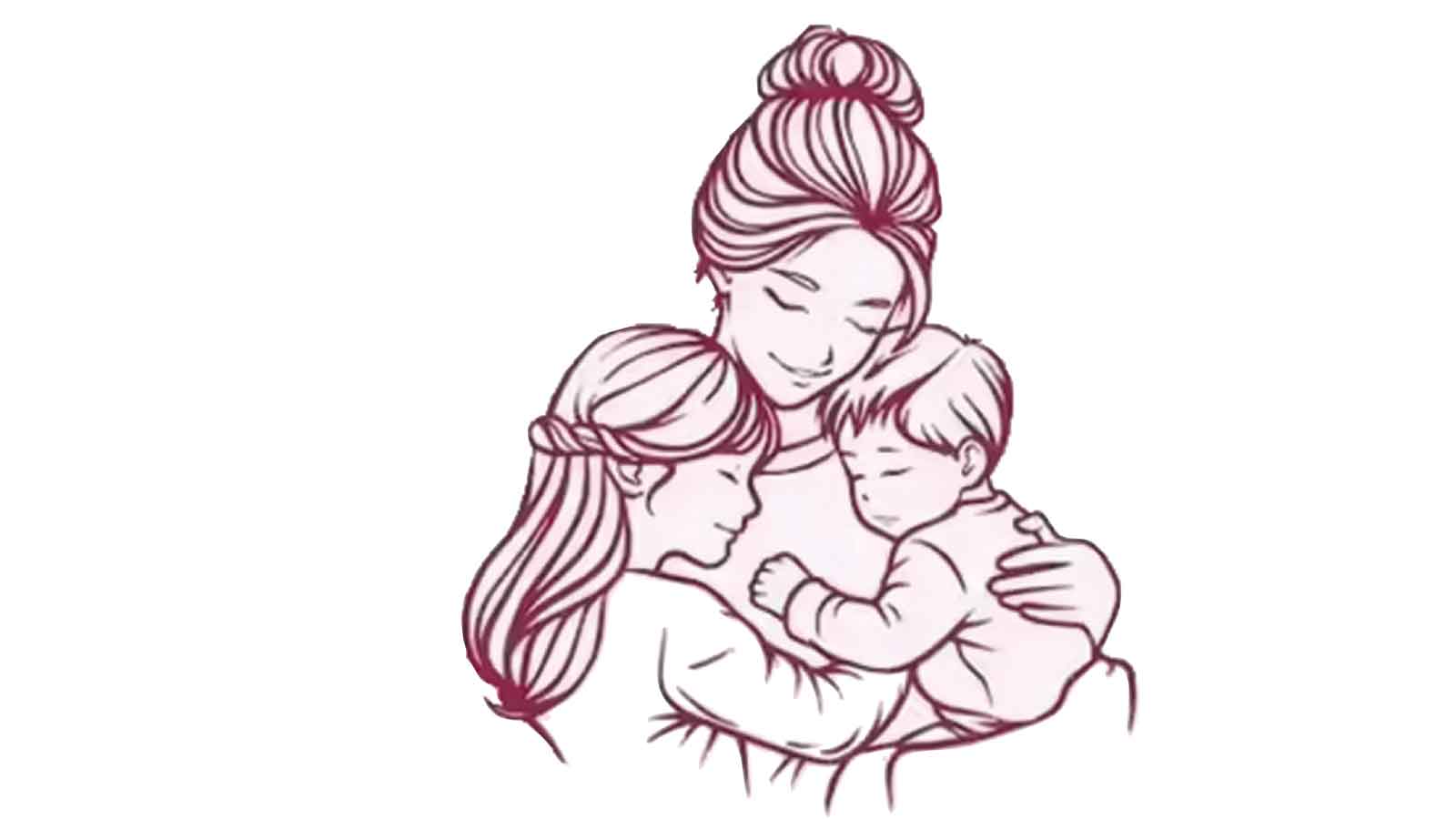
Motherhood is the “glue,” the “constant,” and the “emotional anchor.” But even more so, the Woman is the revolution. Whether you are child-free by choice, a mother by biology, a mother by adoption, or a mother to your community—you are the table.
You are the ones who stay when others walk away. You are the ones who fight when the going gets tough.
You are the ones who prove that “fatherhood” may be conditional for some, but “womanhood” is a relentless, unconditional commitment to life itself.
Happy Mother’s Day to all women. You are enough, simply because you are.