Prosper Ndlovu [email protected]
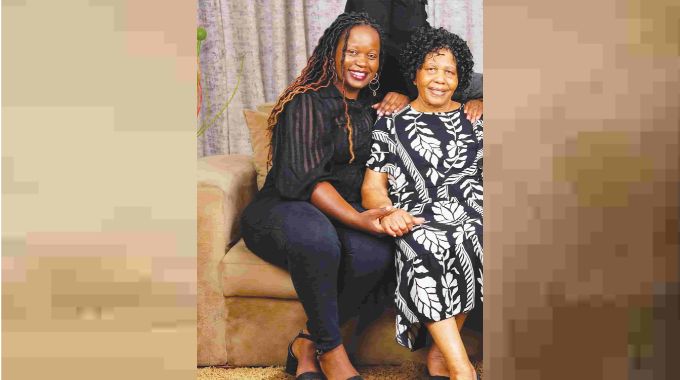
WHEN her mother, Mrs Florence Kumwenda, was diagnosed with dementia in 2012, Ms Emelia Gubba (43) was confronted with a question that would eventually change the course of her life — where do families turn when a loved one develops the condition and they do not know where to find help?
She discovered how difficult it was for families in Zimbabwe to access information, trained caregivers and specialised support for this condition.
Thirteen years later, her mother is still alive at 79, and the experience that once left her searching for answers has become the driving force behind the establishment of the Dementia Association of Zimbabwe (DAZ), an organisation she founded to ensure that other families do not have to navigate the condition alone.
Yet, behind the growing awareness campaign is a woman balancing her responsibilities as a mother of two young daughters, a caregiver to her mother and a guardian to her orphaned nephew, while trying to build an organisation that she hopes will transform dementia care in Zimbabwe.
Ms Gubba, who has a health qualification in monitoring and evaluation, understands the realities of dementia not only through her professional background but also through years of caring for her mother.
Her experience exposed what she describes as a critical gap in support services, prompting her to approach the then Minister of Health and Child Care, Dr David Parirenyatwa, with a proposal to establish an association dedicated to dementia awareness and family support.
“When my mother was diagnosed, I searched for help here at home in Zimbabwe, I found that trained support, clear information and services for families were virtually non-existent,” she told Chronicle in an interview.
Dr Parirenyatwa supported her vision and offered DAZ a Memorandum of Understanding. The organisation subsequently registered as a trust in 2018, laying the foundation for programmes aimed at improving understanding of dementia and supporting affected families.
What started as a personal search for help has since grown into an initiative that has trained caregivers, screened communities and conducted awareness talks, with the organisation also holding its inaugural “Let’s
Walk for Dementia” in Bulawayo on Saturday, 26 September 2026, which drew wider stakeholder participation. DAZ also participated in the International Day of Older Persons event in Gweru, extending its message of compassion, dignity and support for older people.
For Ms Gubba, however, the journey remains deeply personal. Her mother, diagnosed in 2012, is still living with dementia, and the family continues to navigate the changing demands of the condition.
“Some days are better than others, and we take each day as it comes, with patience and love. Her journey is what taught me how much families need support,” she said.
Her experience reflects the emotional and practical demands placed on families when a loved one develops dementia, a condition that can affect memory, communication, behaviour and the ability to manage everyday activities. Caregivers often have to adjust their routines, make difficult decisions and provide sustained support, sometimes without adequate information, resources or assistance, said Ms Gubba.
She is determined to change that reality by building a society in which dementia is understood, families know where to seek help and people living with the condition are treated with dignity rather than stigma.
“I want to see a Zimbabwe where no family feels alone after a loved one is diagnosed with dementia,” she said.
Her message extends to caregivers, whose dedication can come with exhaustion, emotional strain and personal sacrifice.
“I see you. I recognise the love, sacrifice, exhaustion, patience, and strength that caregiving requires every single day,” Ms Gubba said. “You are not invisible.”
She believes that supporting caregivers is essential because their wellbeing matters alongside that of the people they look after.
Her responsibilities at home add another dimension to her mission. As a mother of two daughters, aged 10 and eight, and caregiver to her orphaned nephew, she understands the importance of compassion, patience and family support across generations.
She also wants children to understand dementia, particularly when grandparents begin experiencing memory loss, confusion or changes in behaviour. Greater awareness, she believes, can help children respond with kindness rather than fear or confusion. For people living with dementia, her message is equally clear.
“You matter. Your dignity matters. Your voice matters. You are not alone,” she said.
Despite the progress made since DAZ’s registration, the organisation faces financial and operational constraints that threaten its ability to expand its programmes. The organisation currently operates from a home garage at 65067 Tshabalala Extension in Bulawayo because it cannot yet afford office premises.
Families reach the organisation through churches, clinics, schools and word of mouth. Its services include caregiver training, screening and guidance, supported by trustees who provide governance and volunteers who carry out daily activities, with assistance from the Ministry of Health and Child Care.
Ms Gubba hopes that the organisation will be considerably stronger over the next decade, with its own premises, trained caregivers and support groups in every province, while dementia becomes part of national health planning.
Her vision is not simply to establish a larger organisation, but to ensure that families across the country can access information, guidance and practical support when they need it most.
“We urgently need funding to keep our programmes running, and any support from Government, business and well-wishers will change lives,” she said.
The need for greater awareness and community support was also highlighted by the Bulawayo City Council during the inaugural Dementia Awareness Walk held on 26 September.
Councillor Mercy Furanayi, representing the Mayor of the City of Bulawayo, Councillor David Coltart, said dementia should be recognised as a societal challenge rather than a medical issue affecting individuals alone.
“Dementia is no simply a medical issue, but a societal challenge. It affects individuals, families, and communities. When a family member begins experiencing memory loss, confusion, or difficulties with everyday activities, the impact can extend far beyond the individual,” she said.
Clr Furanayi emphasised that early diagnosis helps families understand the condition, explore care options, plan for the future and seek appropriate support.
She commended DAZ for raising awareness, adding that Bulawayo must move beyond awareness towards greater support, understanding and inclusion to ensure that people living with dementia and their caregivers do not feel isolated or forgotten.
For Ms Gubba, the challenge is to turn awareness into lasting support. Her journey demonstrates how a family’s search for answers can inspire a wider effort to address gaps in community care.
She hopes that with adequate funding, stronger partnerships and greater public understanding, DAZ will be able to reach more families and help make dementia support accessible beyond Bulawayo.
Her message remains simple: behind every diagnosis is a person whose dignity must be protected, a family adjusting to a difficult reality and caregivers who also need care and understanding.
No family, she believes, should have to face that journey alone.