Online Reporter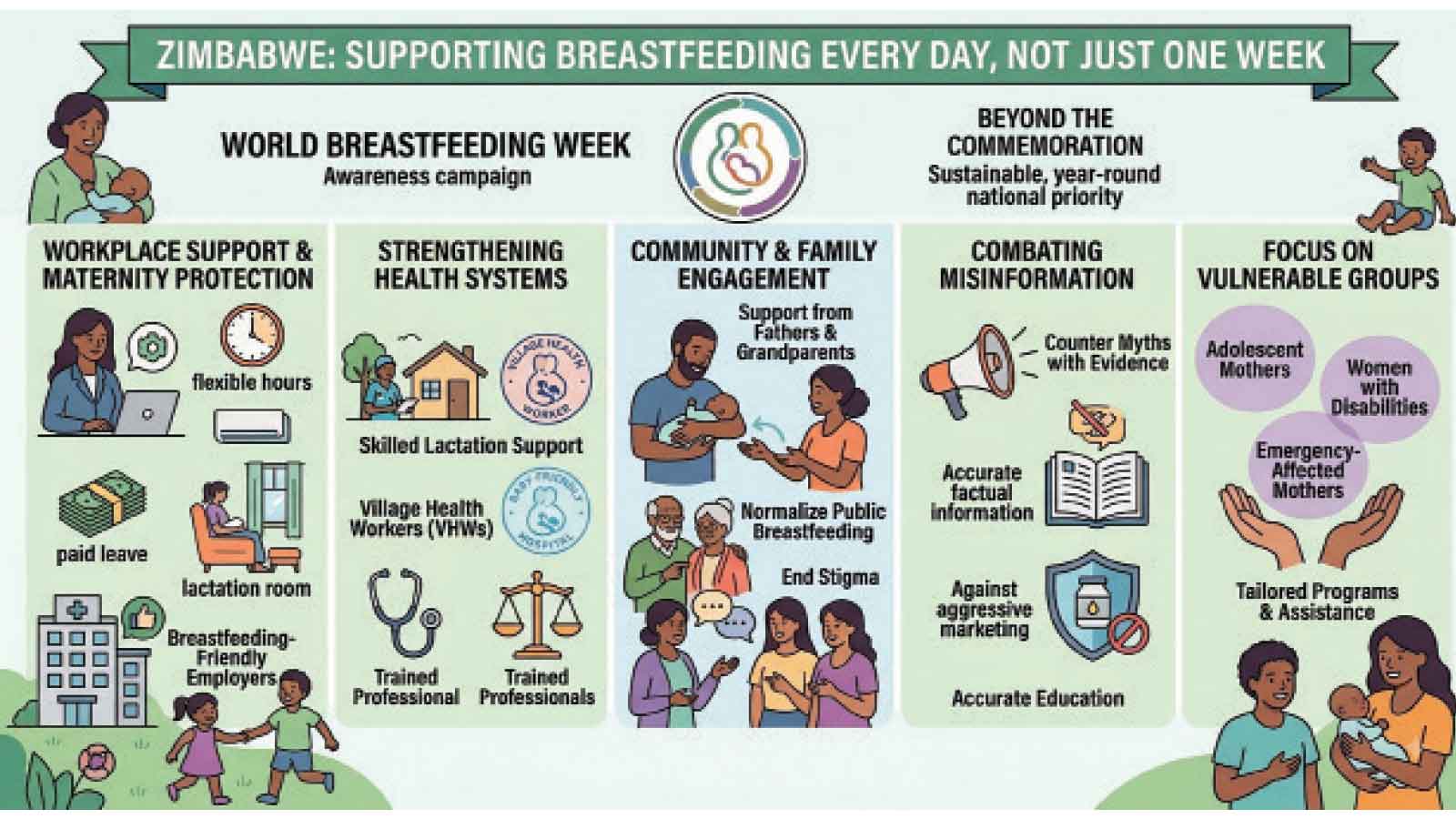
Daphine Zulu
EVERY August, Zimbabwe joins the rest of the world in marking World Breastfeeding Week (1-7August). While the campaign shines a spotlight on the life-saving benefits of breastfeeding, the real test lies in what happens after the commemorations end.
For Zimbabwe, the commemoration should be more than a symbolic observance. It should serve as a moment of reflection on how the country can better protect, promote and support breastfeeding, especially at a time when economic pressures and changing lifestyles continue to create barriers for many mothers.
Breastfeeding is one of the most cost-effective public health interventions available. It provides infants with all the nutrients they need during the first six months of life, strengthens their immune systems, reduces the risk of infections and malnutrition, and supports healthy physical and cognitive development.
For mothers, breastfeeding lowers the risk of breast and ovarian cancers, helps with postpartum recovery and contributes to improved maternal health. But while these are well-established benefits, the challenge lies in ensuring that every mother in Zimbabwe is able to breastfeed successfully.
Zimbabwe has made commendable progress over the years. Through the Ministry of Health and Child Care, supported by development partners such as UNICEF and the World Health Organisation, breastfeeding has remained a central pillar of maternal and child health programmes. The Baby-Friendly Hospital Initiative has helped many health facilities encourage mothers to initiate breastfeeding within the first hour after birth, while health workers continue to educate families on exclusive breastfeeding for the first six months.
Yet significant challenges remain.
Many women, particularly those working in the informal sector, return to work within weeks of giving birth because they simply cannot afford to stay at home. Without paid maternity protection, flexible working arrangements or suitable spaces to breastfeed or express milk, exclusive breastfeeding becomes difficult to sustain.
Even within the formal sector, some workplaces have yet to embrace breastfeeding-friendly policies. Lactation rooms remain uncommon, flexible schedules are limited, and workplace cultures do not always accommodate the needs of nursing mothers. Though Government has made breastfeeding timetable compulsory for nursing mothers, the private sector remains lagging behind, choosing ‘business productivity’ over a healthier nation.
Supporting breastfeeding should not be viewed as a favour to employees, but as an investment in healthier families and a more productive workforce.
Misinformation also continues to undermine breastfeeding. Aggressive marketing of breastmilk substitutes (baby formular milk), misconceptions shared through social media, and cultural myths sometimes convince mothers that formula feeding is superior or that breast milk alone is insufficient during the first six months. Such misinformation can have lasting consequences for child health.
The role of fathers and extended families must also receive greater attention. Breastfeeding is often regarded solely as the mother’s responsibility, yet the support of partners, grandparents and communities is crucial. A mother who receives emotional encouragement, help with household responsibilities and understanding from her family is far more likely to continue breastfeeding successfully.
Zimbabwe’s rural communities face a different set of challenges. While breastfeeding rates are generally higher, access to skilled lactation support can be limited. Mothers experiencing difficulties such as poor infant attachment, low milk supply or medical complications often have few places to seek timely assistance. Apart from being encouraged to drink mahewu, salty peanuts/ round nuts and fruits, no proper medical assistance is ever provided. Aas such strengthening community health systems and expanding access to trained village health workers could help bridge this gap.
The country must also pay closer attention to vulnerable groups, including adolescent mothers, women living with disabilities, and mothers affected by humanitarian emergencies. These groups often require tailored support to ensure they can breastfeed safely and confidently.
This year’s World Breastfeeding Week should therefore prompt renewed commitment from all sectors.
Government should continue investing in maternal and child health services while strengthening policies that protect breastfeeding. Employers should establish breastfeeding-friendly workplaces and recognise that supporting nursing mothers improves staff well-being, retention and productivity.
Health professionals should continue providing evidence-based guidance, while the media should play a greater role in countering myths and promoting accurate information.
Communities also have a responsibility. Mothers should not face criticism for breastfeeding in public, nor should they feel isolated when choosing to exclusively breastfeed. Creating an environment where breastfeeding is normalised and encouraged benefits society as a whole.
Ultimately, breastfeeding is not merely a personal choice; it is a national development issue. Healthier children are more likely to succeed in school, become productive adults and contribute to economic growth. Investing in breastfeeding is therefore an investment in Zimbabwe’s future.
As Zimbabwe joins the rest of the world in commemorating World Breastfeeding Week, the message should extend beyond awareness campaigns and commemorative speeches. Every mother deserves the knowledge, protection and practical support needed to give her child the healthiest possible start in life. Ensuring that this happens is a shared responsibility, one that government, employers, communities and families must embrace with renewed urgency.
Above all, mothers should remain steadfast in embracing breastfeeding as the best gift they can give their children. Despite the economic hardships, social pressures and misinformation that may discourage exclusive breastfeeding, they should draw confidence from the overwhelming scientific evidence that breast milk is the safest, healthiest and most complete source of nutrition for infants. By exclusively breastfeeding for the first six months and continuing alongside appropriate complementary feeding thereafter, mothers are not only giving their children the strongest possible foundation for life but are also helping build a healthier and more productive Zimbabwe.
Every breastfeeding mother is nurturing not just a child, but the future of the nation.