Online Reporter
Wallace Ruzvidzo, Harare Bureau
GOVERNMENT is working towards reviewing of media-related licence fees including ZBC car radio licences, Information, Publicity and Broadcasting Services Minister, Dr Jenfan Muswere has said.
Earlier this year, President Mnangagwa directed a review of levies, licences, fees and permits across sectors including health, agriculture, retail, tourism, transport, energy, manufacturing, broadcasting, telecommunications, liquor, construction and financial services.
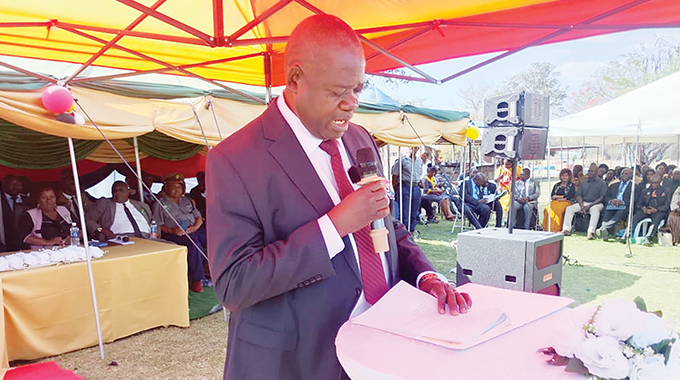
Responding to questions from media stakeholders at the 2025 annual media stakeholders conference in Harare yesterday, Dr Muswere said the impending review is in line with the President’s directive.
“Yes, the review is coming…” he said.
“This year when Cabinet commenced, His Excellency the President, Dr ED Mnangagwa directed Cabinet ministers to come up with a framework, which is now being co-ordinated by the Office of the President and Cabinet and the Ministry of Finance, Economic Development and Investment Promotion and the particular line ministries, in order to further create a magnetic investment climate for both foreign direct investment and domestic investment in order to grow the economy.”
Dr Muswere said the call was aimed at improving the ease of doing business.
“So the reviews in terms of the broadcasting sector are underway and part of the conference deliberations is also to highlight some of the challenges that they face in terms of pricing modalities and duplication in terms of the licensing framework,” he said.
Dr Muswere pledged to ensure the country’s media industry is sustainable and that it fully carries out its mandate.
He then rallied the media to help the country’s attainment of an upper-middle-class economic status by 2030, adding that the fraternity should do more in publishing the numerous milestones achieved under the Second Republic.
“The new media policy is very clear in terms of the objectives and its pillars and principles; that the media sector has a shared responsibility to defend the image of Zimbabwe, to promote Zimbabwe as a country, to promote investment, tourism and media diversity.
“For us to be able to achieve an upper middle-income society, it is the responsibility of each and every media house to be able to uproot the vices, to raise awareness on critical issues, to fight corruption, to hold the executive accountable, but also to contribute towards national economic development in our country,” he said.
During the conference, development partners such as UNESCO commended Zimbabwe for launching its media policy back in May, while also conveying its unequivocal support to the growth and development of the media sector.
International Media Support (IMS) expressed their commitment to supporting the development of the country’s media industry.
Zimpapers board member Dr Alexander Rusero presented on the need for a National Employment Council (NEC) for the media industry.
“This chaotic nature of the media industry can only be addressed if we put in place a fully-fledged National Employment Council because it is the NEC that will then bridge the gap between the employers and the employees,” he said.
Zimpapers group political editor Ranga Mataire participated in a panel discussion at the indaba, highlighting how the country’s largest diversified media outlet is presently on a transformative journey.
He also shared experiences on Artificial Intelligence and how it is impacting the media industry.
Also in attendance were Zimpapers acting chief executive officer Mr William Chikoto and The Herald Editor Victoria Ruzvidzo, among other media industry stakeholders.
Ends CKD