Online Reporter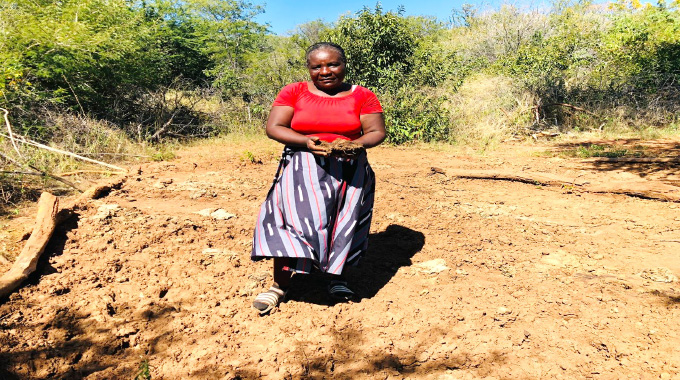
Lungelo Ndhlovu, [email protected]
LAST year, Mrs Maritha Sibanda’s one-hectare plot in Ward 2 of Masikili, Mabale in Hwange District barely produced enough crops to fill a single scotch-cart.
This season, however, brought a remarkable turnaround. By adopting a moveable kraal — locally known as a mobile bommer — Mrs Sibanda was able to rejuvenate her field.
Rotating the kraal across her land allowed her livestock to naturally fertilise different sections, and the results were dramatic. Her one-and-a-half-hectare plot yielded four scotch-carts of maize and three carts of sorghum.
“I used to get just one cart of sorghum, and my maize harvest couldn’t even fill a scotch-cart before. But now I see real change. The moveable kraal really works,” Mrs Sibanda said.
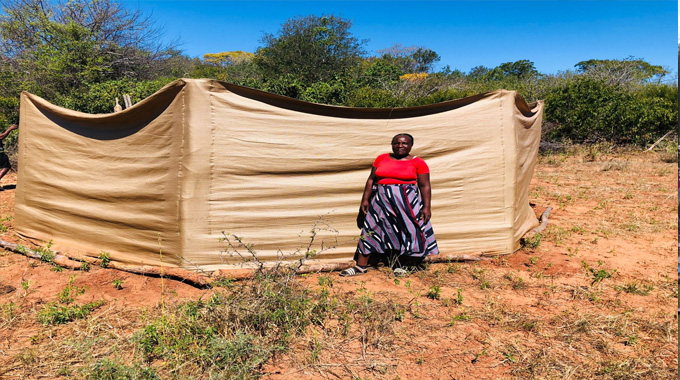
The moveable kraal method is simple yet effective. Cattle are penned overnight in temporary enclosures that are regularly shifted across fields. As the animals graze, trample, and defecate, they enrich the soil — eliminating the need for manual manure spreading.
This technique is helping smallholder farmers across Hwange restore soil fertility without the cost of chemical fertilisers or the labour of transporting manure.
“You don’t have to carry the manure to the fields anymore. The cows do everything — grazing, trampling and fertilising,” Mrs Sibanda explained.
This low-cost, low-tech solution is gaining traction in Hwange, particularly as the region grapples with the effects of climate change.
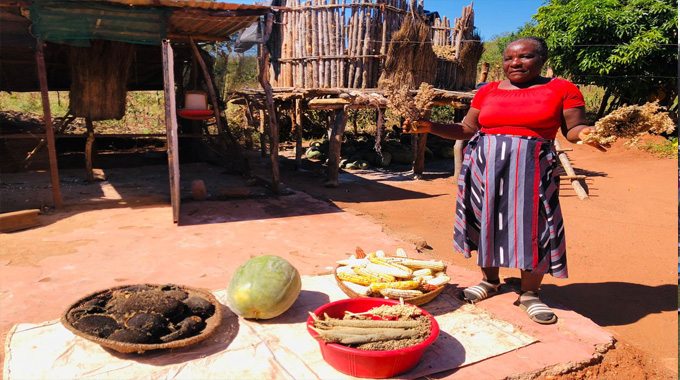
Erratic rainfall, prolonged dry spells and rising temperatures have made traditional farming increasingly unreliable. Moveable kraals are now being used not only to rebuild soils and boost harvests,but also to reduce livestock losses from predators.
Mr Mpiyekhaya Ncube, a facilitator at Soft Foot Alliance — a conservation and community development group working with Hwange villagers — says moveable kraals also enhance livestock safety.
“For the past two years, we haven’t lost any cows or goats in our villages because of these moveable kraals. Wild animals like lions and hyenas can’t see what’s inside the bommer. We also practise holistic grazing and land management, which reduces the spread of livestock diseases because the animals are not confined to one space for too long,” he said.
The technique blends traditional knowledge with modern climate adaptation strategies. In Zimbabwe, where most rural farmers rely on rain-fed agriculture, shifting weather patterns have led to poor yields, hunger, and declining incomes. The Ministry of Lands, Agriculture, Fisheries, Water and Rural Development has made climate-smart agriculture a cornerstone of its strategy to help farmers adapt and thrive.
The Government’s National Climate Policy and National Climate Change Response Strategy support sustainable practices such as organic manure use, water harvesting, crop rotation and minimum tillage — all of which align with the principles behind moveable kraals.
Mr Joy Mabenge, Country Director for ActionAid Zimbabwe, said the organisation is helping farmers adopt agro-ecological methods that prioritise sustainability and resilience.
“One of our interventions is the practice of agro-ecology — a powerful shift from conventional farming that guarantees resilient, productive and equitable food systems. We are actively working with communities to revolutionise how they manage their land, focusing on practical methods to conserve precious water and moisture in their small plots,” he said.
Mr Mabenge added that ActionAid is also investing in infrastructure such as nutrition gardens and boreholes, to support consistent food production, even during dry spells. The organisation recently submitted an agro-ecology policy paper to the Ministry of Agriculture, advocating for national policies to promote these approaches.
“We believe it’s not just a viable solution to climate change — it’s a potent one,” he said.
At the institutional level, the Environmental Management Agency (EMA) is leading efforts to rehabilitate land and protect natural resources, including wetlands that are vital for water storage and biodiversity.
Mrs Chipo Mpofu-Zuze, EMA’s provincial manager for Matabeleland North, noted that climate pressures are driving communities to over-exploit natural resources in their struggle to survive.
“We understand that people need to survive, but unsustainable use of wetlands and forests only deepens the crisis. That’s why we work to build community awareness around planning and using their natural resources wisely,” she said.
EMA uses environmental legislation, such as the Environmental Management Act (Chapter 20:27) and Statutory Instrument 7 of 2007, to guide its work. It also partners with development organisations to fund community-led projects that promote restoration and offer livelihoods that do not degrade the environment, according to Mrs Mpofu-Zuze.
In Matabeleland North, several community-based projects are helping to protect and revitalise degraded landscapes. These include wetland rehabilitation efforts in places like Manjolo, Masibinta and Gande in Binga; Luseche, Kasibo and Chidobe in Hwange; and Guga Wetland in Lupane. In Bubi District, EMA has supported a woodlot and orchard project.
These initiatives often combine wetland protection with borehole drilling, fish farming, bee keeping and the development of community gardens, to create food and income alternatives.
Altogether, more than 1 840 hectares of land have been protected in the province through catchment area management. These efforts improve year-round water availability, enhance food security and reduce pressure on the environment.
Mrs Mpofu-Zuze said the broader goal is to ensure that rural families have options for survival that are not destructive to their surroundings.
“By protecting wetlands and using sustainable methods like moveable kraals, we are not only restoring land — we are also restoring dignity, health and resilience in our communities,” she said.
EMA also plays a key role in educating communities on the sustainable use of natural resources and raising awareness of environmental laws. The agency runs awareness campaigns through various platforms, including commemorations of key environmental days such as National Tree Planting Day, which promotes reforestation to restore carbon sinks and balance the hydrological cycle. On World Wetlands Day, communities are reminded of the importance of wetlands, the threats they face and how they can be restored.
Other outreach efforts include exhibitions, school clubs and competitions, targeted stakeholder engagements and the use of radio, newspapers, and social media to spread messages. Through these efforts, EMA aims to build a culture of environmental responsibility that begins at the community level.