admin
admin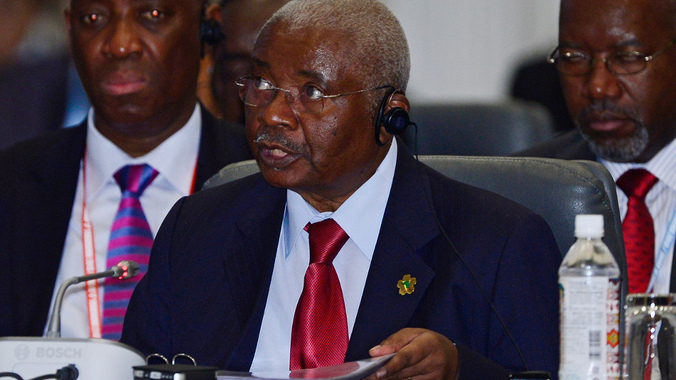
Chimoio — Mozambique’s president insisted on Wednesday that violent clashes with armed rebels did not spell a slide back to brutal civil war, stressing the energy-rich nation remains a safe bet for investors. “I do not think, and that is a strong ‘no’… that we are going back to war,” Armando Guebuza told AFP in an exclusive interview, amid the worst political violence the country has seen since its brutal 16-year civil war ended in 1992.
“Mozambique is not in a situation of instability,” said Guebuza.
The civil war pitted Guebuza’s Frelimo liberation movement against anti-Communist Renamo rebels. It led to the deaths of an estimated one million people and made Mozambique a byword for internecine bloodshed.
Since then the country has boomed, amid a coal and gas bonanza and as the warring factions shifted their battle to the ballot box.
But as Renamo’s power has waned its leader Afonso Dhlakama retreated to the bush, vowing reprisals if the country’s economic windfall is not shared.
A series of tit-for-tat attacks between his supporters and the government led the military to launch a sustained assault on his bases beginning on 21 October.
Since then Renamo has declared a two-decade peace deal null and void and gunmen have launched attacks on the country’s main highway.
But Guebuza (70), said the clashes were restricted to one area and were short-term.
“I don’t think there is a problem in the medium and long term and we are doing our best to stop it as soon as possible,” he said, speaking in the central-western town Chimoio. “Things that are happening are localised, and we know where it is happening.”
Guebuza personally blamed his old civil war rival Dhlakama for the simmering conflict that has rocked the centre of the country.
“Apparently he sees himself as a loser and uses whatever remains of his forces to try to prove that he can impose on the government his own decisions,” Guebuza said.
“That doesn’t make sense because there is no problem of legitimacy on the present government. We have a vast majority,” said Guebuza.
Dhlakama did not want to battle the ruling party at polls, Guebuza added, after Renamo refused to register for an upcoming local vote on 20 November. — Sapa


 Online Reporter