Chronicle Editor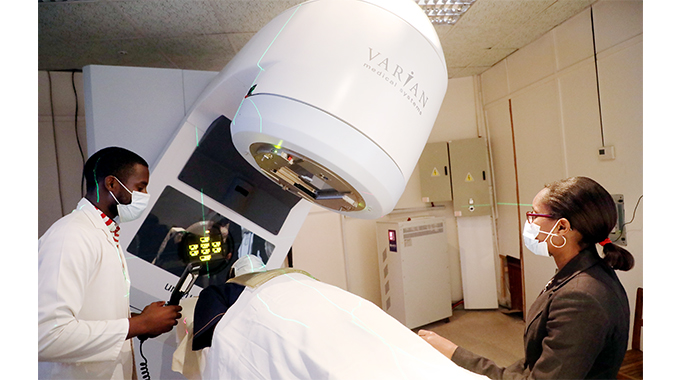
Thandeka Moyo-Ndlovu, Health Reporter
MPILO Central Hospital has resumed radiotherapy services following Government’s intervention which resulted in the deployment of a physicist, a month after machines that had broken down were fixed.
From August last year, Mpilo had been unable to cater for cancer patients from the Southern region following the breakdown of its machines.
Last month, Government paid for servicing and the machines were fixed but could not be run as the hospital had no physicist.
Radiotherapy is the use of radioactive rays to kill cancer cells and/or shrink the growth.
The effects of radiotherapy are localised and confined to the region being treated or targeted, making it impossible for the cells to continue growing and dividing.
The life saving treatment, which can only be accessed at Mpilo and Parirenyatwa in the country, is essential in the cure of several cancers including cervical cancer which accounts for more deaths in women.
On August 15 last year, the machine meant to service cancer patients from the southern region broke down forcing people to travel to Harare.
With lockdown conditions in place, others could not travel and many could not afford to pay private hospitals for the lifesaving cancer treatment.
Delays in accessing radiotherapy often leads to cancer cells spreading in one’s body thereby lessening the patient’s chances of survival.
Recent statistics show that more than 60 percent of patients being attended to at Mpilo and other public health institutions in Zimbabwe have stage three and four cancers.
At this stage, the cancer would have advanced so much that it is virtually incurable.
Stage three and four cancers require palliative treatment which is only meant to treat symptoms or ease pain until the patient dies.
Zimbabwe is yet to conduct a localised research on cancer to establish its prevalence as the country relies on global estimates.
A Chronicle news crew caught up with staffers at the radiotherapy centre yesterday who expressed gratitude to the Government for ensuring that the service resumes despite challenges.
Mpilo acting chief executive officer Professor Solwayo Ngwenya said more resources are needed to ensure the service is not discontinued for any reason as that could lead to compromised quality of life for the patients.
“We are very happy that the machines have finally been fixed and we have a physicist who was seconded by the Ministry of Health and Child Care to help administer the treatment. We are particularly grateful that all the work which has been done so far was facilitated by Vice President Constantino Chiwenga during his last visit,” said Prof Ngwenya.
“We are grateful for the funds he availed to make sure we are able to treat cancer patients here and ensure they do not travel, as far as Harare to seek treatment. The machines are very delicate and controlled by software which can break down any time so we will continue lobbying for support so that machines are continuously up for the people in the Southern region.”
The head of the radiotherapy department Dr Tatenda Chingonzoh said they had about 120 patients on the waiting list last year when the machine broke down.
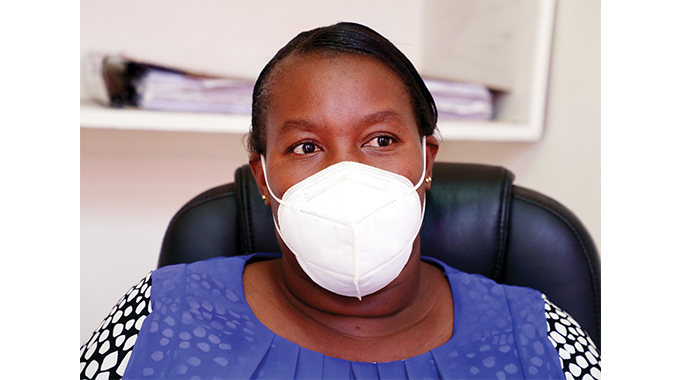
She said unfortunately some had died awaiting treatment while some no longer qualify for the treatment as their cancers have advanced.
Dr Chingonzoh said most of the patients in the updated list done last week which currently has about 45 people have cervical cancer.
She said cervical cancer patients need at least five weeks of continuous treatments on the machine.
“We are happy that finally we will resume offering radiotherapy at Mpilo although we are in need of a physicist.
“The one we have is temporary and then the day he goes we will be forced to suspend the services as this type of treatment needs highly qualified personnel,” she said.
“We wish we had a way to train at least four physicists a year so that we solve this perennial issue of having to stop treatment because there is no one available to help treat the patients.”
Dr Chingonzoh said two physicists that Mpilo had last year had gone abroad leaving the department with no skilled personnel to ensure the machine keeps running.
She also said most patients seeking cancer treatment were as young as 17 and from rural areas who come seeking treatment for cervical cancer.
“This cancer screening is proving to be effective. Despite the fact that it is still free of charge we have thousands of sexually active women who will not dare go for screening. I encourage men even to take up the challenge and go for screening when they are still fit and asymptomatic so that they are helped before cancer develops into something untreatable,” she added. -@thamamoe



 Online Reporter