Chronicle Editor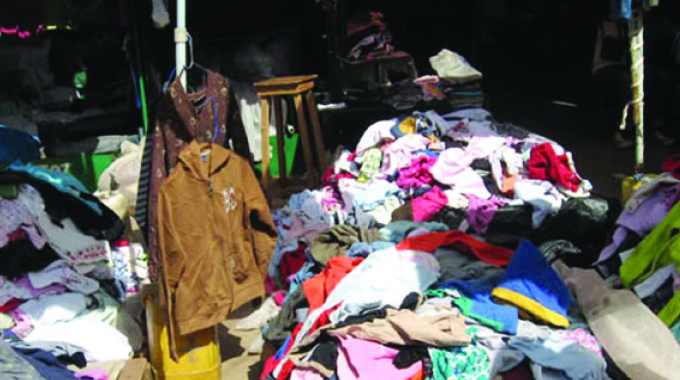
Faith Ndlovu, Sunday News Reporter
MANY Zimbabweans have turned their backs on home-grown fashion brands, opting for the booming market in “pre-loved” imports from overseas instead.
The clothes are popular for their cheap price tags and many brag about how unique they are. A significant number of clothing stores carry mass-produced items, which are all over town, they say. Some of the second-hand clothing goes for as little as $US1.
It’s a given; there’s no shop in this country where one can pay as little as US$2 for a pair of jeans, which has made thrifting very popular.

With the advent of monkeypox (mpox), however, many have become sceptical about buying second-hand clothing for fear of contracting the virus.
According to the World Health Organisation (WHO), mpox is an illness caused by the monkeypox virus. It is a viral infection that can spread between people, mainly through close contact and occasionally from the environment to people via things and surfaces that have been touched by a person with mpox.
“In settings where the monkeypox virus is present among some wild animals, it can also be transmitted from infected animals to people who have contact with them,” says WHO.
Research shows that mpox spreads from person to person mainly through close contact with someone who has the virus. Close contact includes skin-to-skin (such as touching or sex) and mouth-to-mouth, or mouth-to-skin contact (such as kissing) and can also include being face-to-face with someone who has mpox (such as talking or breathing close to one another, which can generate infectious respiratory particles).
During the global outbreak that began in 2022, the virus mostly spread through sexual contact. WHO says more research is needed on how mpox spreads during outbreaks in different settings and under different conditions.
“People with mpox are considered infectious until all their lesions have crusted over, the scabs have fallen off and a new layer of skin has formed underneath, and all the lesions on the eyes and in the body (in the mouth, throat, eyes, vagina and anus) have healed too, which usually takes from two to four weeks.
“It is also possible for the virus to persist for some time on clothing, bedding, towels, objects, electronics and surfaces that have been touched by a person with mpox. Someone else who touches these items may become infected, particularly if they have any cuts or abrasions or touch their eyes, nose, mouth or other mucous membranes without first washing their hands.
“Cleaning and disinfecting surfaces/objects and cleaning your hands after touching surfaces/objects that may be contaminated can help prevent this type of transmission,” says WHO.
According to WHO, the virus can also spread during pregnancy to the foetus, during or after birth through skin-to-skin contact, or from a parent with mpox to an infant or child during close contact.

Although getting mpox from someone who is asymptomatic (not showing symptoms) has been reported, there is still limited information on whether the virus can be transmitted from someone with the virus before they get symptoms or after their lesions have healed.
“Although live virus has been isolated from semen, we do not yet know the extent to which infection can spread through semen, vaginal fluids, amniotic fluids, breast milk or blood,” says WHO.
On 14 August 2024, a new mpox public health emergency was declared by WHO because Africa is now experiencing the largest epidemic of mpox.
For example, the Democratic Republic of Congo had reported 5 467 confirmed cases and 730 deaths as of 24 September 2024, with most cases occurring in children.
On 13 October, Zimbabwe’s Ministry of Health and Child Care confirmed the first two mpox cases in the country, in Harare and Mberengwa.
One case was an 11-year-old child who was known to have travelled to South Africa in September, while the second case had recently come back from Tanzania. Both cases were reported to be stable.
In recent weeks, Zimbabwe health authorities have reported a significant spike in mpox infections, with many cases linked to the thriving second-hand clothing market.
The phenomenon has raised pressing questions about the safety of imported used clothing and the adequacy of existing health protocols.
A second-hand clothing seller at one of the popular markets in Bulawayo, Mrs Antony Moyo, said their safety protocols when handling the used clothing exceed the recommended standards.
“As responsible bale clothing sellers, we take the allegations of being super-spreaders of mpox very seriously. We have implemented rigorous cleaning and disinfection procedures to ensure all items are sanitised before sale,” said Mrs Moyo.
She said her staff wears protective gear at all times. “We maintain a clean environment to prevent any potential transmission. We invite customers to inspect our facilities and witness our cleaning processes, demonstrating our commitment to transparency,” said Mrs Moyo.
Mpox has a long incubation period, which means it can take three to 21 days to develop illness after being exposed to the virus.
However, a person can transmit the disease to someone else one to four days before symptoms appear. Altogether, mpox infection lasts two to four weeks.
Another second-hand clothing seller, Miss Pamela Ngwenya said they educate their customers on proper hygiene practices, such as washing and thoroughly ironing the clothes before wearing them.
“We provide information on mpox prevention and transmission, emphasising the importance of close contact precautions.

Our staff is trained to address customer concerns and provide accurate information, ensuring transparency and accountability.
We maintain open communication channels, encouraging customers to report any concerns or suspicions. By prioritising customer safety and education, we demonstrate our commitment to responsible business practices,” said Miss Ngwenya.
The second-hand clothing industry, a staple of Zimbabwe’s informal economy, has become an unlikely focal point in the battle against mpox.
With thousands of people reliant on imported used clothing for affordable fashion, the sector’s role in transmitting the virus poses a daunting challenge for policymakers. As authorities race to contain the outbreak, citizens are left wondering whether their favourite second-hand clothing markets have become breeding grounds for infection.
Miss Bekezela Nyoni said bale clothing provides affordable fashion options for those on a budget, enabling them to access quality clothing without breaking the bank.
“We can’t let unfounded fears dictate our consumer choices and harm local businesses that rely on this industry. Affordable fashion is a basic necessity, not a luxury,” she said.
“Local second-hand clothing vendors are not the culprits. They’re small business owners trying to make a living, provide for their families and contribute to the local economy. Let’s support responsible businesses and promote fair trade practices. We should celebrate entrepreneurship, not cripple it with unfounded fears,” said Miss Nyoni.
Mr Lawrence Moyo weighed in saying consumers have a personal responsibility to prioritise hygiene, inspect garments and take necessary precautions.
“We should not rely solely on vendors or authorities to ensure our safety. By taking ownership of our choices, we can minimise risks and promote responsible consumption,” he said.
Mr Moyo said instead of stigmatising second-hand clothing, members of the public should educate themselves on proper hygiene practices, mpox prevention and responsible consumption, which would effectively reduce transmission risks.
“We need public awareness campaigns, workshops and community outreach programmes to promote informed decision-making,” he said.
Ministry of Health and Child Care spokesperson, Mr Donald Mujiri reassured the public that the situation is under control and there is no need for panic.
“We emphasise that there is no need for panic because the health authorities have swiftly implemented contact tracing and isolation protocols to prevent further spreading.
“On public awareness and education, we are actively informing the public about mpox, its symptoms and preventive measures. This proactive approach helps in early detection and treatment, reducing the risk of widespread transmission,” he said.



 Online Reporter