admin
admin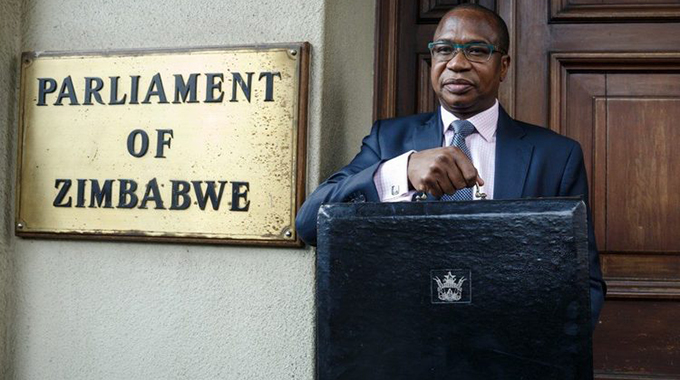
Zvamaida Murwira
Senior Reporter
Members of Parliament want to play a greater role in national Budget processes to ensure the disbursement of money to priority areas for the budget to have a meaningful impact on people.
Budget and Finance portfolio committee chairperson and Chikomba Central MP Cde Felix Mhona said while legislators had a role in budget formulation and approval, there was need to strengthen their oversight role to ensure they played a part in the allocation of resources towards important areas such as health and social protection.
Cde Mhona said this on Tuesday during a review of the 2021 Budget Strategy Paper that was launched by Finance and Economic Development Minister Professor Mthuli Ncube last week under the theme: “Building Resilience and Economic Recovery post Covid-19”.
The document is expected to guide wider consultations on the upcoming 2021 National Budget.
The 2021 Budget Strategy Paper marks the switch from the Transitional Stabilisation Programme, which is coming to an end this December, to the First National Development Strategy (2021-2025).
The meeting that was attended by legislators, economists and civic society was organised by Zimbabwe Coalition on Debt and Development (Zimcodd).
“The budget is the only tool that Government uses to meet the developmental issues and socio-economic needs of the people,” said Cde Mhona.
“In other words, from the lens of a human right perspective, the national budget is a fiscal commitment to the right to health, education and social protection, among other human rights that must be met by the State.
“In other jurisdictions, Parliament plays a critical role on the budget contrary to our scenario where we merely approve the budget, but have no role in the distribution.”
Zimcodd executive director, Ms Janet Zhou, said there was need to ensure that the 2021 national budget addressed the plight of women and youths, who bear the brunt of national pandemics such as Covid-19 and other diseases.
“We need to realise that in this time of lockdown, women and young girls are more vulnerable to domestic violence,” she said.
“They need access to finance, economic power, wealth creation opportunities, land and other productive resources to fully participate or benefit from the expected investments in agriculture, manufacturing and mining.”
Ms Zhou said women were the majority of workers in smallholder agriculture and informal trade even though they, in most cases, did not own land and means of production.
“We also realise that feminisation of poverty is a major drawback to national development, we ought to know that the Covid-19 pandemic will likely worsen inequalities experienced daily by women and young girls in terms of access to education, legal justice, food, water, energy among other issues,” she said.


 Online Reporter